


Click or Scroll Down
General Information
NUMBER 5 STEAM LOCOMOTIVE
NUMBER 6 STEAM LOCOMOTIVE
GENERAL INFORMATION
by Ken Morgan
Lionel’s first two steam locomotives were catalogued for many years, with both the 5 and 6 catalogued from 1906 through 1926. After these engines were discontinued, Lionel would not have a steam loco in the catalog until 1929.
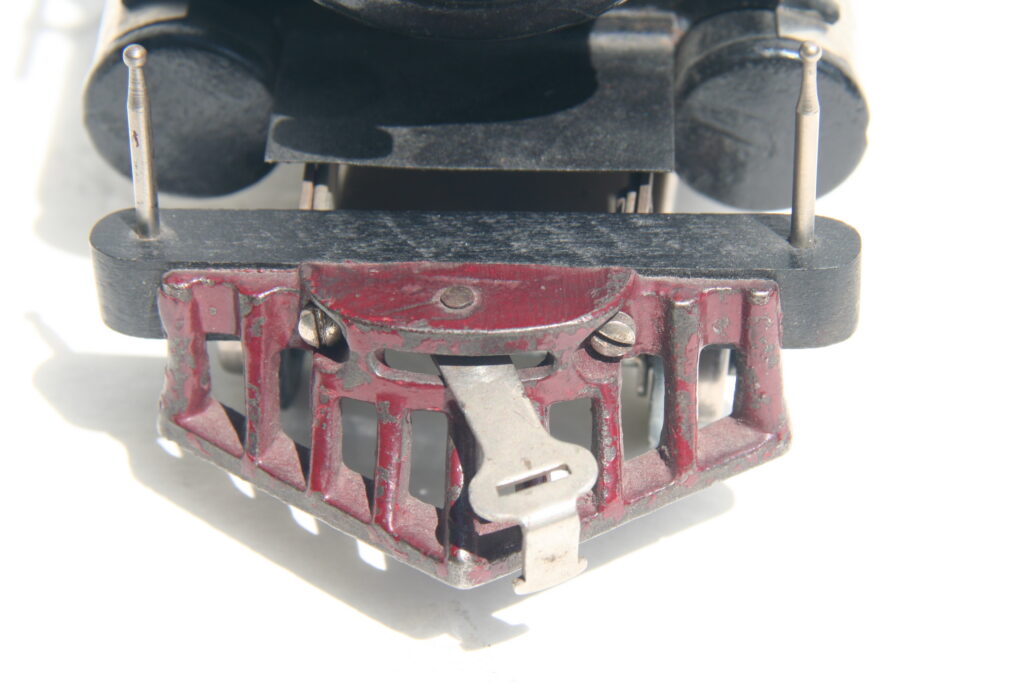
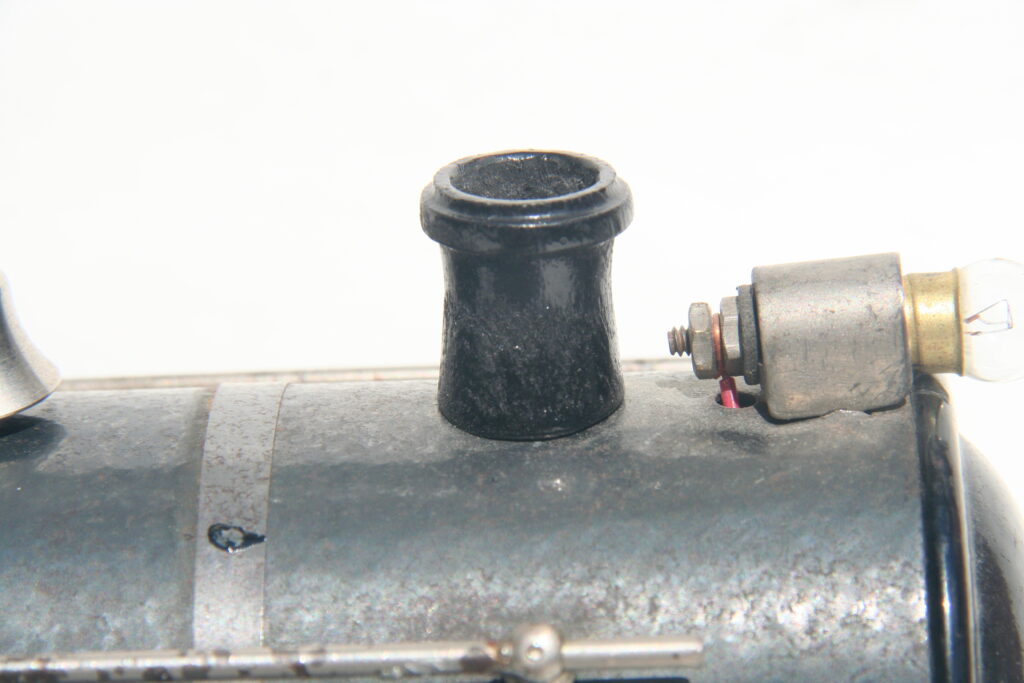
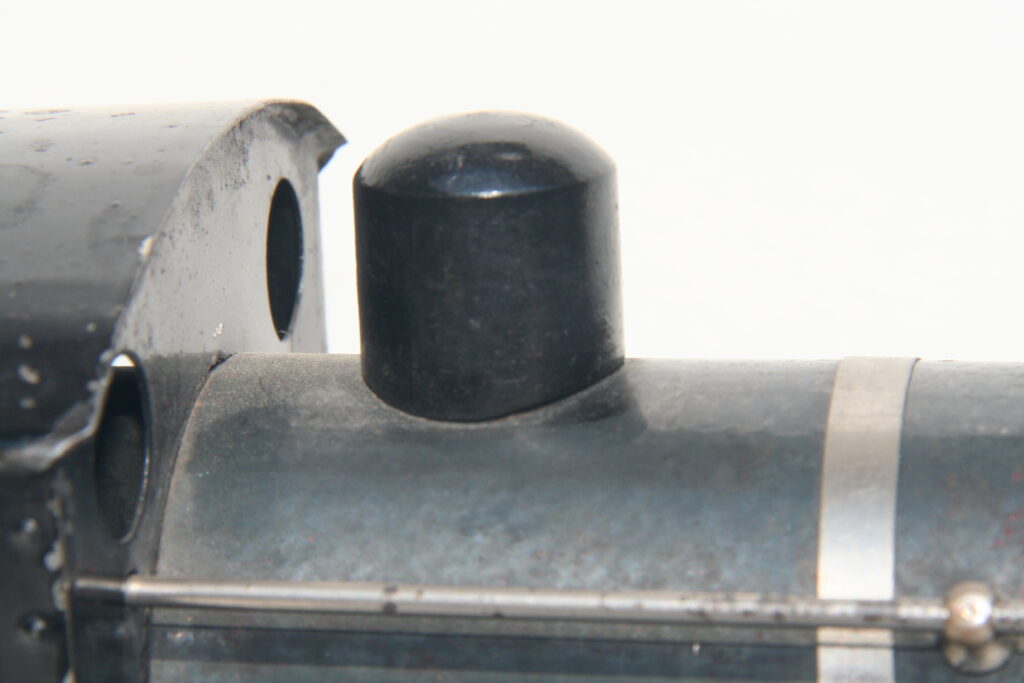
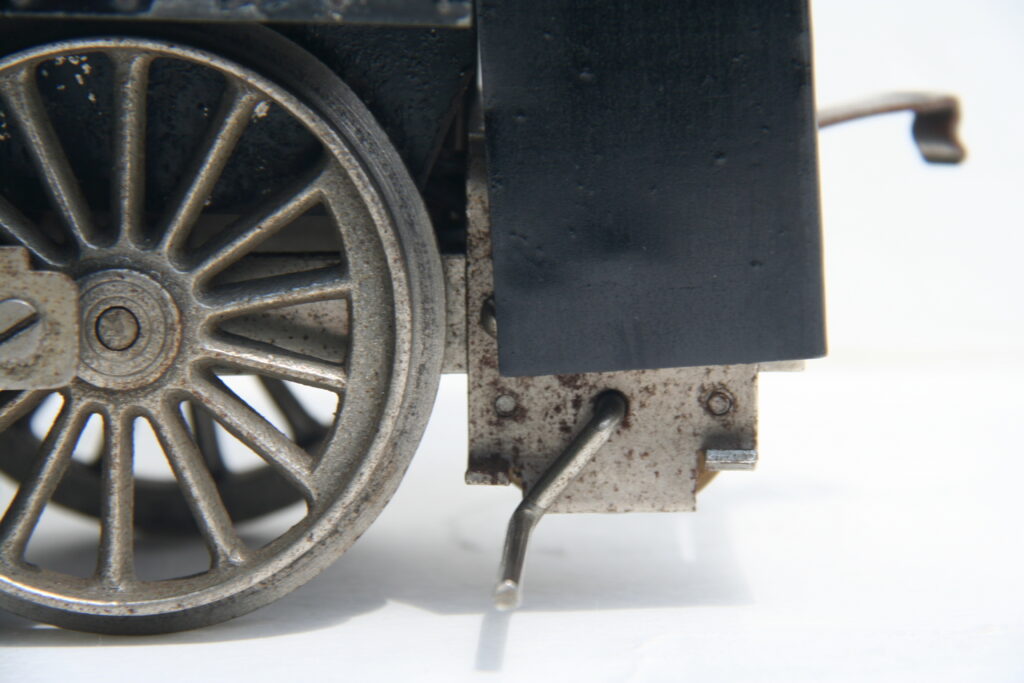
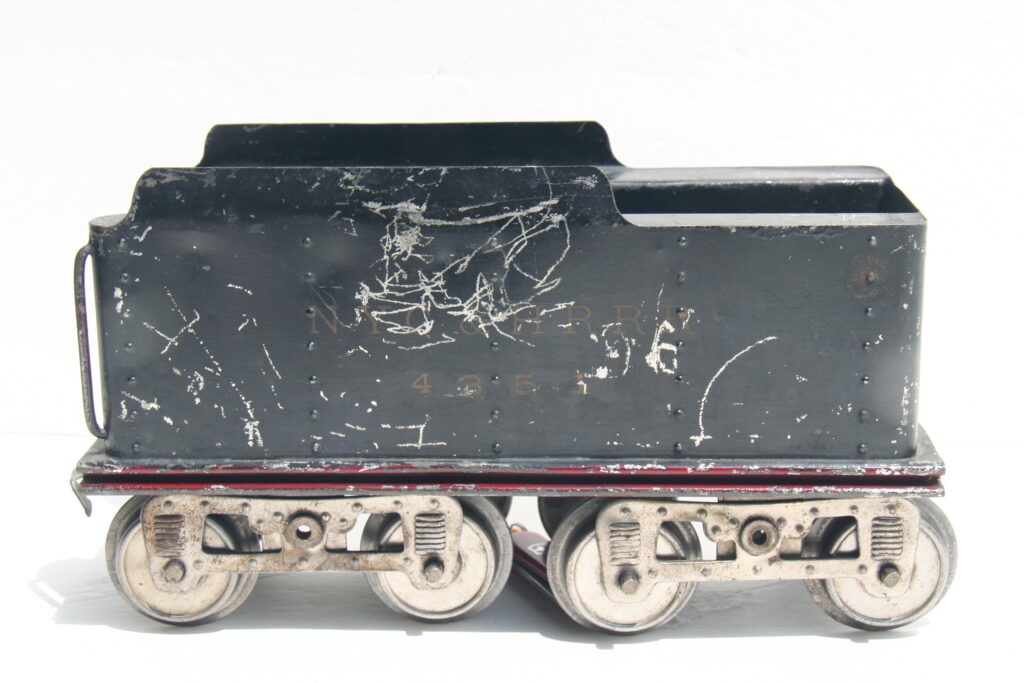
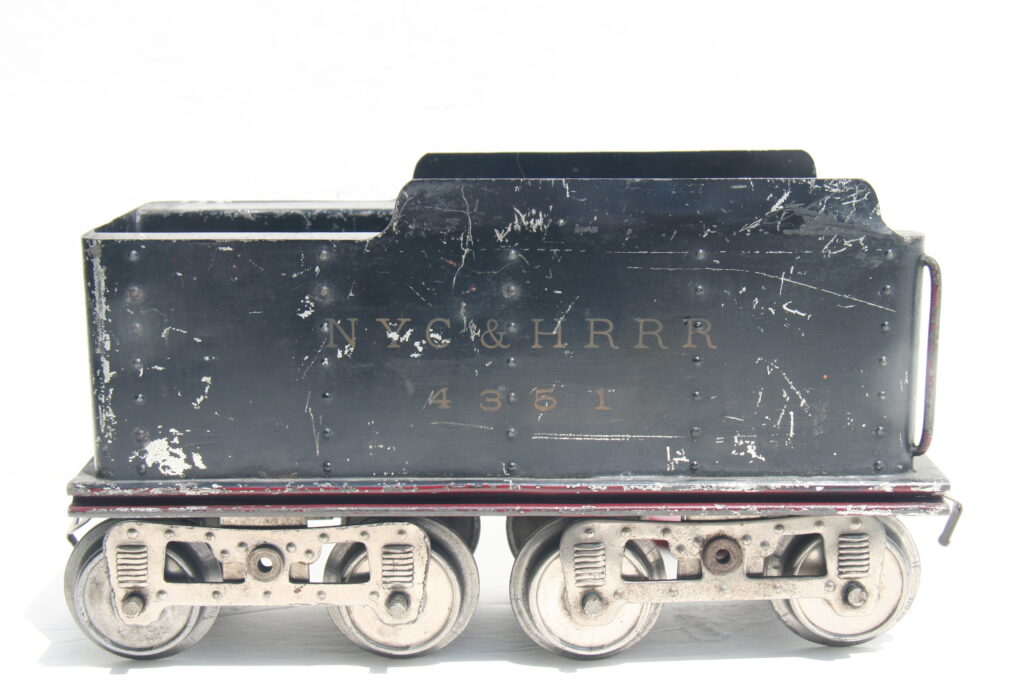
There were several variations of both locos. The 5 was offered without a tender or with a small tender which could have either a single truck or two smaller trucks, in which case it was either a 5 Special or, later, a 51. The 6 always had a tender, but it was also offered as a brass loco, first as a 6 Special, then as a 7. Most were rubber stamped for the NYC&HRRR (New York Central & Hudson River Railroad), but some were lettered PENNSYLVANIA or B&ORR. The latter are much more difficult to find. They were mostly made of tinplated metal, but the steam dome, stack, boiler front, and the beam to which the cowcatcher was attached were wood, and the cowcatcher was cast iron as were the drivers. There were many changes made over the years, but the most obvious one was the change from thin rimmed to thick rimmed drivers in 1912. Also obvious are the headlight which changed over the years. The earliest headlights are referred to as slide on. They were used from 1906 through 1913. The base of the headlight has angled brackets which slide onto a plate on the locomotive. Overlapping the slide on headlight, the pedestal type was used from 1912 to 1918 when it was replaced by the strap headlight which continued in use through 1926. The pedestal version has an open bracket under the lamp fixture which is screwed onto the locomotive. The last early headlight is the strap, which is a curved piece of sheet metal with into which the light socket is fitted. The metal strap has a small foot on each side which is slotted onto the loco and twisted inside the loco body to secure it in place. There were some minor variations of both slide on and pedestal headlights which occurred over the years they were in use. All these changes help date the locomotives on which they were used, as were some other detail changes to bells, whistles, length and types of couplers, motor field laminations, etc.
All these comments related to trim and field laminations apply to the early electric locomotives and the interurbans as well as to the steam locos.
On the steam locos, the front axle is powered and the rear is driven by the side rods.
NUMBER 5 STEAM LOCOMOTIVE
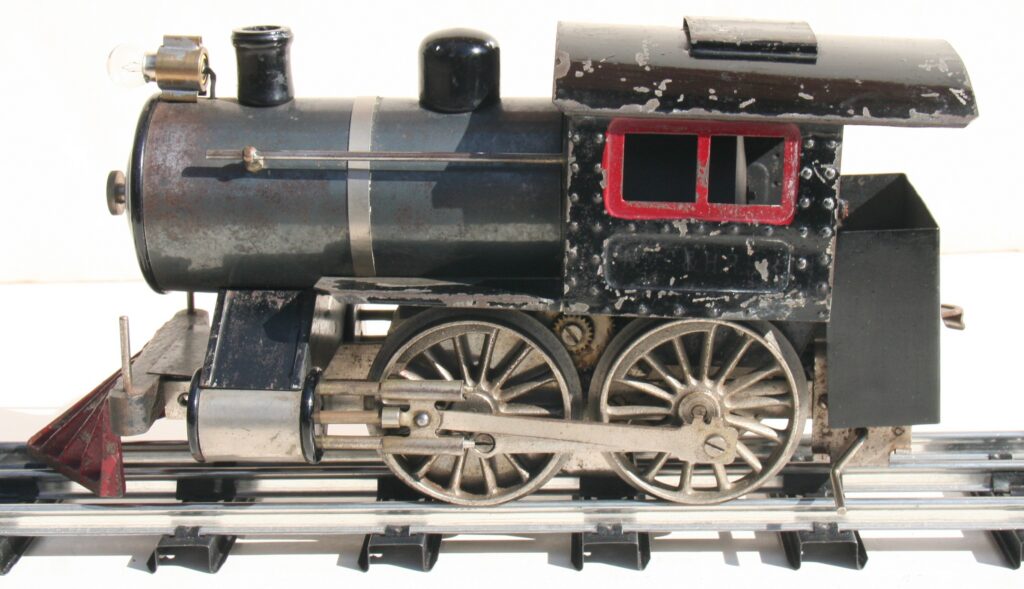
Based on several specifics (drivers, slide-on headlight, motor laminations, boiler front screw), this number 5 loco likely dates to 1910.
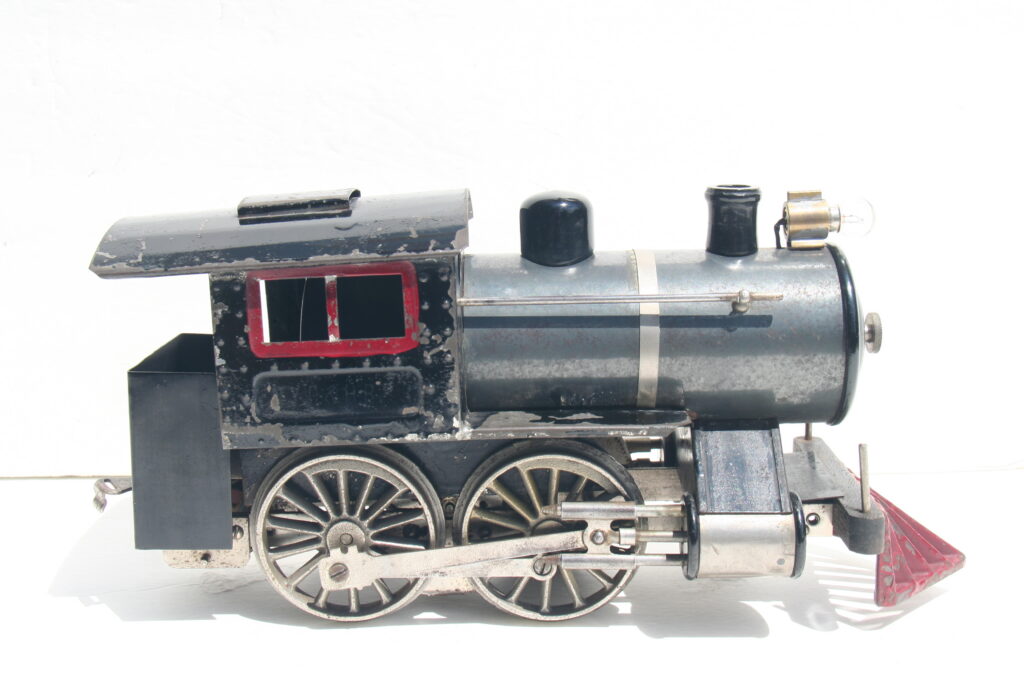
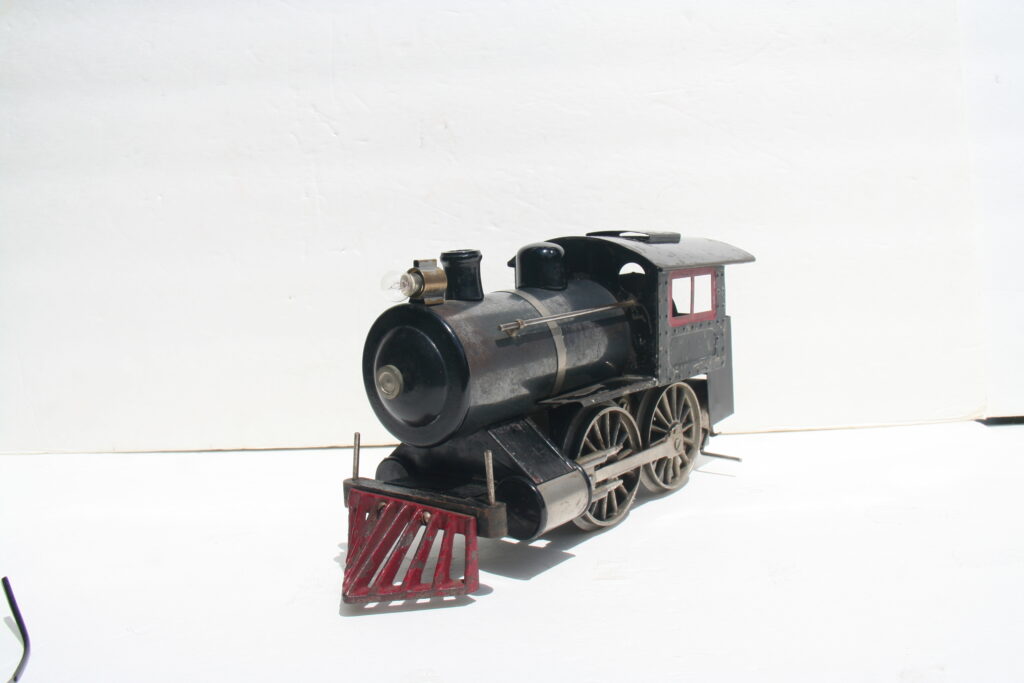
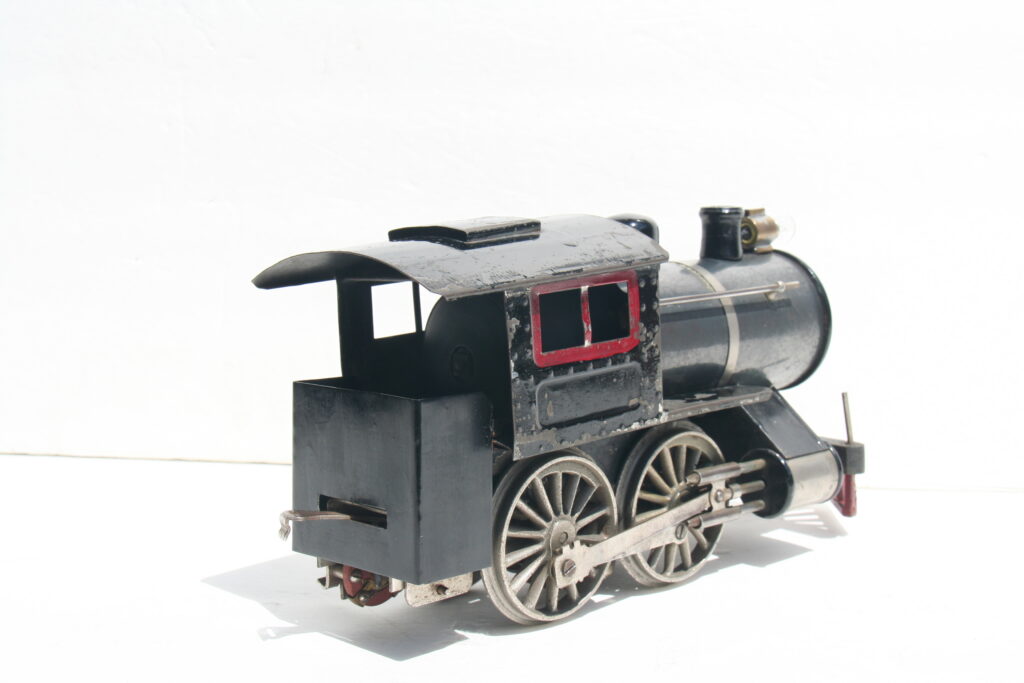
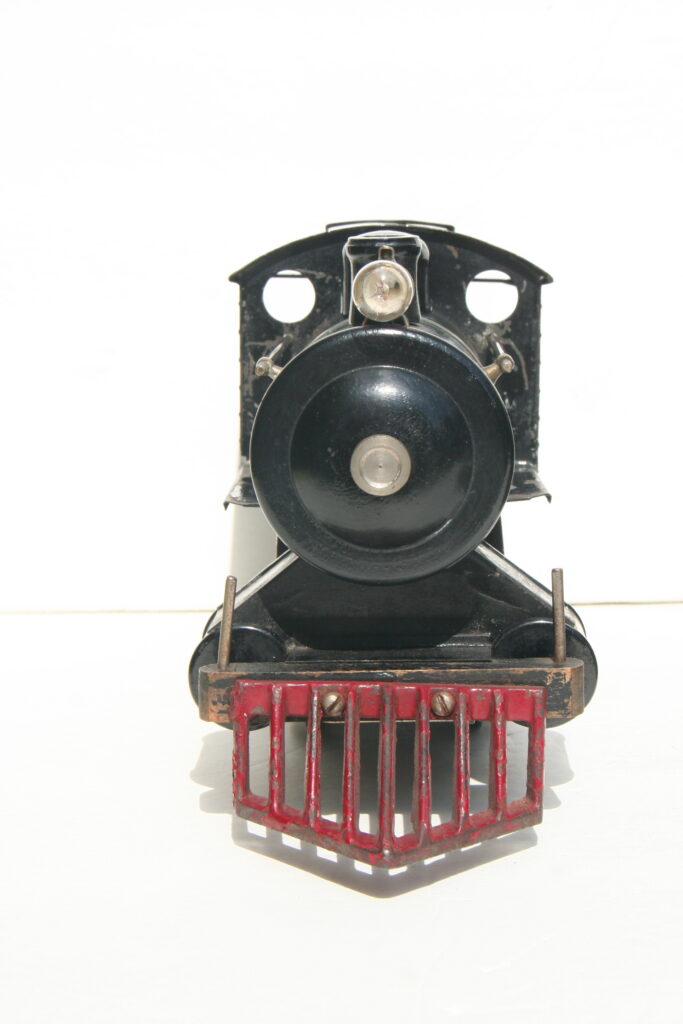
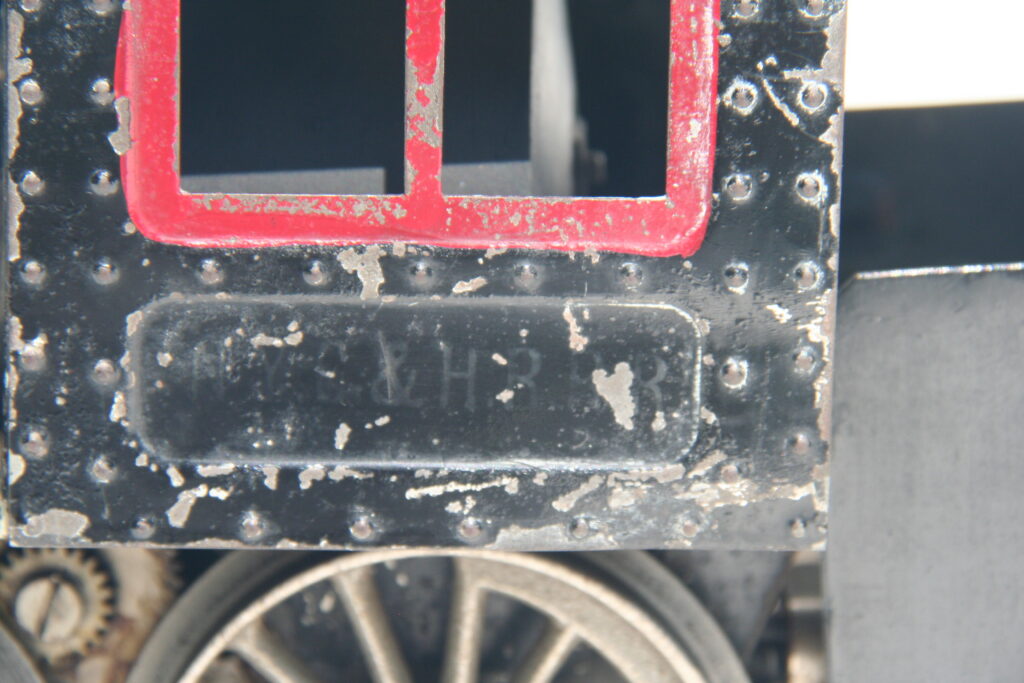
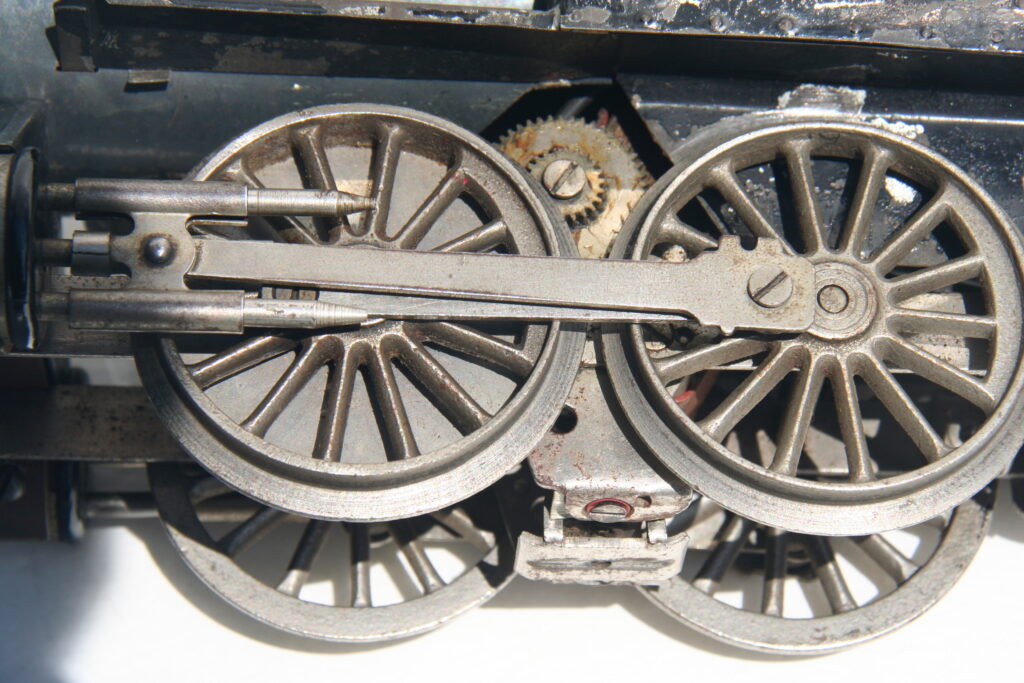
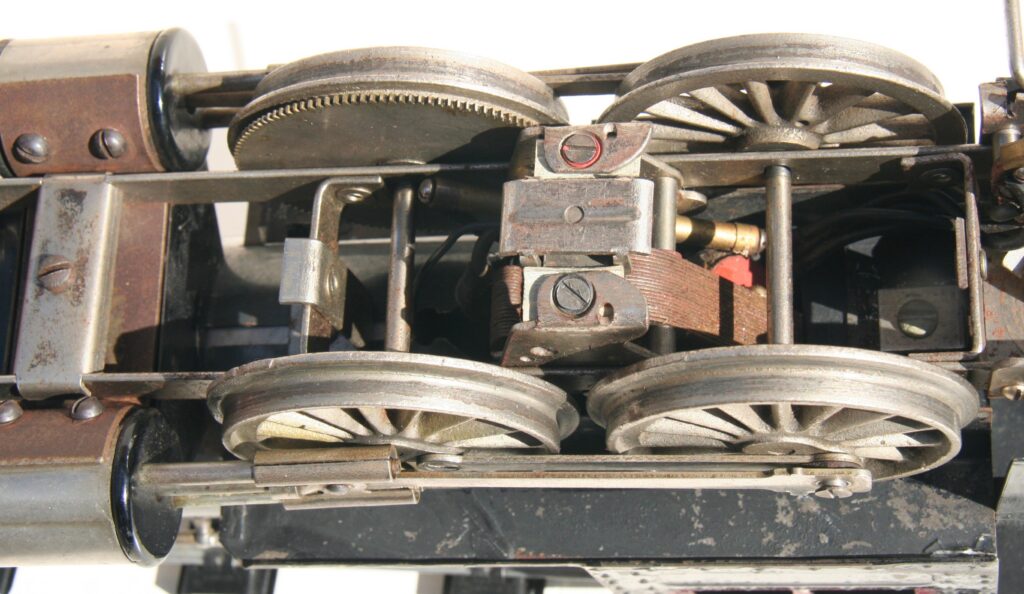
Courtesy of “The Morgan Collection”
NUMBER 6 STEAM LOCOMOTIVE
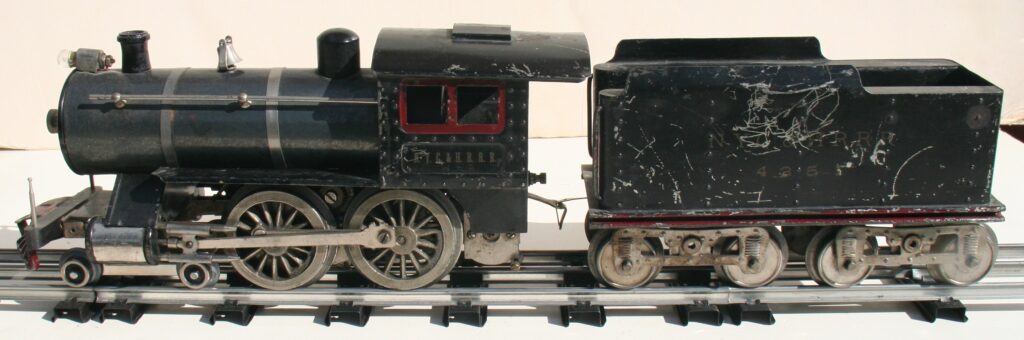
This is a post -1912 number 6, clearly identified by the thick rimmed drivers. Based on the number of laminations on the motor and the strap headlight, it dates to roughly 1918-23.
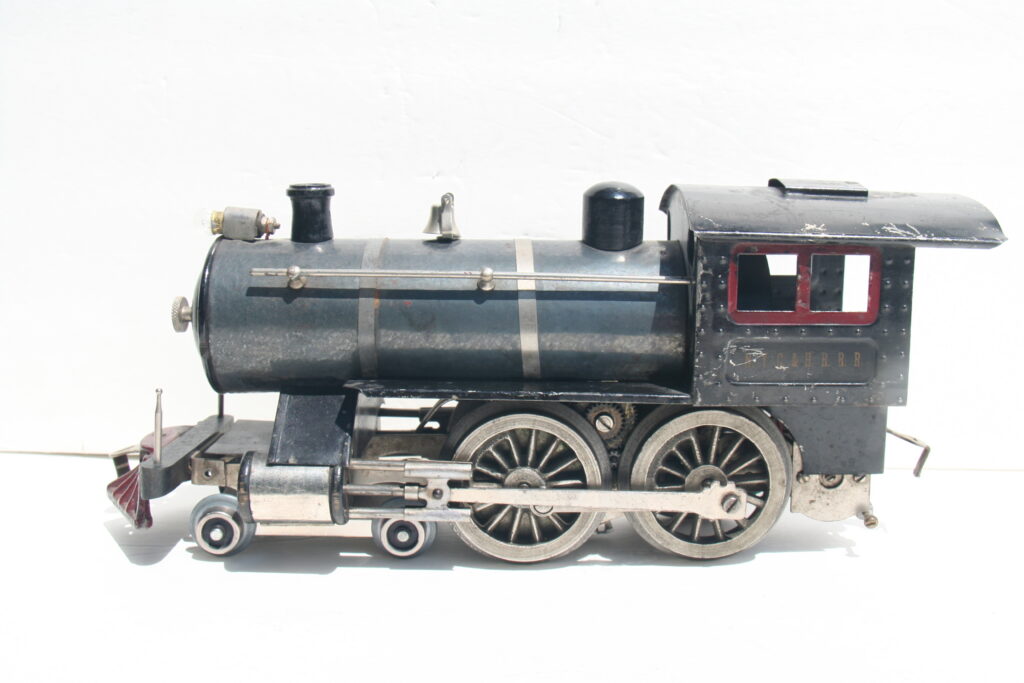
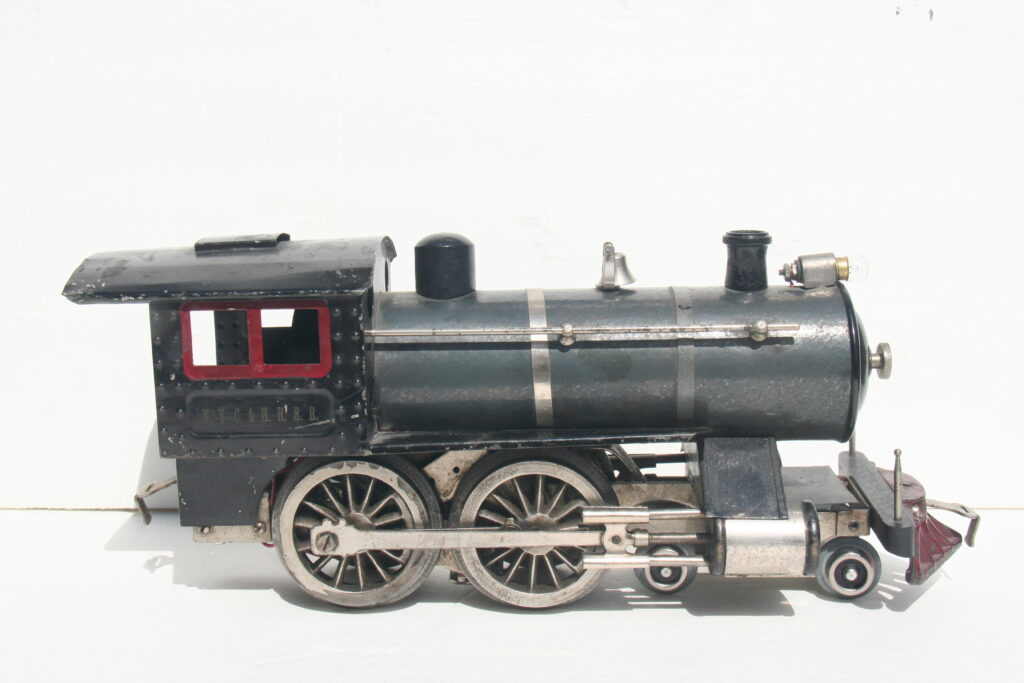
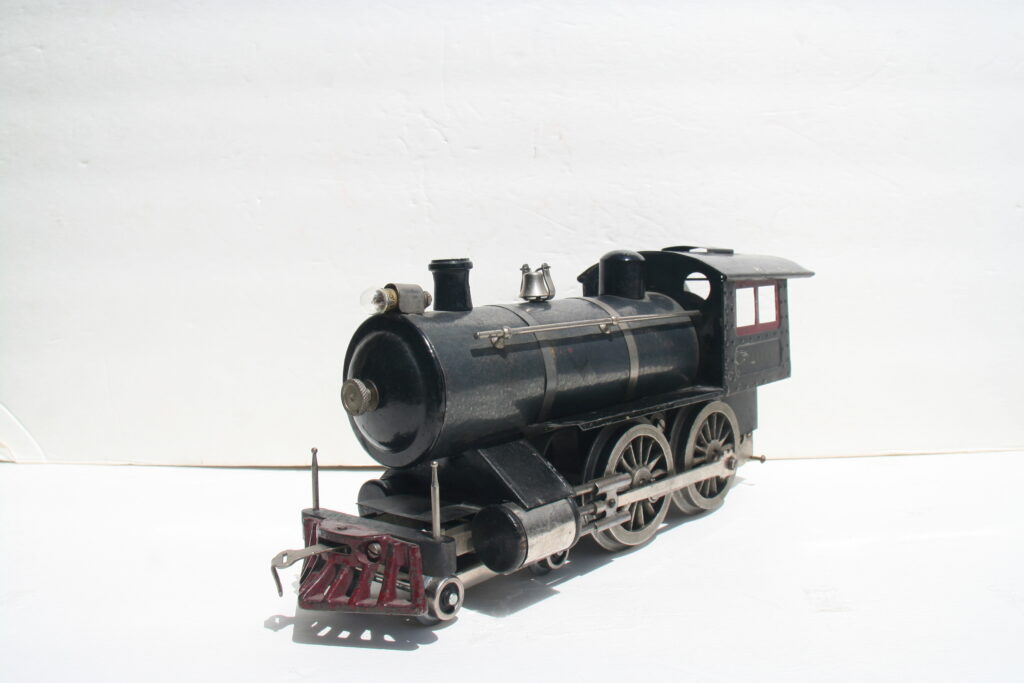
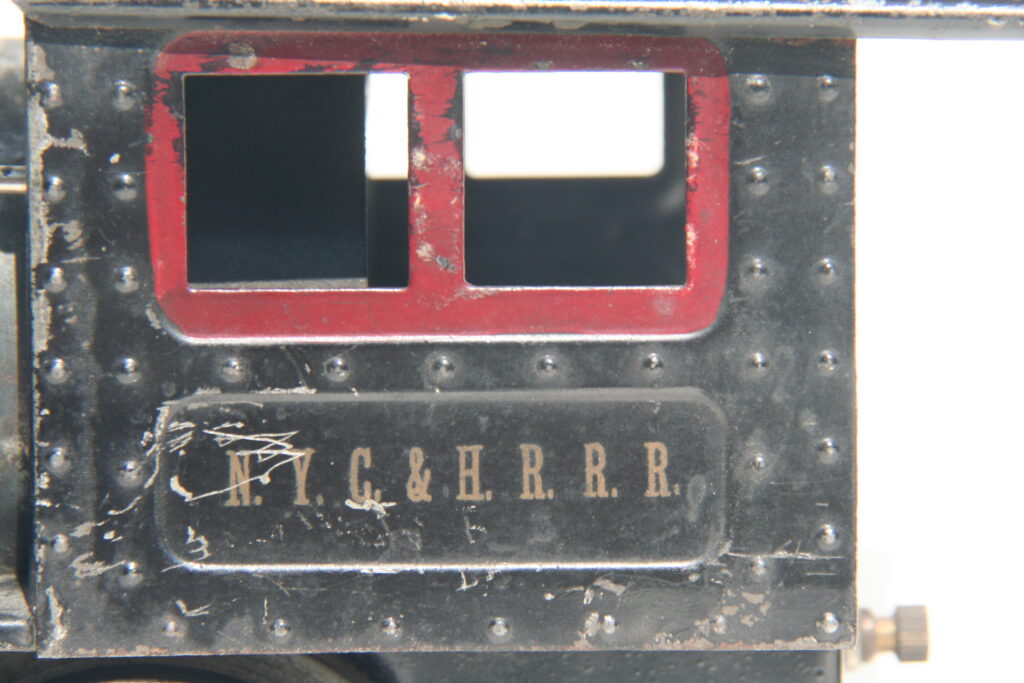
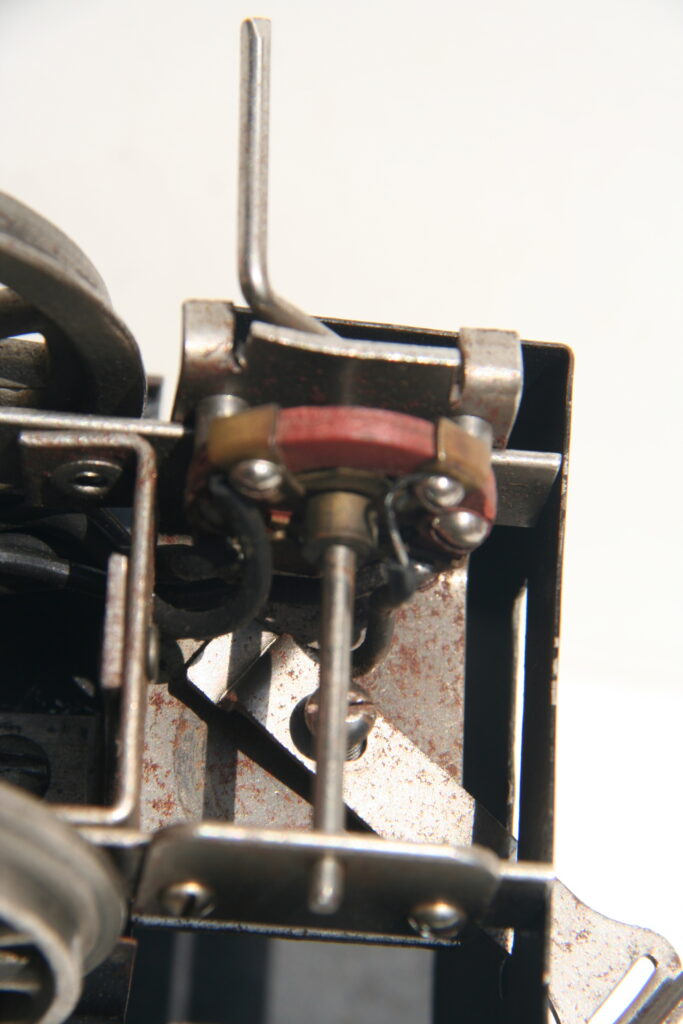
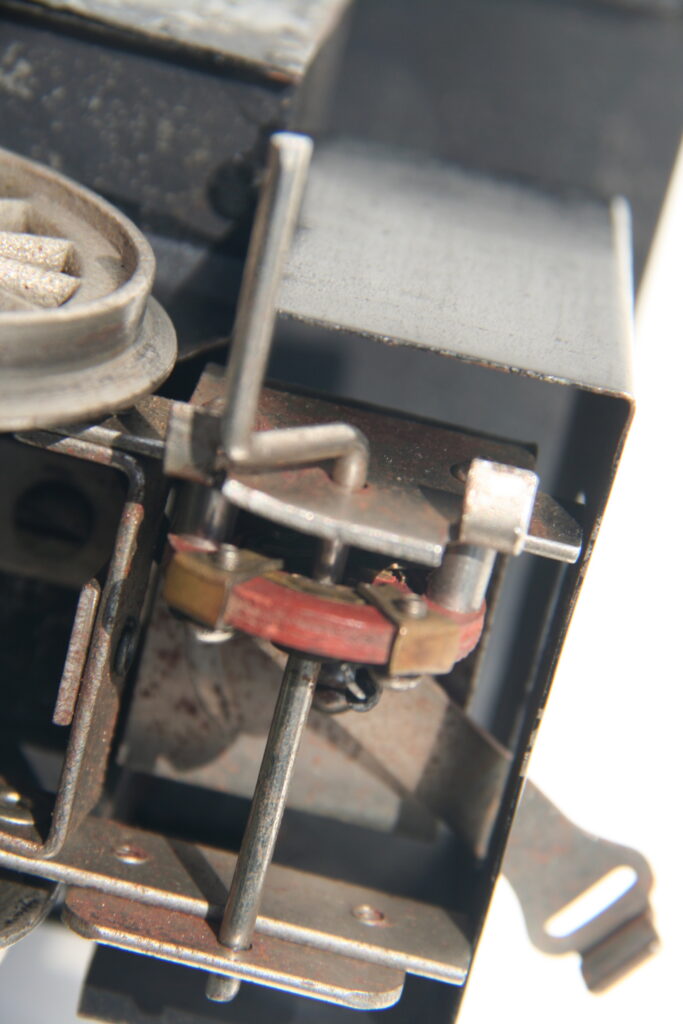
Detailed views of the hand reverse unit. This unit is common to both the number 5 and 6 type engines.
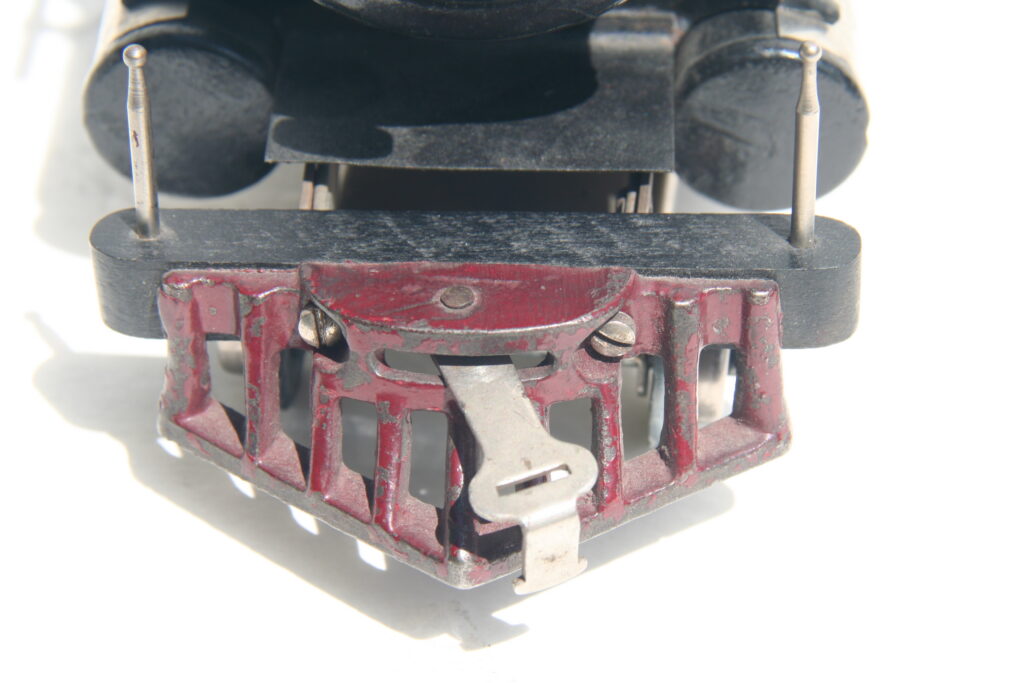
On these early steam locomotives, Lionel used wooden parts for the pilot beam to which the cast iron pilot, or cow catcher was attached, as well as the smokestack and steam. This was common to both the number 5 and the number 6 series of engines.
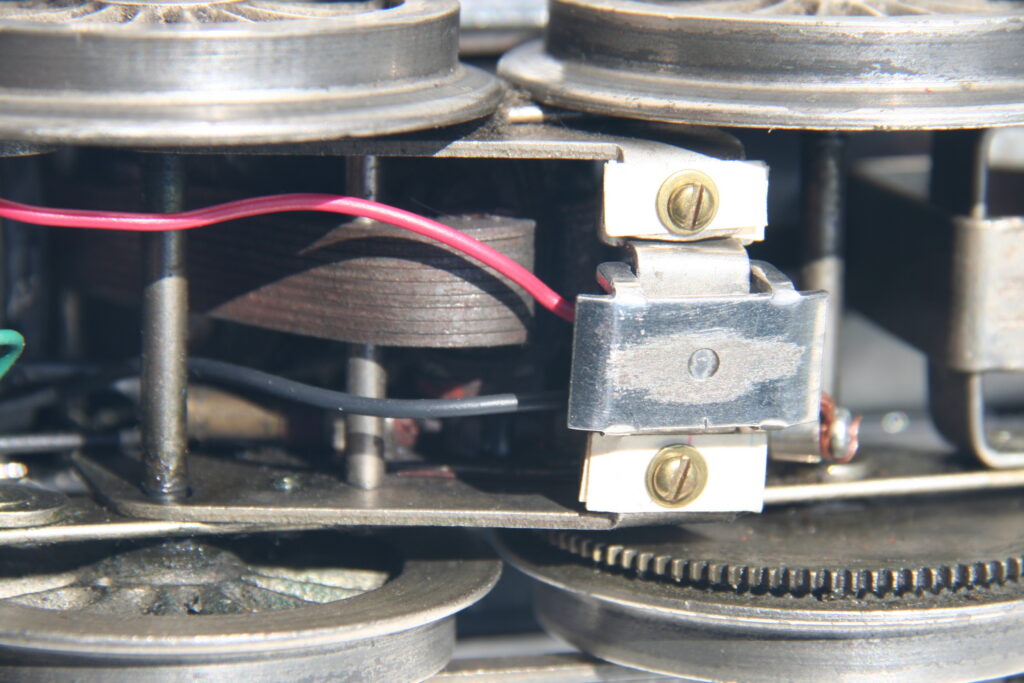
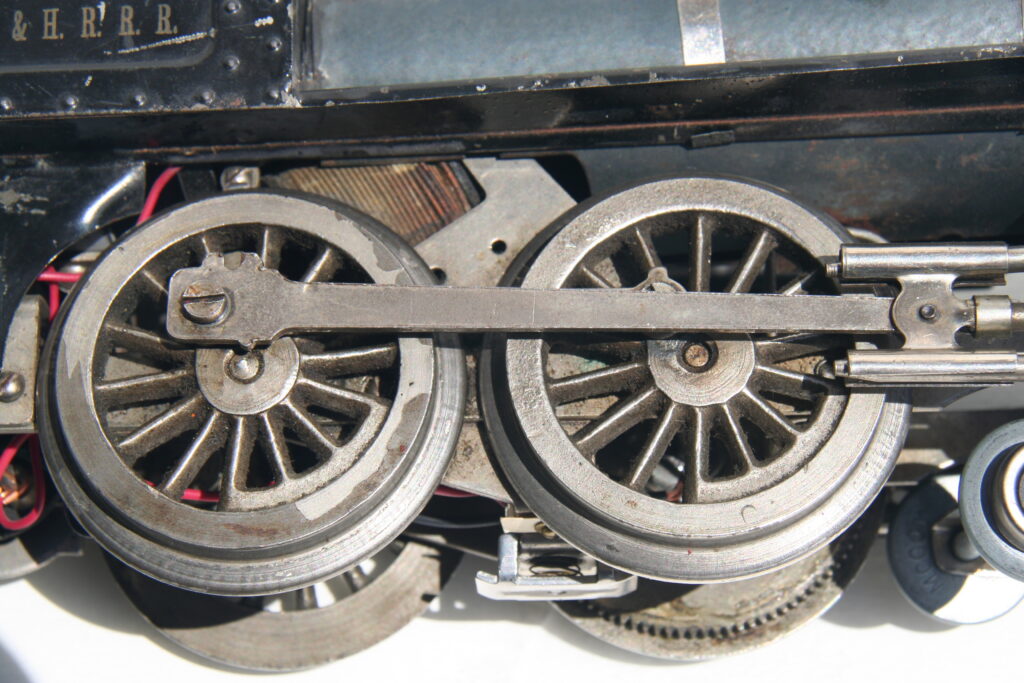
Detailed views of the hand reverse unit. This unit is common to both the number 5 and 6 type engines.
Courtesy of “The Morgan Collection”
WHERE WOULD YOU LIKE TO GO NOW ?