


Lionel “Lionelville” Stations
All information and trains supplied by Russ MacNair unless otherwise noted
Lionel No. 125 Station
General Information
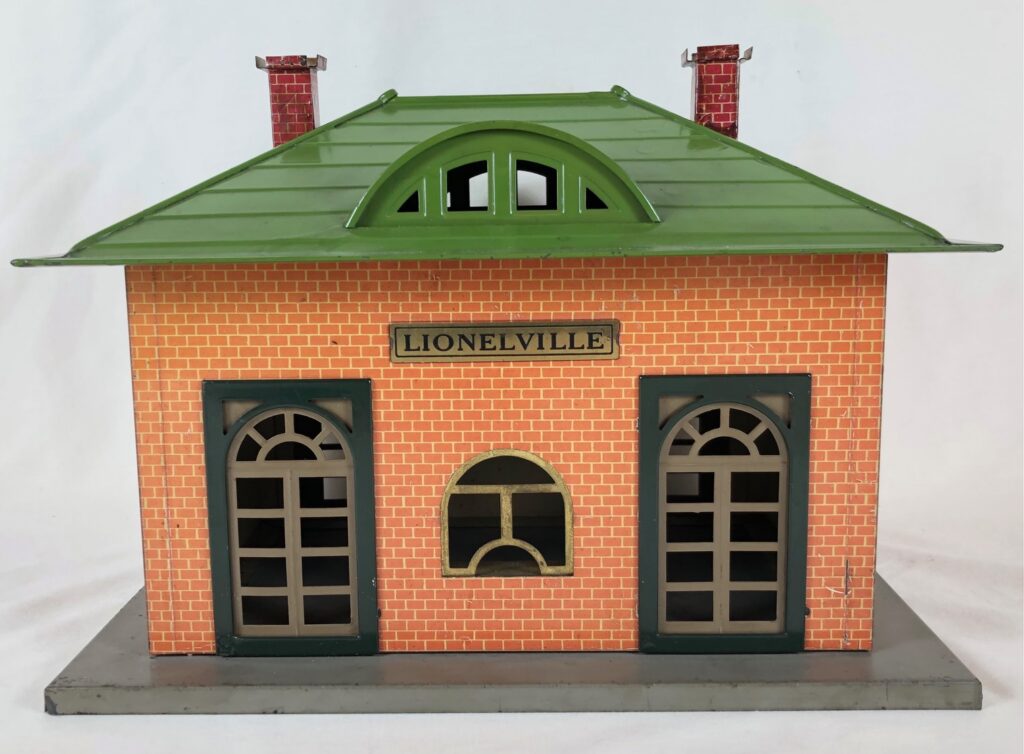
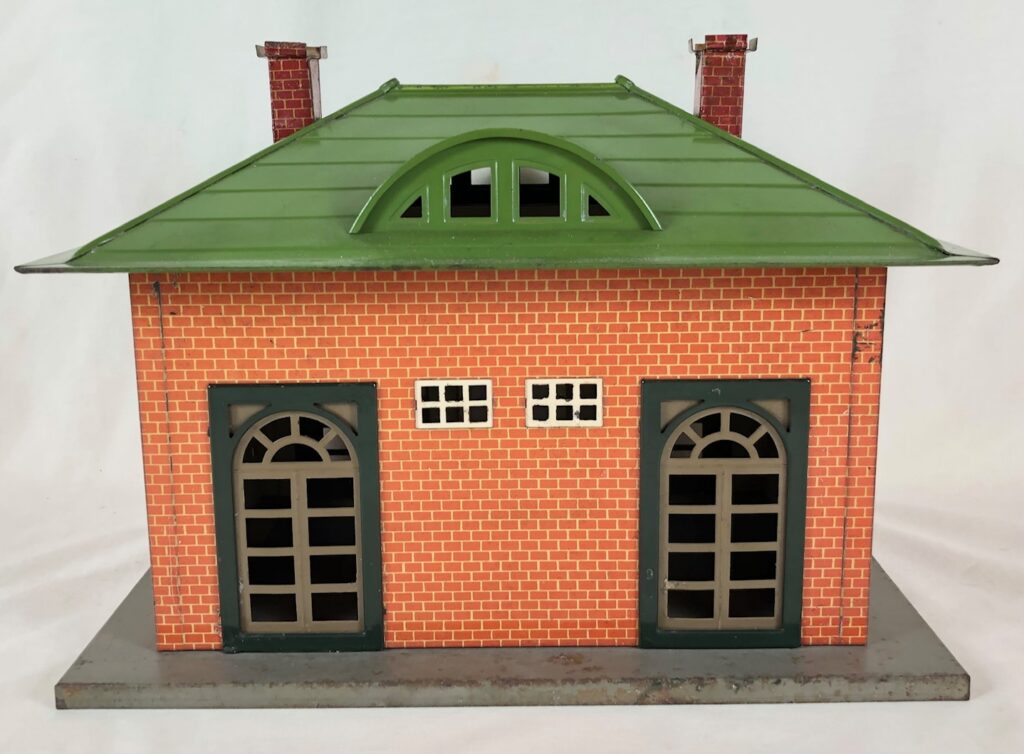
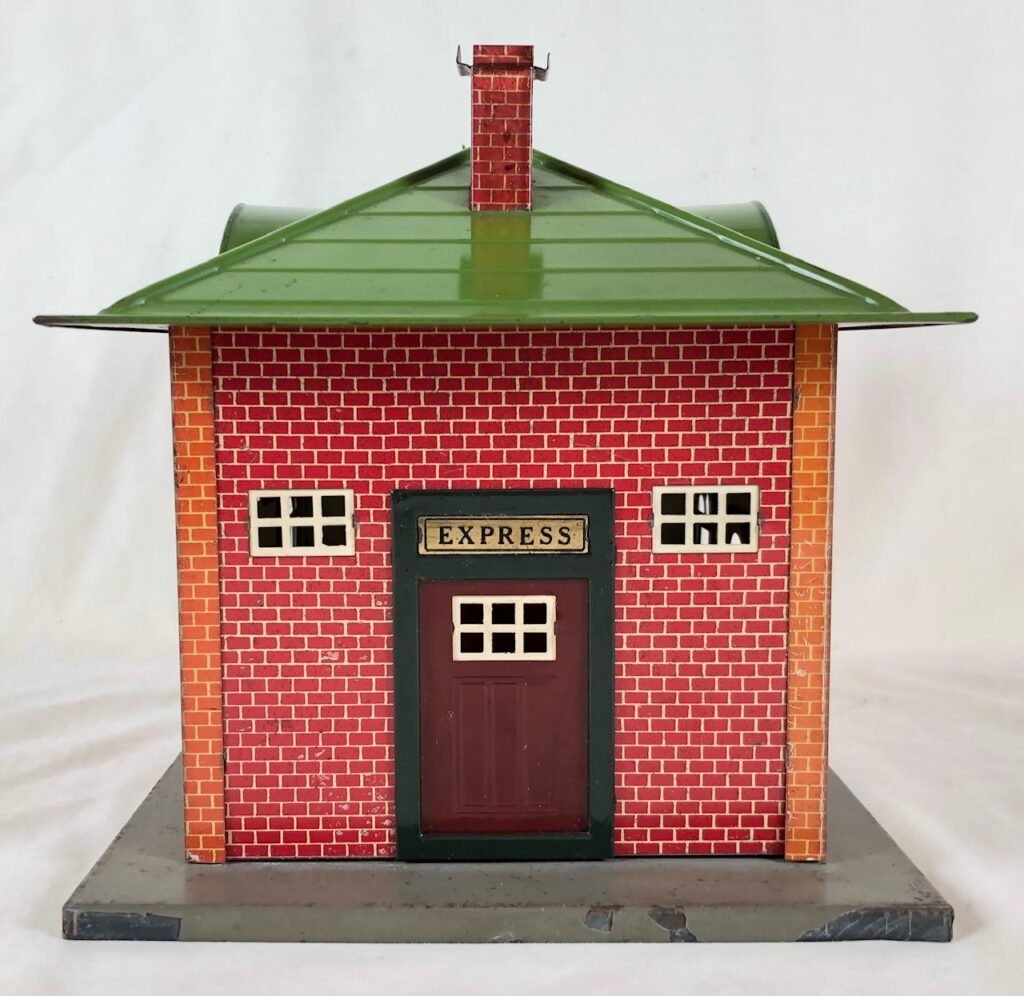
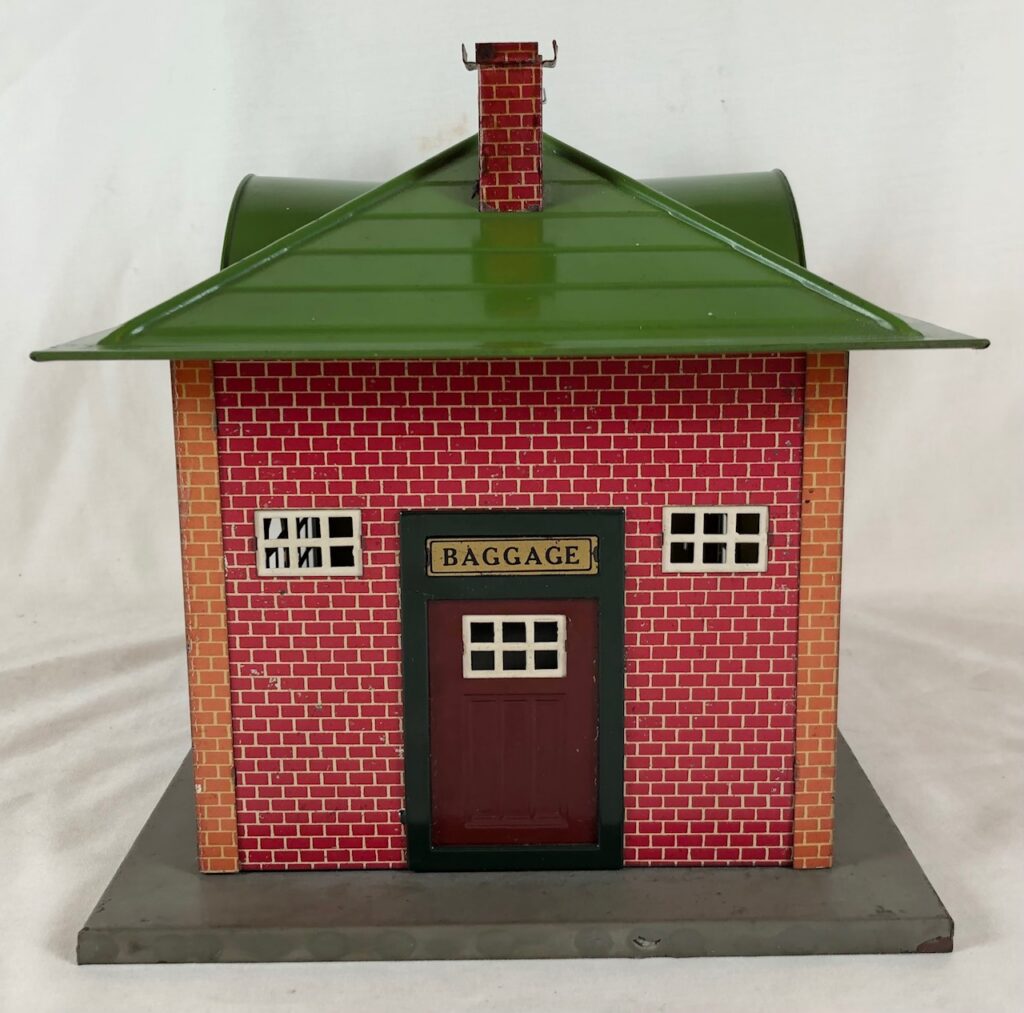
The Lionel No. 125 “Lionelville” Station was introduced in 1923 and was cataloged through 1925. The No. 125 Station is constructed of steel with a base and four-sided peaked roof with two arched dormers and two chimneys. The front and rear walls of the station have two arched doors. The front wall has a brass ticket window between the doors and the rear wall has two small windows between the doors. The two side walls have a baggage door in the center with two small windows on either side of the door. There is a brass plate with “Lionelville” above the ticket window. There is also a brass plate with “Express” above one baggage door and a brass plate with “Baggage” above the other.
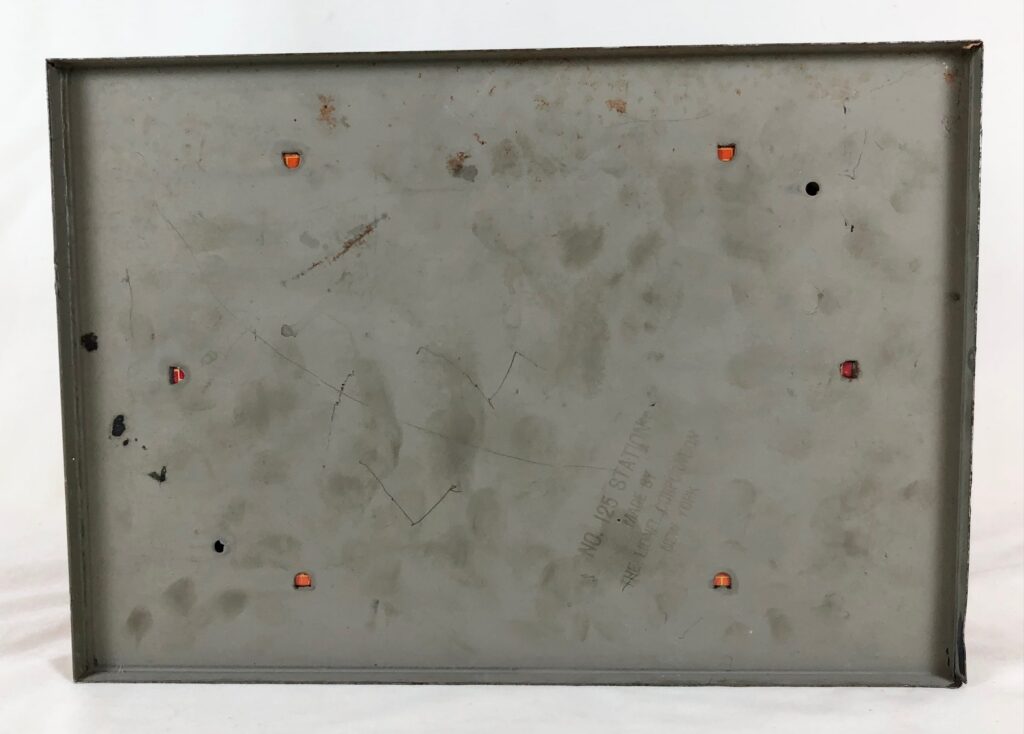
The No. 125 Station has red brick lithographed walls, dark Mojave base, pea green roof, red lithographed chimneys, Mojave front and rear doors, maroon side doors, dark green door trim and ivory window inserts. The color of the brick lithography varies from orange red to dark red. The No. 125 Station is not illuminated. The underside of the station is stamped “No. 125 Station – Made by the Lionel Corporation, New York” in black. The base of the station measures 10-inches wide by 7-inches deep and the height of the station is 7 1/4-inches.
There are no variations of the No. 125 Station.
Lionel No. 125 “Lionelville” Station
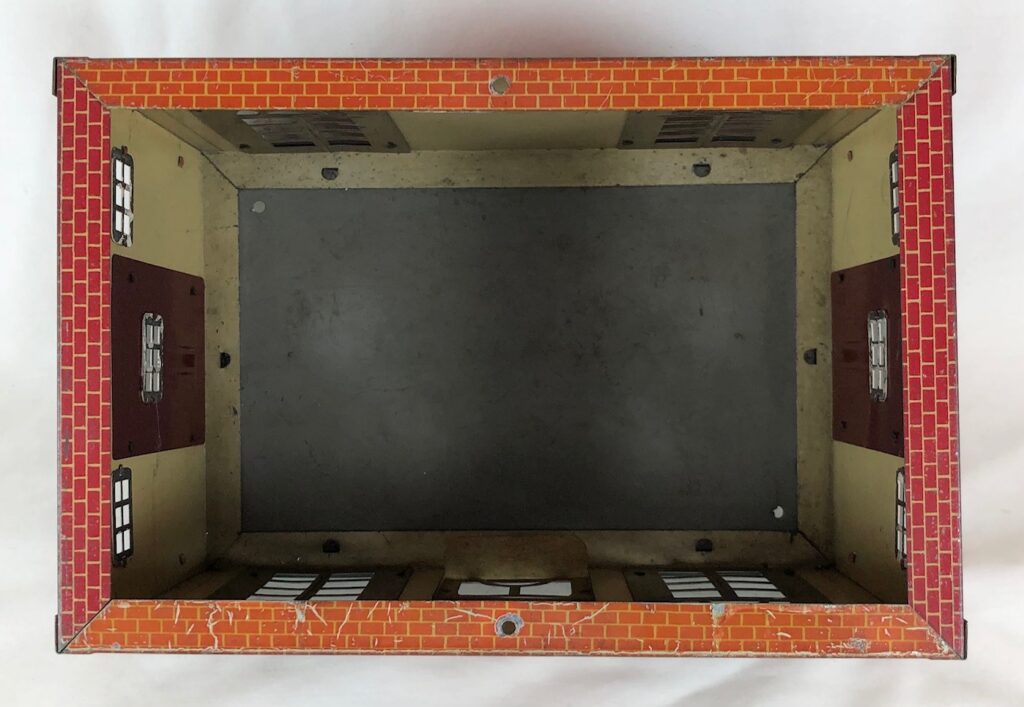
2. Interior of No. 125 Station
1. No. 125 Station with red litho walls, dark Mojave base, pea green roof, red litho chimneys, Mojave front and rear doors, maroon side doors, dark green door trim and ivory window inserts. The station has a brass ticket window and brass plates with black lettering.
2. Interior of No. 125 Station
Lionel No. 126 Station
General Information
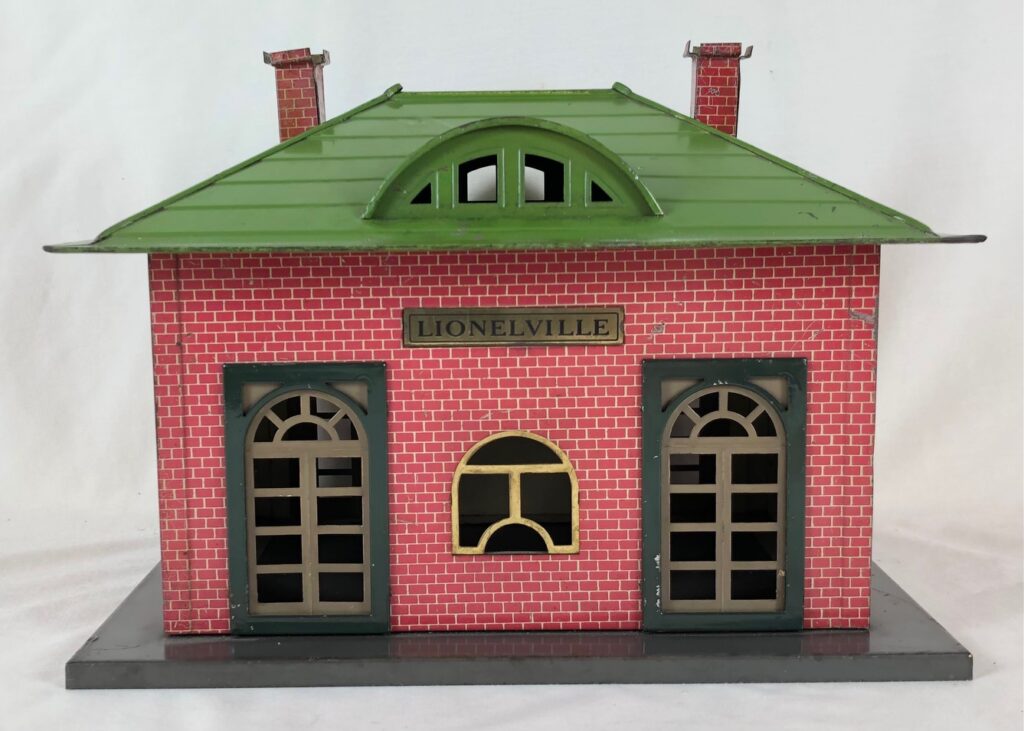
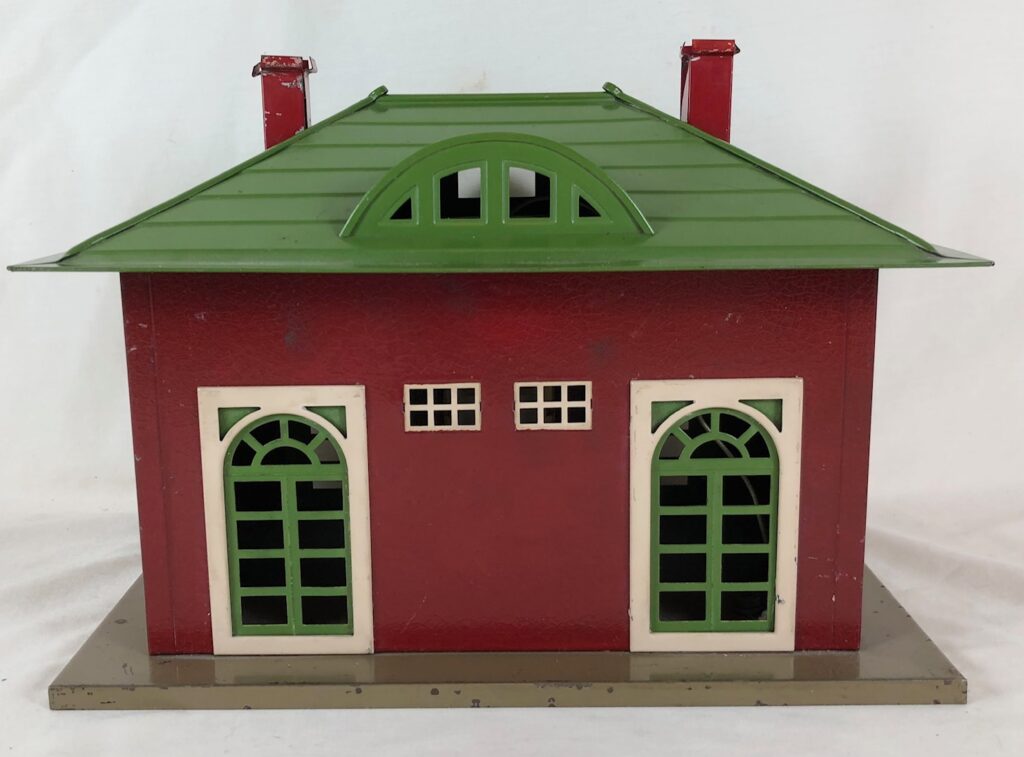
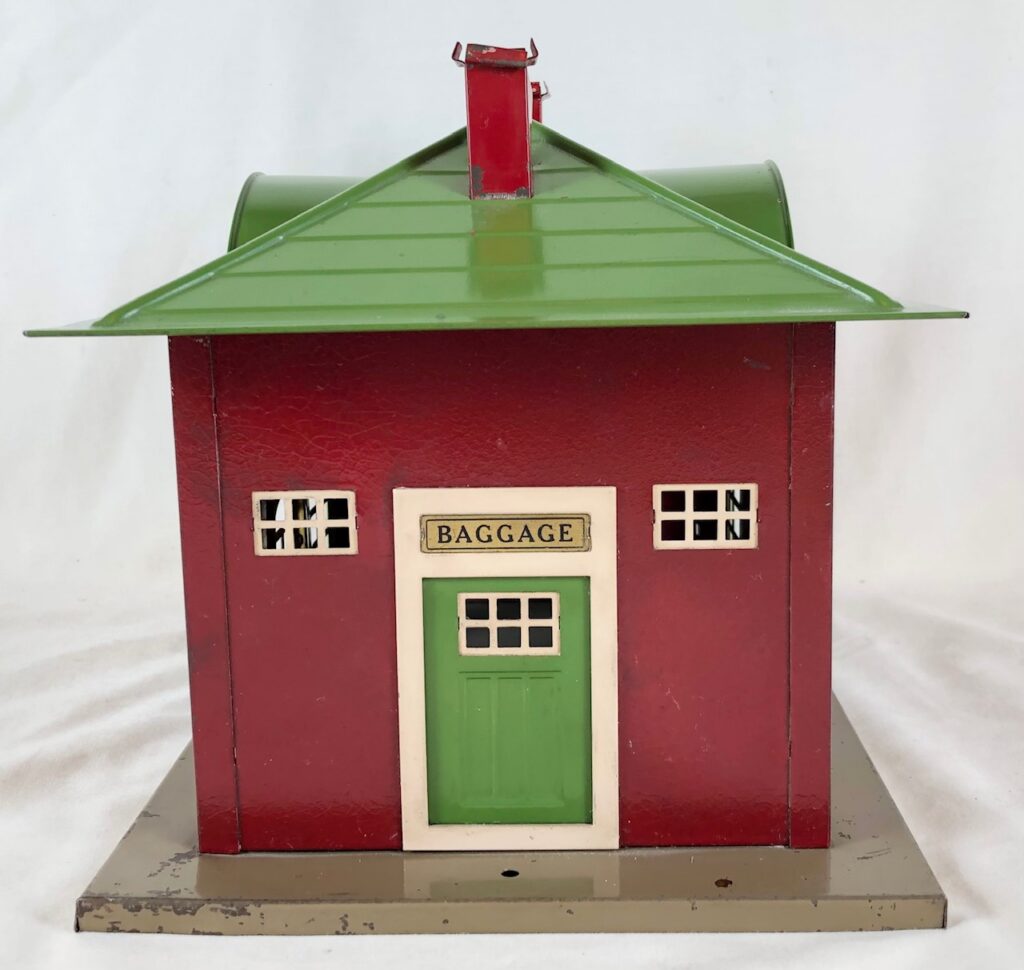
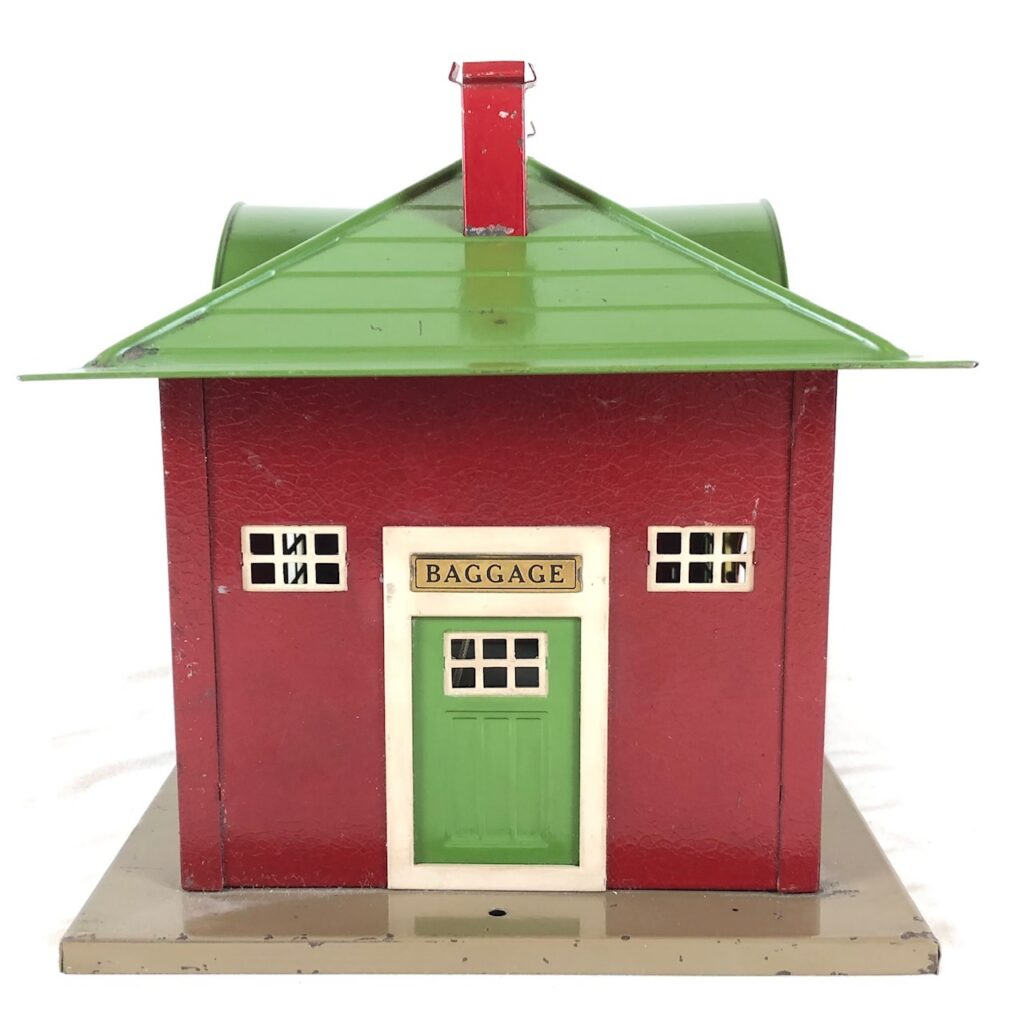
The Lionel No. 126 “Lionelville” Station was introduced in 1923 and was cataloged through 1936. The No. 126 Station is constructed of steel with a base and four-sided peaked roof with two arched dormers and two chimneys. The front and rear walls of the station have two arched doors. The front wall has a brass or painted ticket window between the doors and the rear wall has two small windows between the doors. The two side walls have a baggage door in the center with two small windows on either side of the door. There is a brass plate with “Lionelville” above the ticket window. There is also a brass plate with “Express” above one baggage door and a brass plate with “Baggage” above the other. Later No. 126 Stations have nickel plates. The lettering on the nickel plates can be black or red.
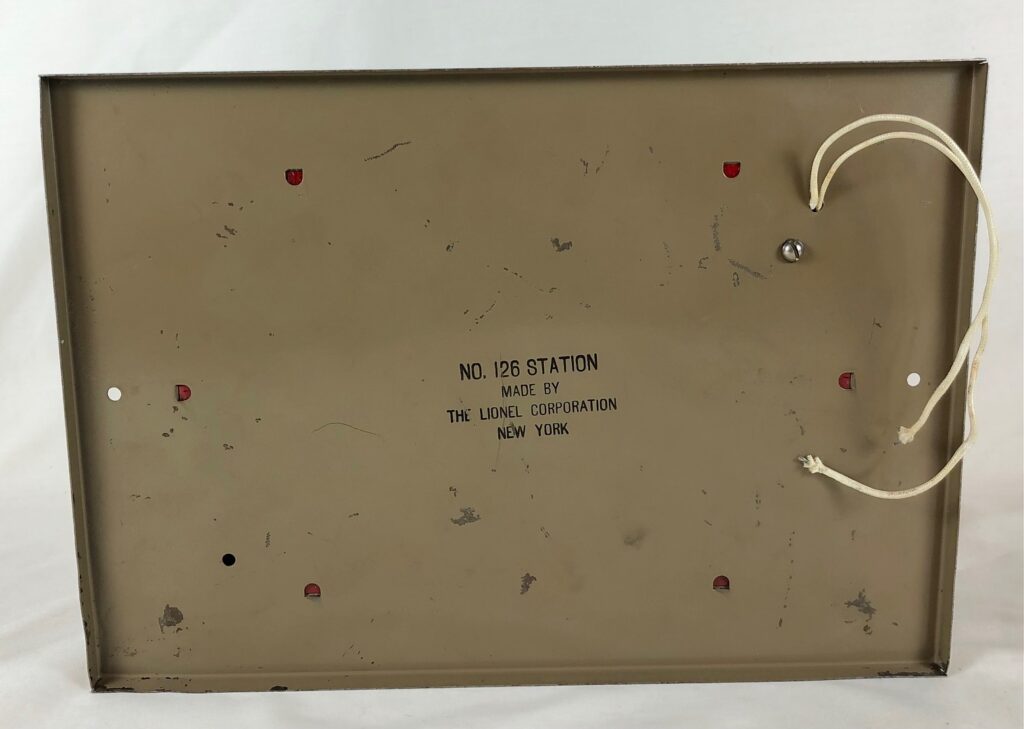
The No. 126 Station is identical to the No. 125 Station except that it is illuminated. The No. 126 Station has red brick lithographed or enameled walls and chimneys. The color of the brick lithography varies from orange red to dark red. The base, roof, doors, front and side doors, door trim and window trim are painted various colors. The underside of the station is stamped “No. 126 Station – Made by the Lionel Corporation, New York” in black. The base of the station measures 10-inches wide by 7-inches deep and the height of the station is 7 1/4-inches.
There are several variations of the No. 126 Station.
Lionel No. 126 “Lionelville” Station
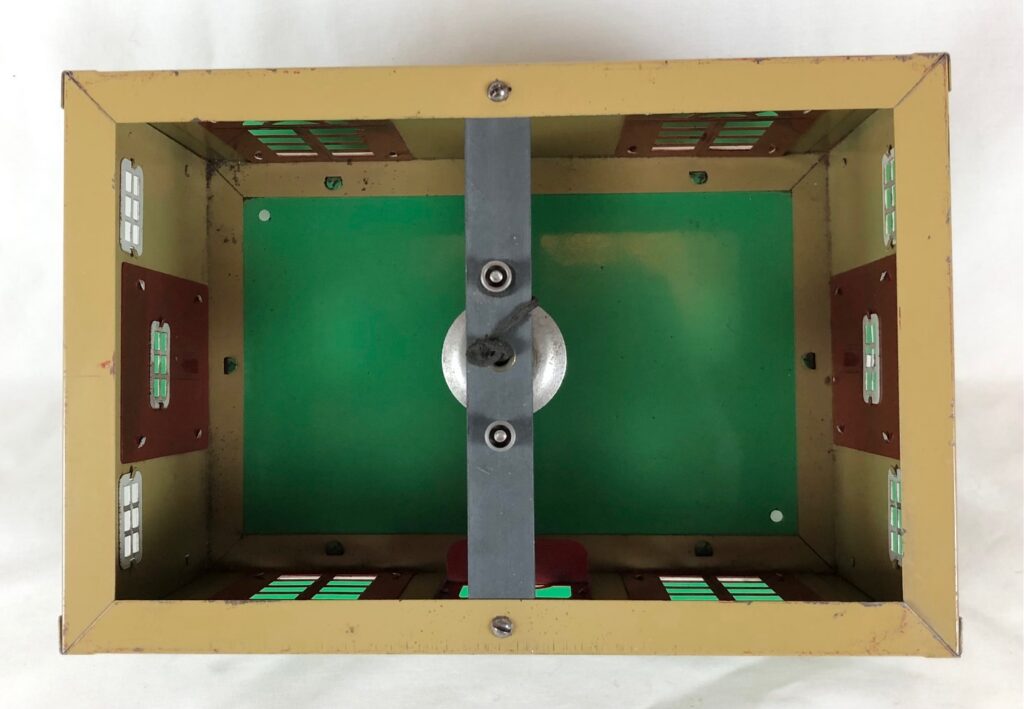
4. Interior of No. 126 Station
1. No. 126 Station with red litho walls, dark gray base, pea green roof, red litho chimneys, Mojave front and rear doors, maroon side doors, dark green door trim and ivory window inserts. The station has a brass ticket window and brass plates with black lettering.
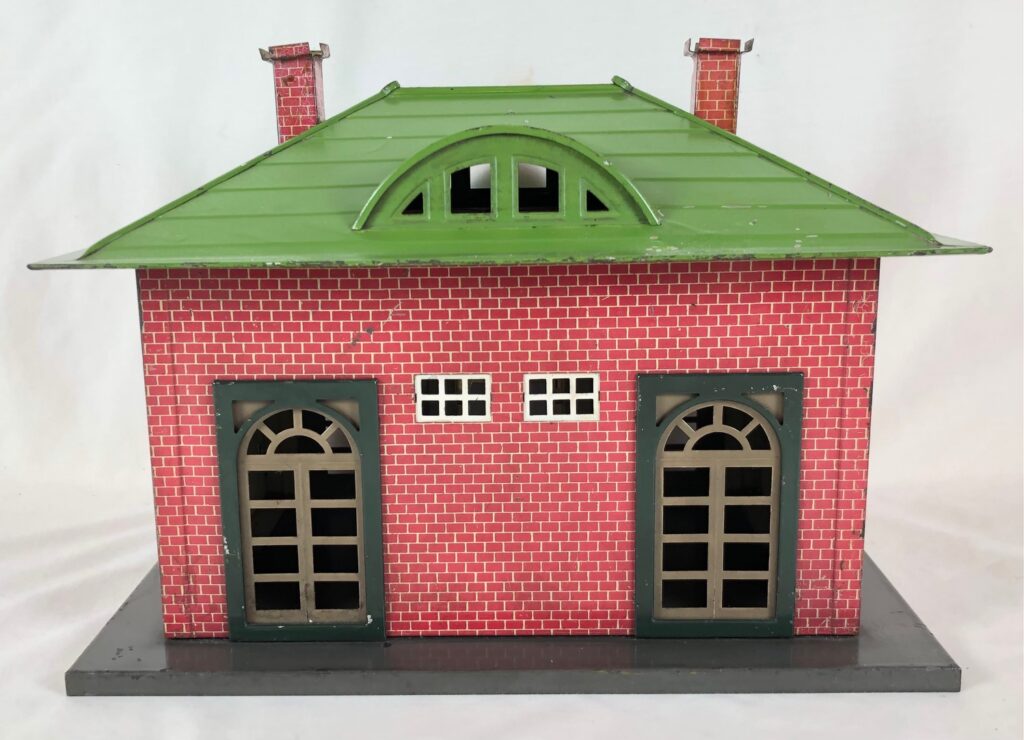
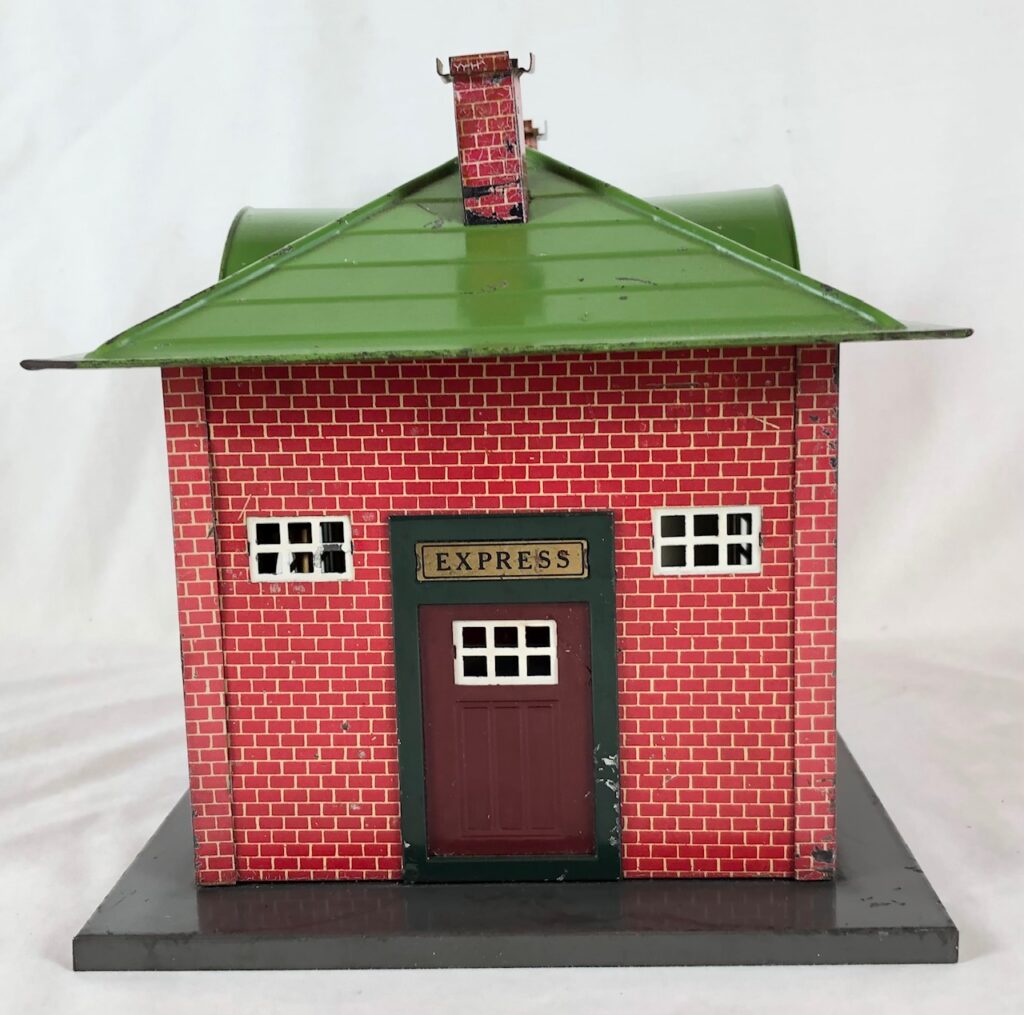
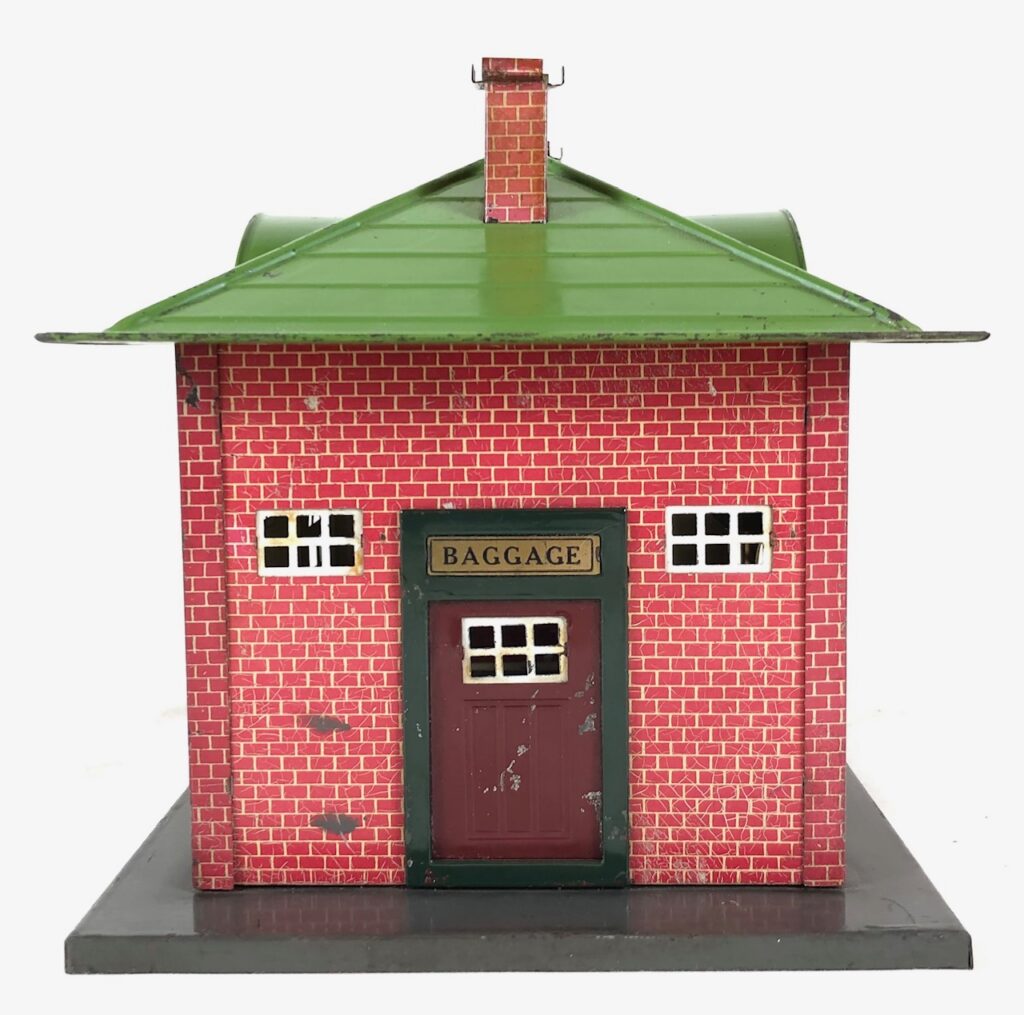
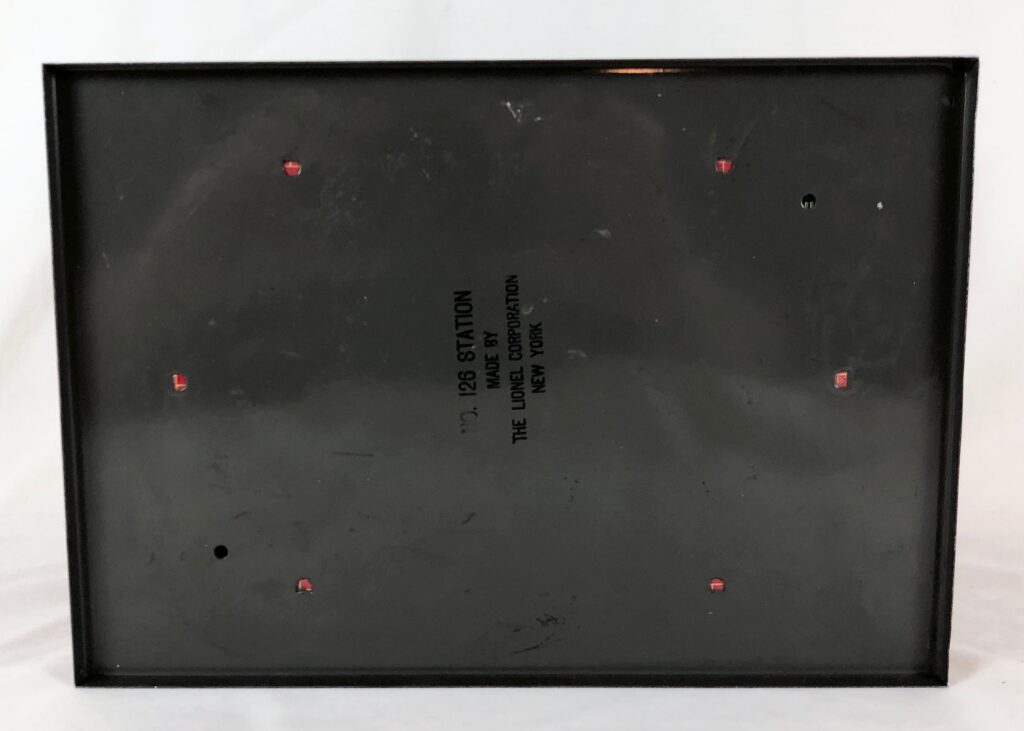
2. No. 126 Station with dark red crackle walls, dark Mojave base, pea green roof, dark red chimneys, pea green front, rear and side doors, cream door trim and cream window inserts. The station has a brass ticket window and brass plates with black lettering. This station has two “Baggage” plates.
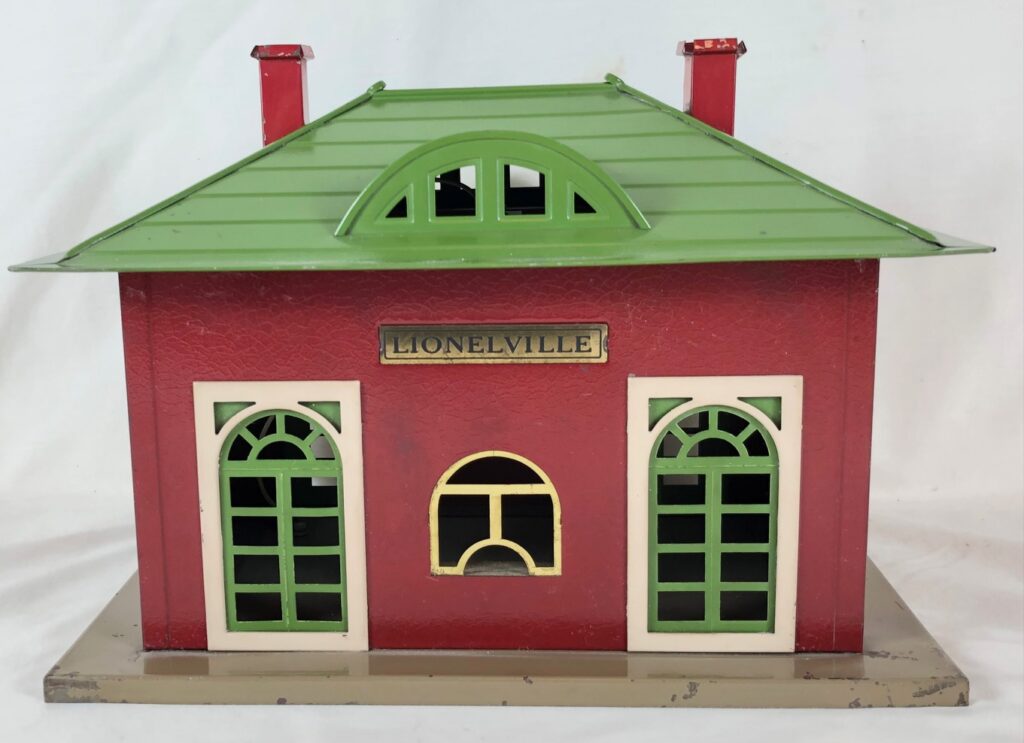
3. No. 126 Station with mustard walls, bright green base, red roof, mustard chimneys, red front, rear and side doors, cream door trim and cream window inserts. The station has a red ticket window and nickel plates with black lettering. The “Baggage” plate on this station has red lettering.
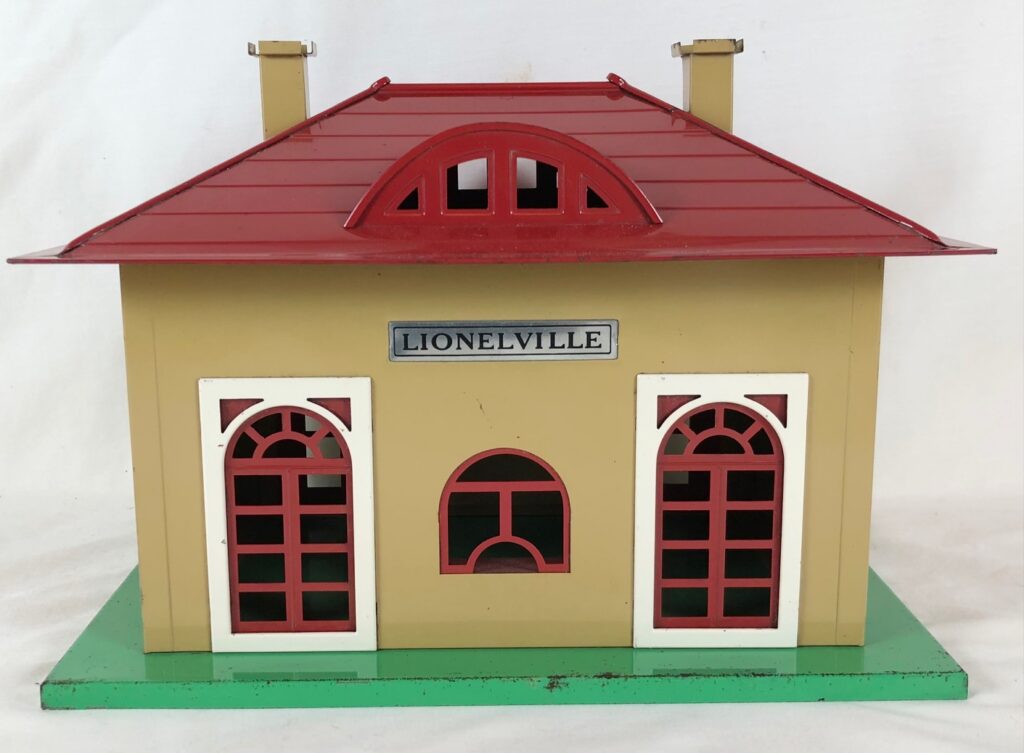
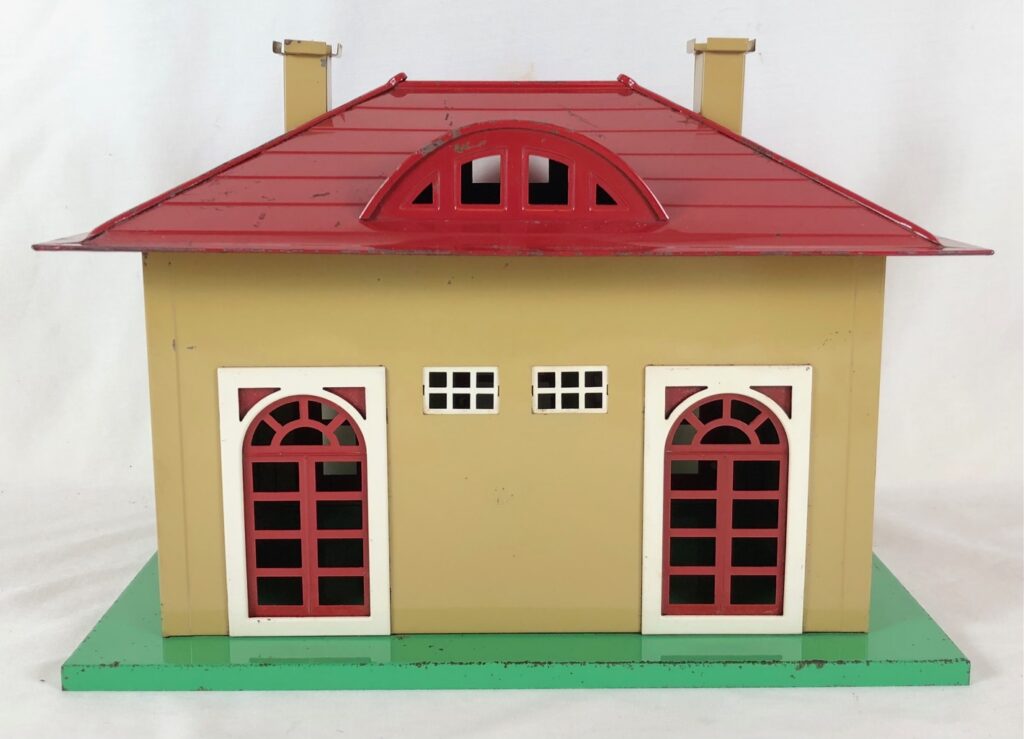
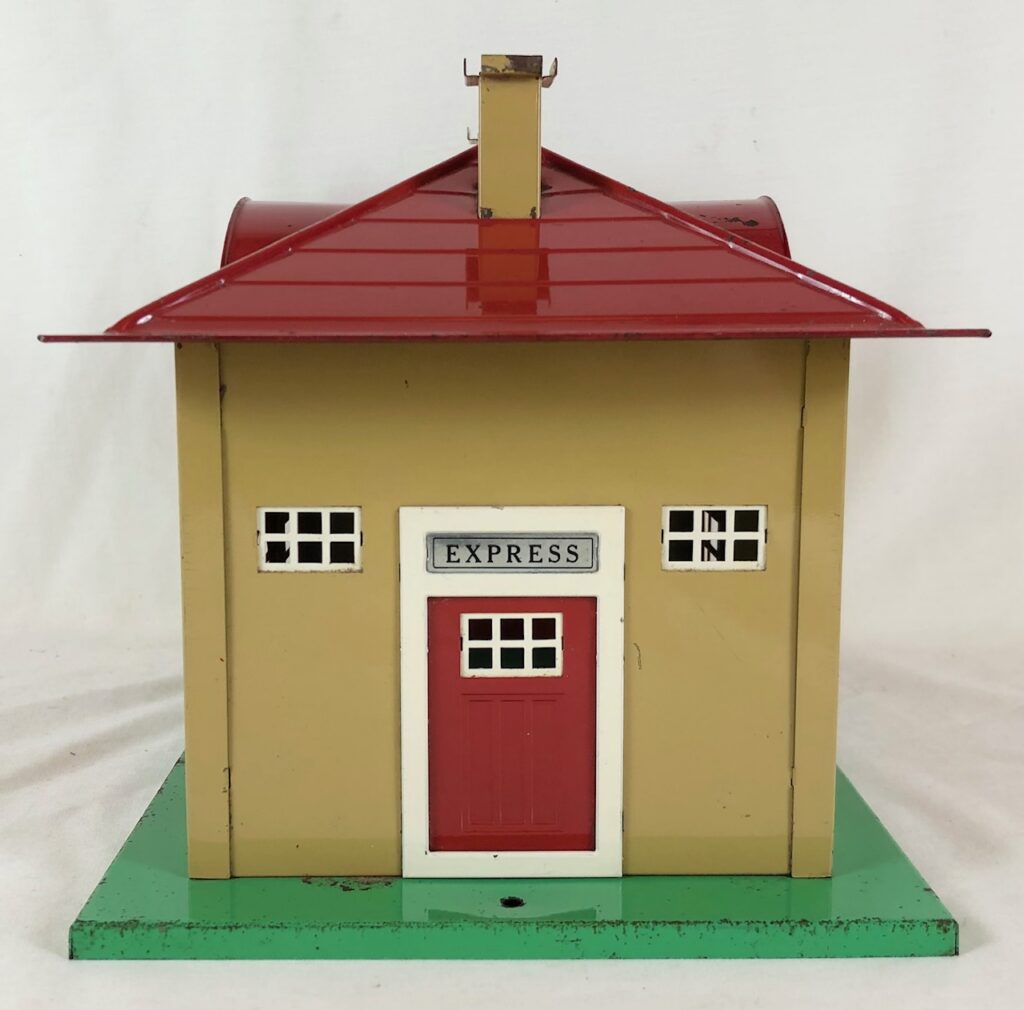
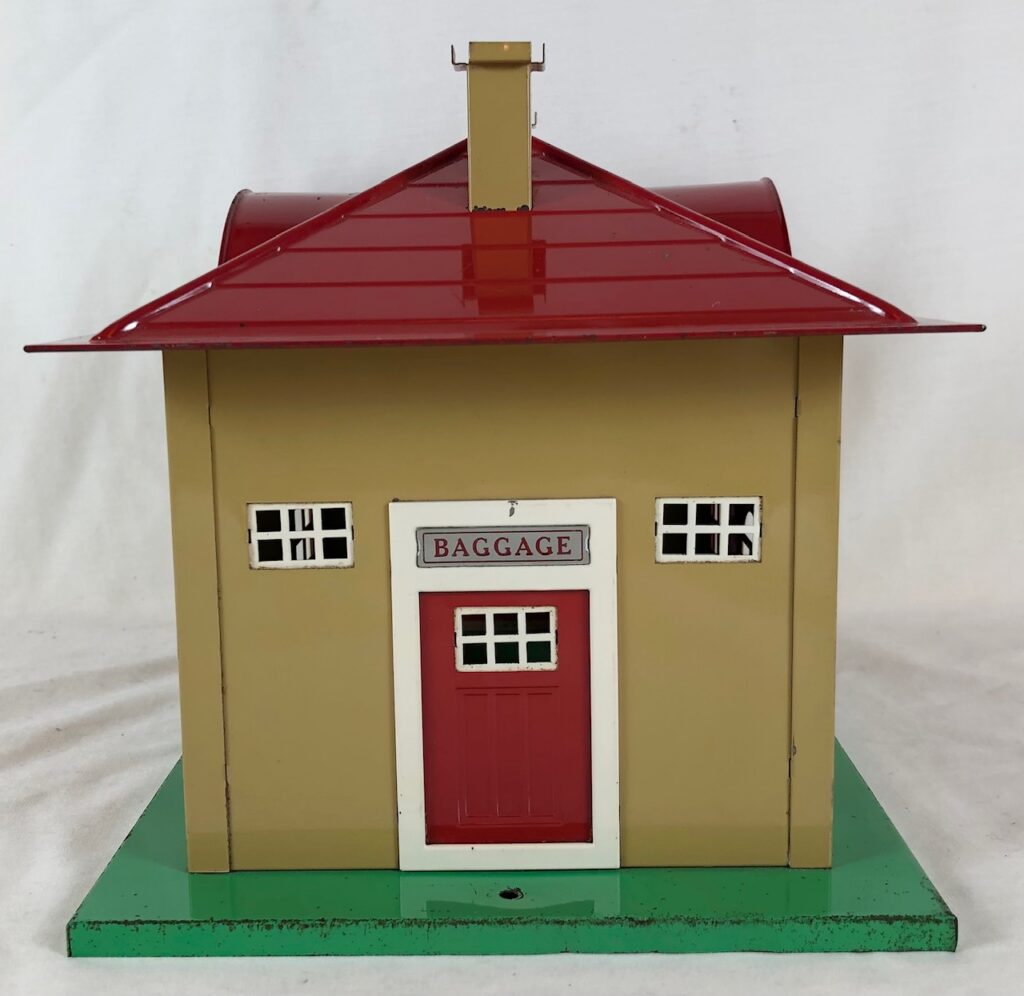
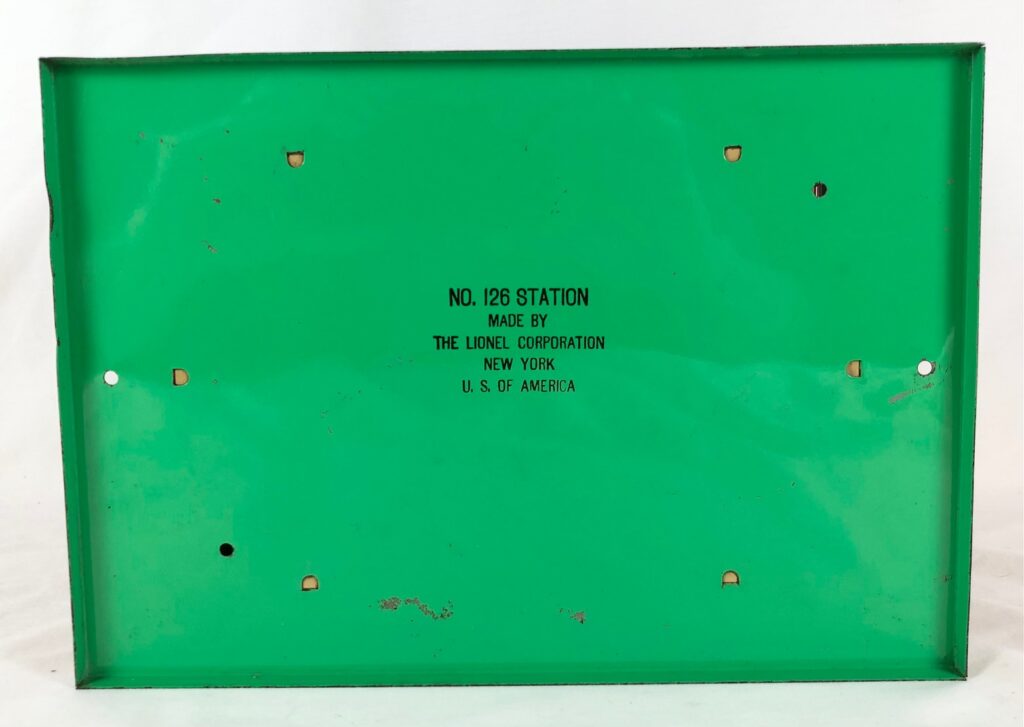
4. Interior of No. 126 Station
Lionel No. 136 Station
General Information
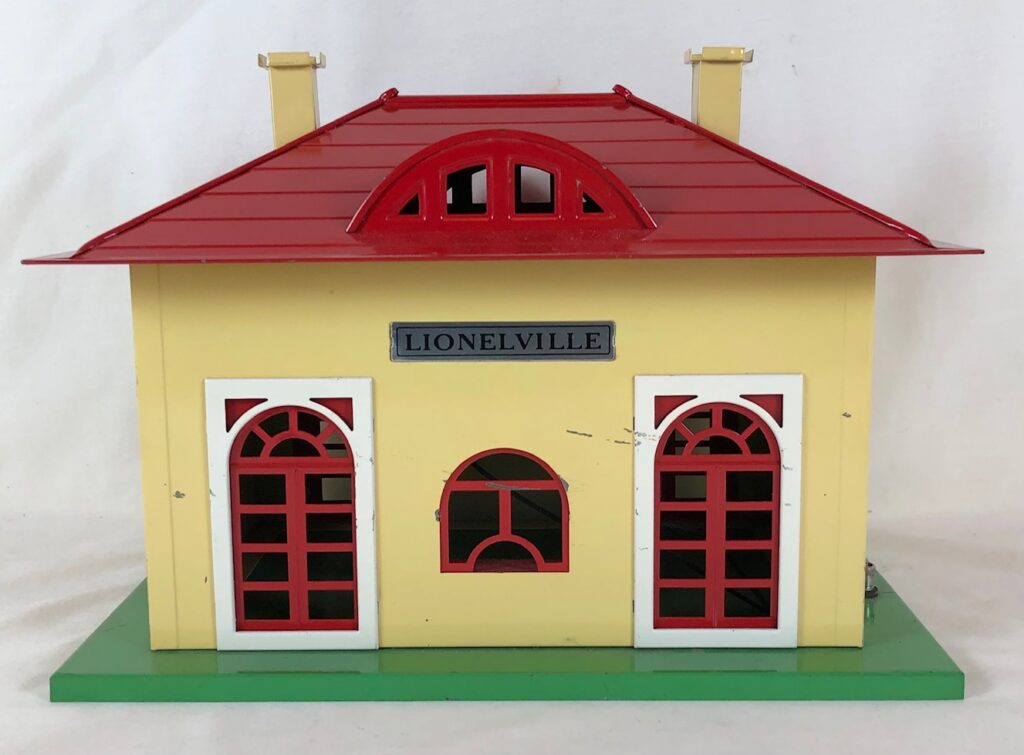
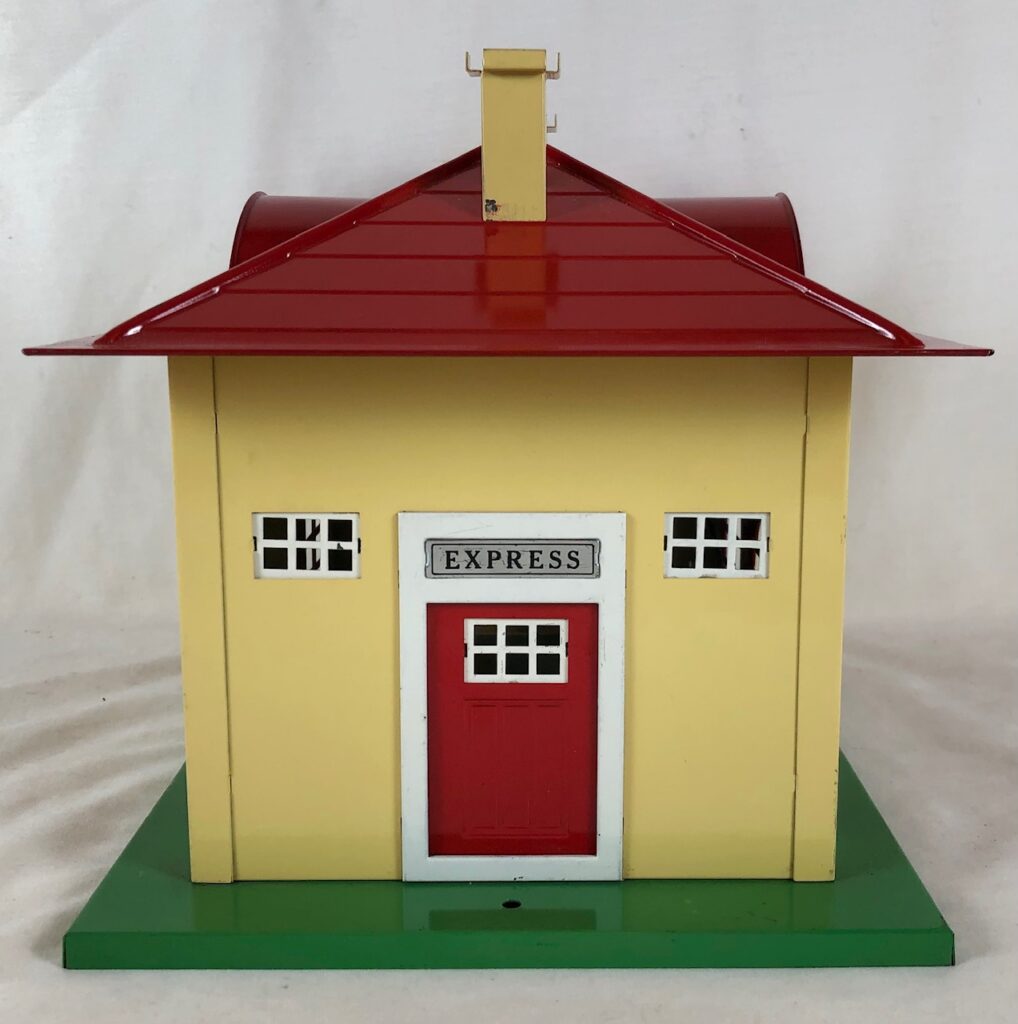
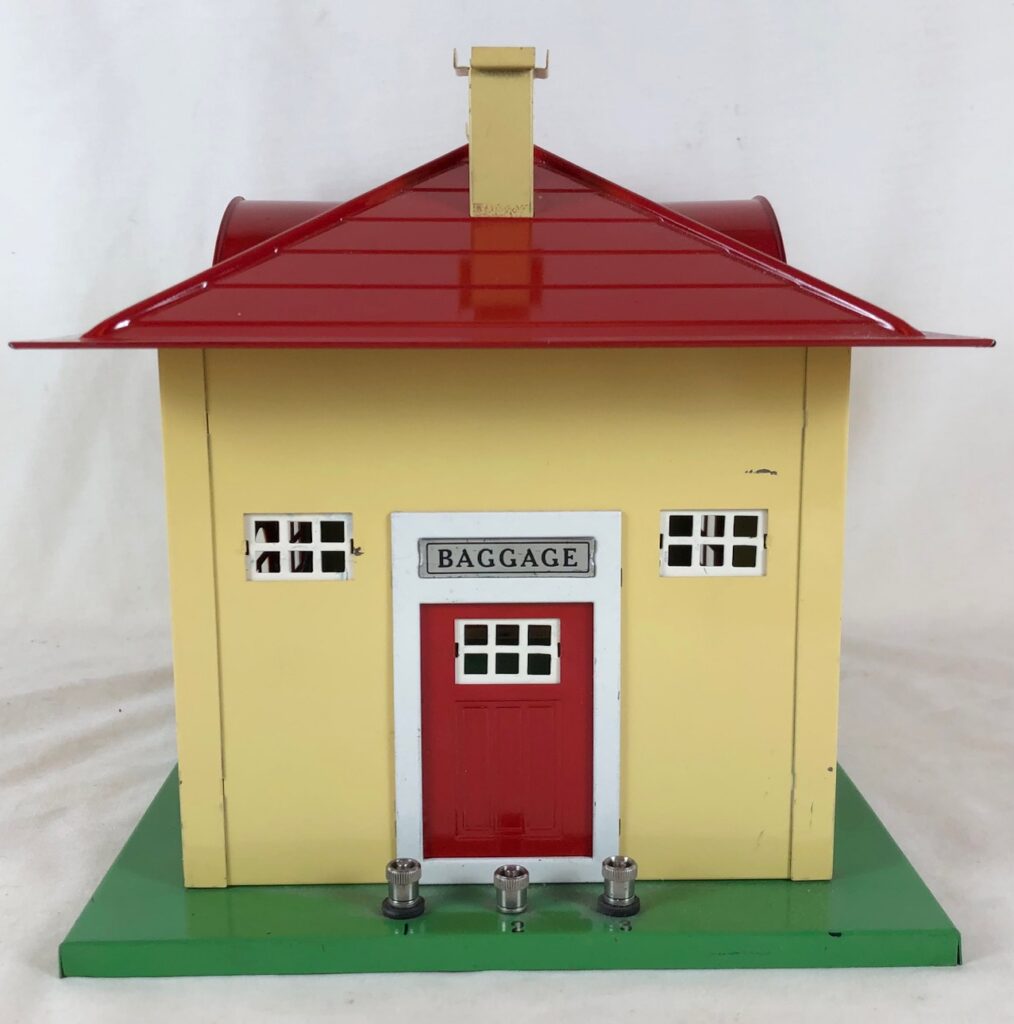
The Lionel No. 136 “Lionelville” Station was introduced in 1937 and was cataloged through 1942. The No. 136 Station is constructed of steel with a base and four-sided peaked roof with two arched dormers and two chimneys. The front and rear walls of the station have two arched doors. The front wall has a painted ticket window between the doors and the rear wall has two small windows between the doors. The two side walls have a baggage door in the center with two small windows on either side of the door. There is a brass or nickel plate with “Lionelville” above the ticket window. There is also a brass or nickel plate with “Express” above one baggage door and a brass plate with “Baggage” above the other. The lettering on the nickel plates can be black or red.
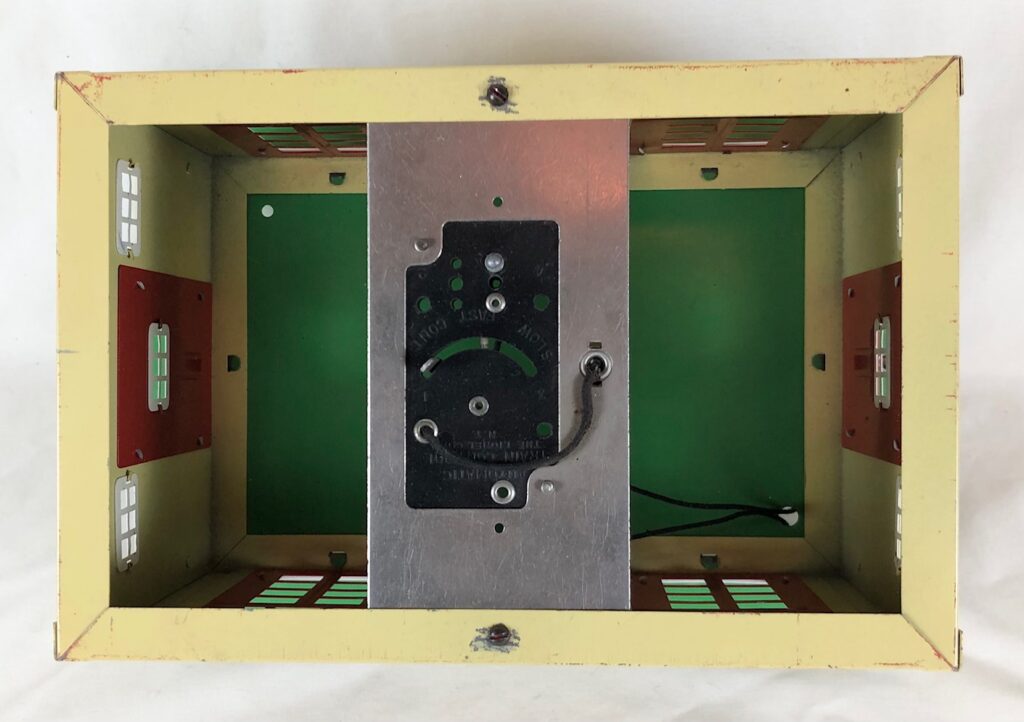
The No. 136 Station is identical to the No. 126 Station with the exception that in addition to being illuminated, the No. 136 Station is equipped with a train stop circuit. The base has three terminal connections to power the interior light and the train stop circuit. The No. 136 Station has cream walls, bright green base, red roof, cream chimneys, red front, rear and side doors, ivory door trim and ivory window inserts. The underside of the station is stamped “No. 136 Station – Made by the Lionel Corporation, New York” in black. The base of the station measures 10-inches wide by 7-inches deep and the height of the station is 7 1/4-inches.
Lionel No. 136 “Lionelville” Station
2. Interior of No. 136 Station
1. No. 136 Station with dark cream walls, bright green base, red roof, dark cream chimneys, red front, rear and side doors, ivory door trim and ivory window inserts. The station has a red ticket window and nickel plates with black lettering.
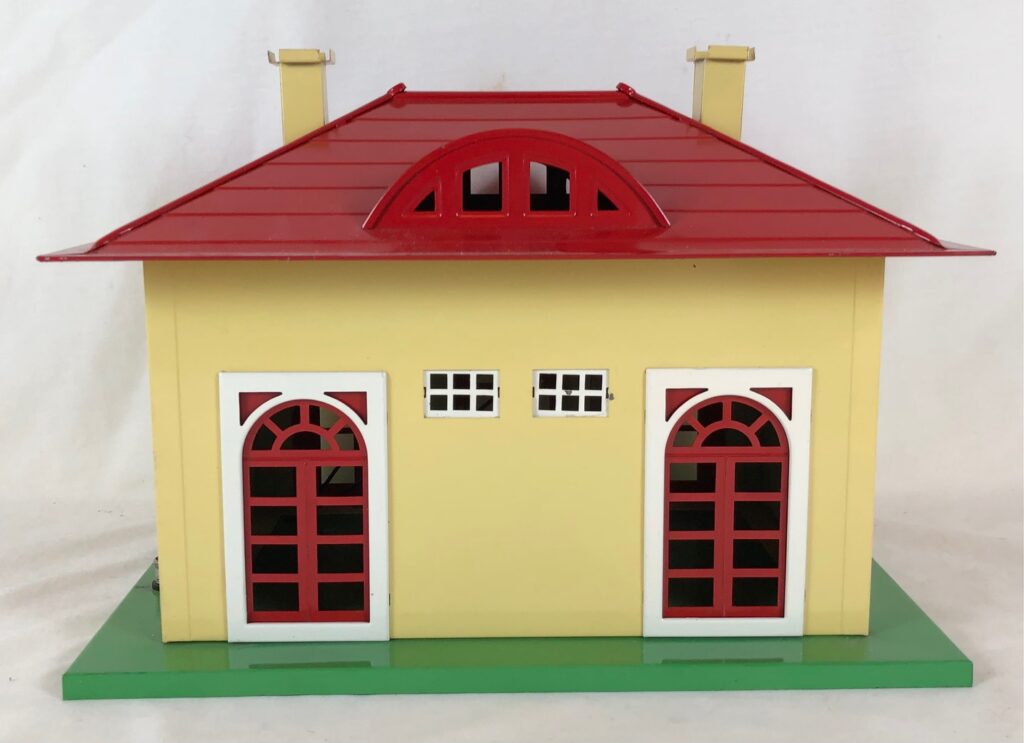
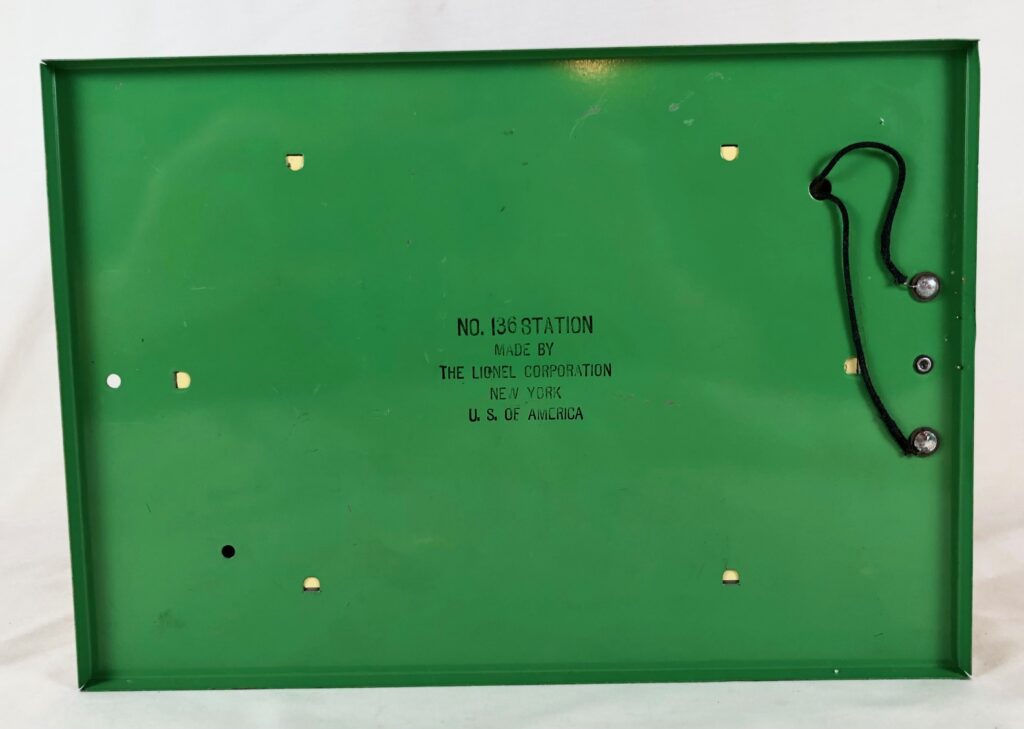
2. Interior of No. 136 Station
Ives No. 226/1871 Station
General Information
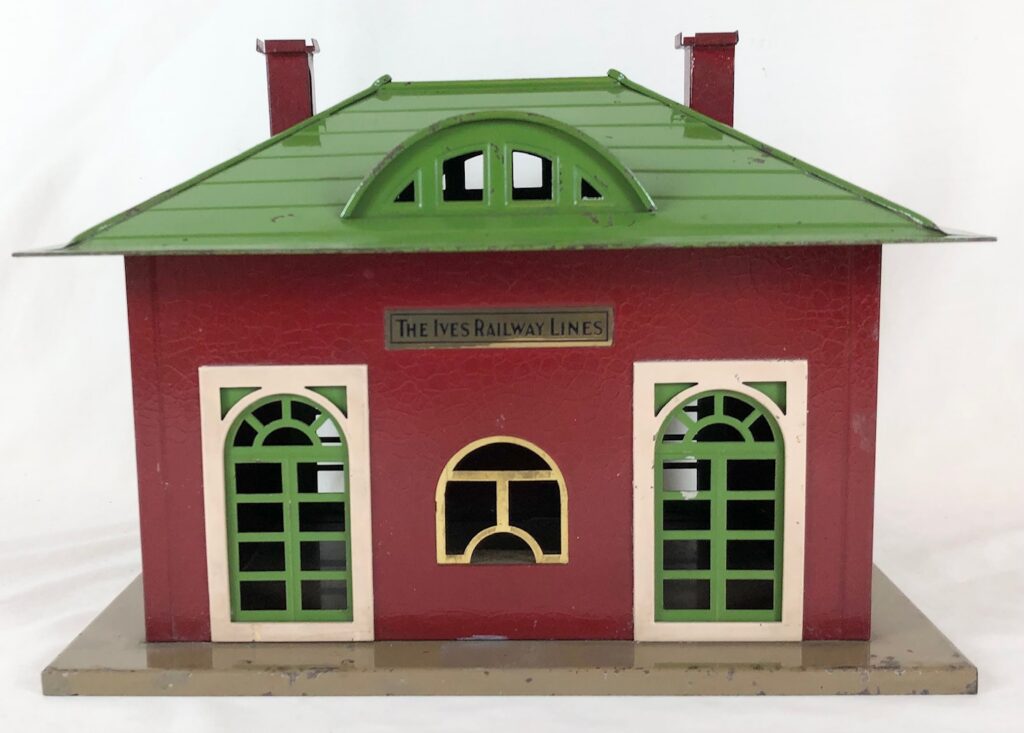
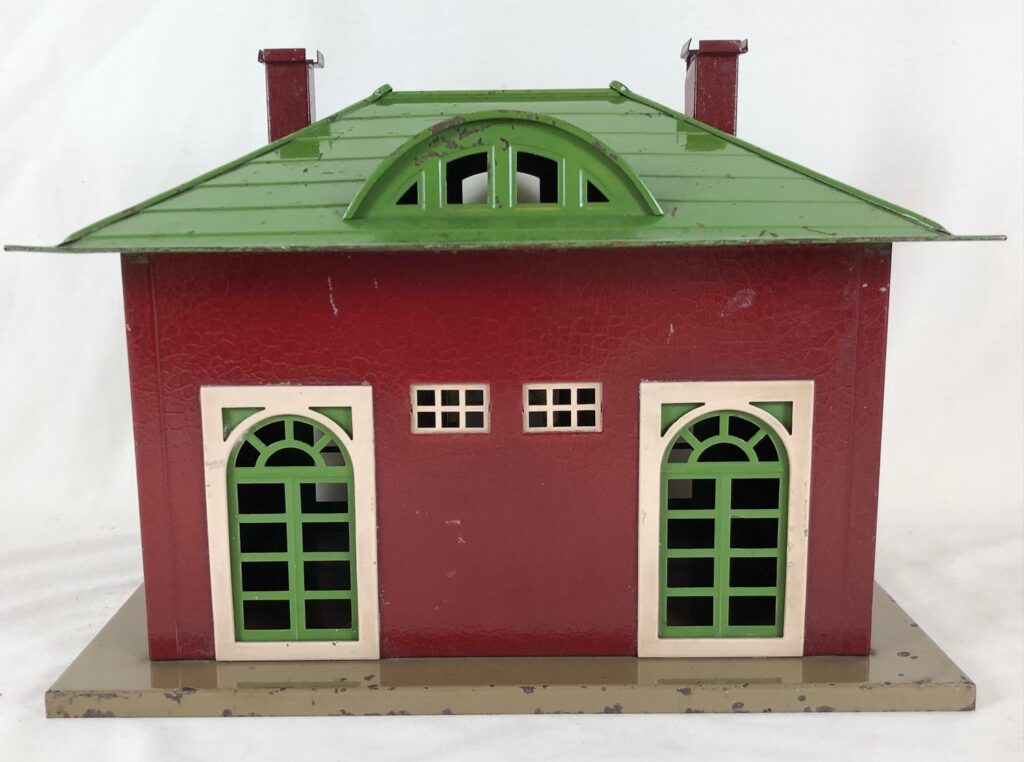
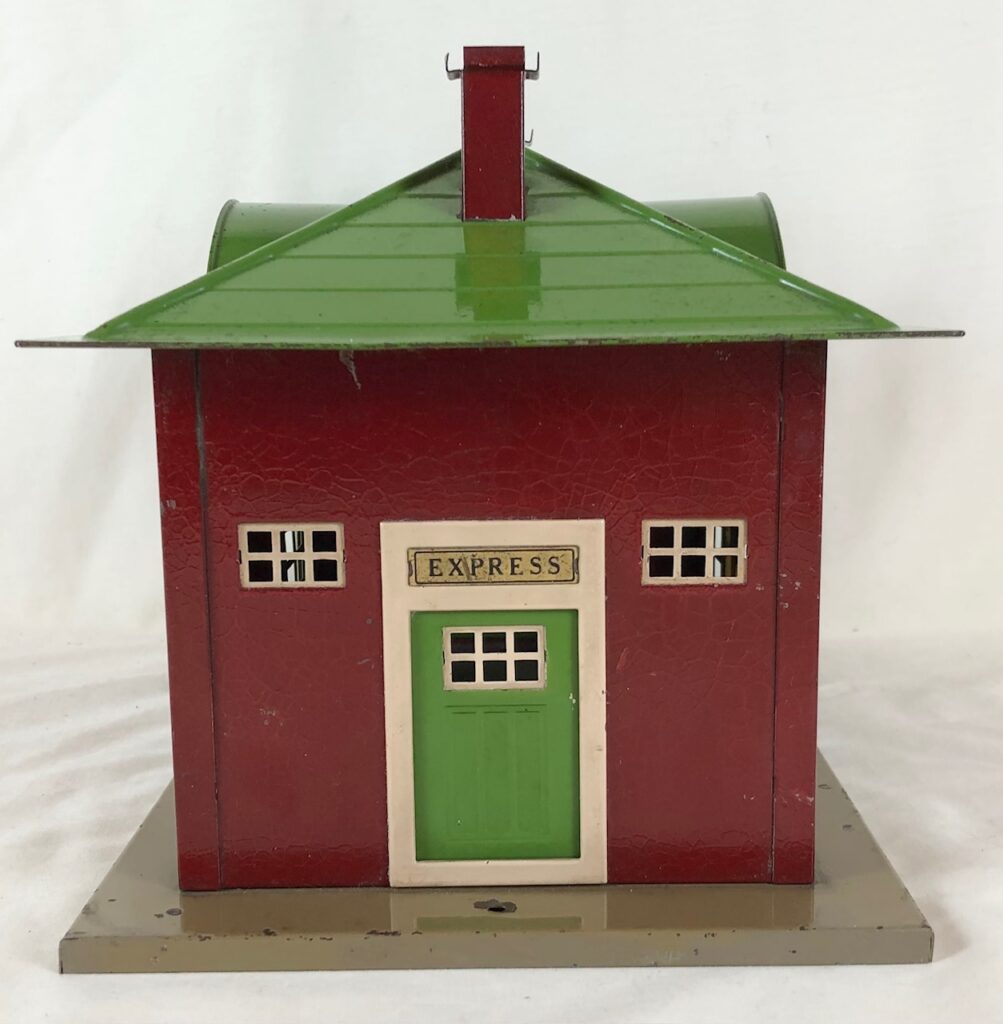
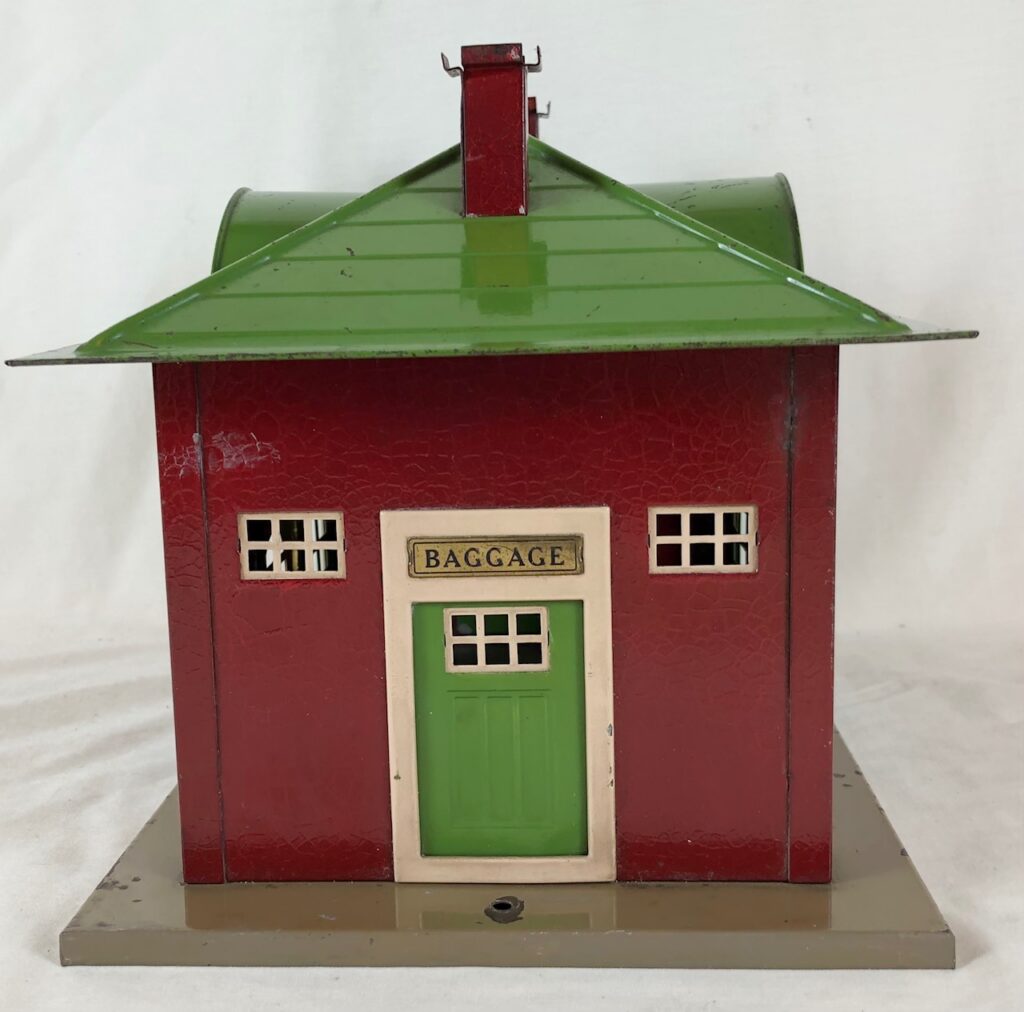
The Ives No. 226 Station was offered by Lionel in the 1929 and 1930 Ives Catalogs. In 1931, the number of the station was changed from No. 226 to No. 1871. The No. 1871 Ives Station was offered by Lionel in the 1931 and 1932 Ives Catalogs. The Ives No. 226/1871 Station is constructed of steel with a base and four-sided peaked roof with two arched dormers and two chimneys. The front and rear walls of the station have two arched doors. The front wall has a brass ticket window between the doors and the rear wall has two small windows between the doors. The two side walls have a baggage door in the center with two small windows on either side of the door. There is a brass plate with “The Ives Railway Lines” above the ticket window. There is also a brass plate with “Express” above one baggage door and a brass plate with “Baggage” above the other.
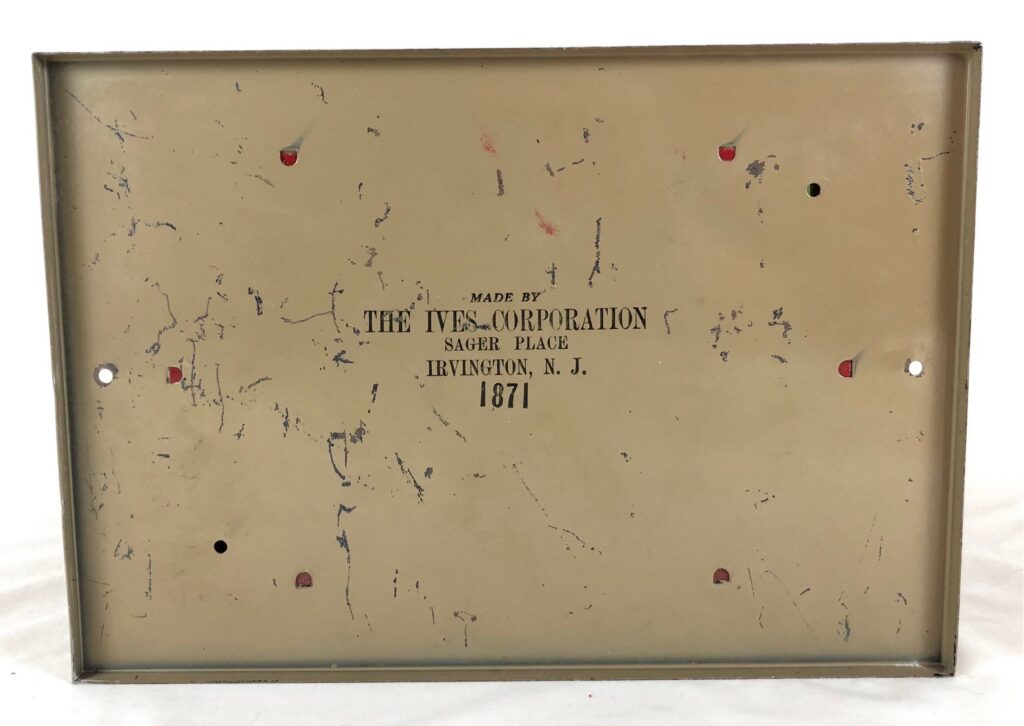
The Ives No. 226/1871 Station is identical to the Lionel No. 126 Station except for the plate above the ticket window and the stamping on the bottom of the base. The station is illuminated. The Ives No. 226/1871 Station has dark red crackle walls, Mojave base, pea green or red roof, lithographed red brick or dark red crackle chimneys, pea green doors, cream door trim and cream window inserts. The underside of the station is either stamped “Made by The Ives Corporation, Sager Place, Irvington, N.J. 226 or 1871” in black on a white paper label or directly on the base. The base of the station measures 10-inches wide by 7-inches deep and the height of the station is 7 1/4-inches.
There are several variations of the Ives No. 226/1871 Station.
Ives No. 1871 “The Ives Railway Lines” Station
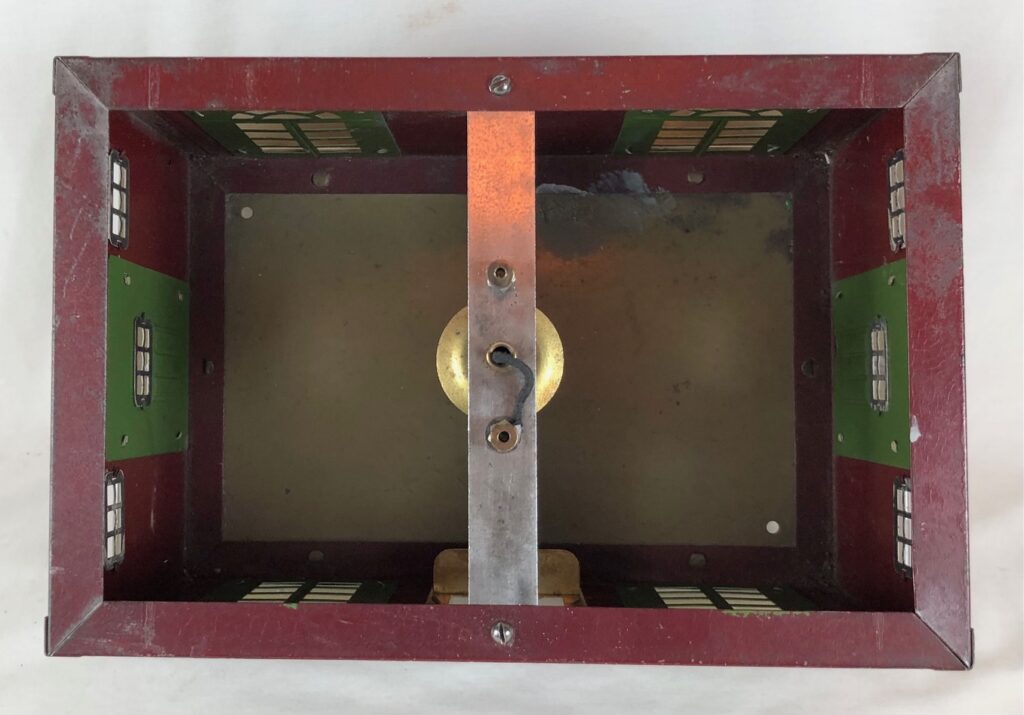
2. Interior of Ives No. 1871 Station
1. Ives No. 1871 Station with dark red crackle walls, Mojave base, pea green roof, dark red crackle chimneys, pea green doors, cream door trim and cream window inserts. The station has a brass ticket window and brass plates with black lettering.
2. Interior of Ives No. 1871 Station
WHERE WOULD YOU LIKE TO GO NEXT ?