


Lionel Trucks and Couplers
During the postwar period, Lionel offered a number of different trucks and couplers. In general Lionel changed their design to improve runnability, improve reliability, reduce fragility, reduce installation time, and of course to reduce production costs.
This overview will use descriptions commonly recognized by the collector community, not used by Lionel, as well a descriptions used in Lionel’s service documents. This listing does not attempt to list all of the minor variations of the different truck designs.
The production year of a car can often be determined by the trucks. However caution should taken as trucks and components can easily be replaced. Additionally Lionel sometimes used earlier trucks on later production bodies to meet production demands.
Normally Lionel used the same type of truck on both ends of the car. However during t946-1947 it is not unusual to find a mixture of trucks. This is especially true of tenders and cabooses. In later years Lionel would intentionally put two different type of trucks on a car to reduce production costs, e.g. an operating coupler truck on one end and a dummy coupler truck on the other.
Generally all cars included in a set had similar trucks and couplers. However this is not the case in many 1946 sets where the tender has different trucks compared to the cars. Also, following the introduction of the plastic trucks, operating cars and higher end cars with metal trucks were often included in sets with predominately plastic truck equipped sets.
Many of the differences that indicate the year(s) of production have to do with the trucks and couplers. Below is a guide to understanding these differences. Please be aware that not everything is created and usage begins on January first. Below is a guide, usage could begin earlier or go longer than the dates shown.
Click or Scroll Down
1945 – 1951 STAPLE END TRUCKS
1952 – 1969 BAR END TRUCKS
1948 – 1951 SCOUT TRUCKS
1952 – 1955 SEMI SCOUT TRUCKS
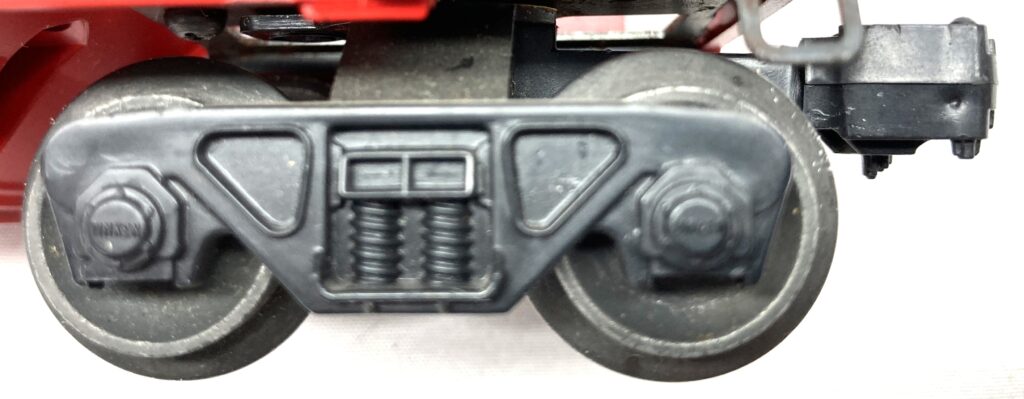
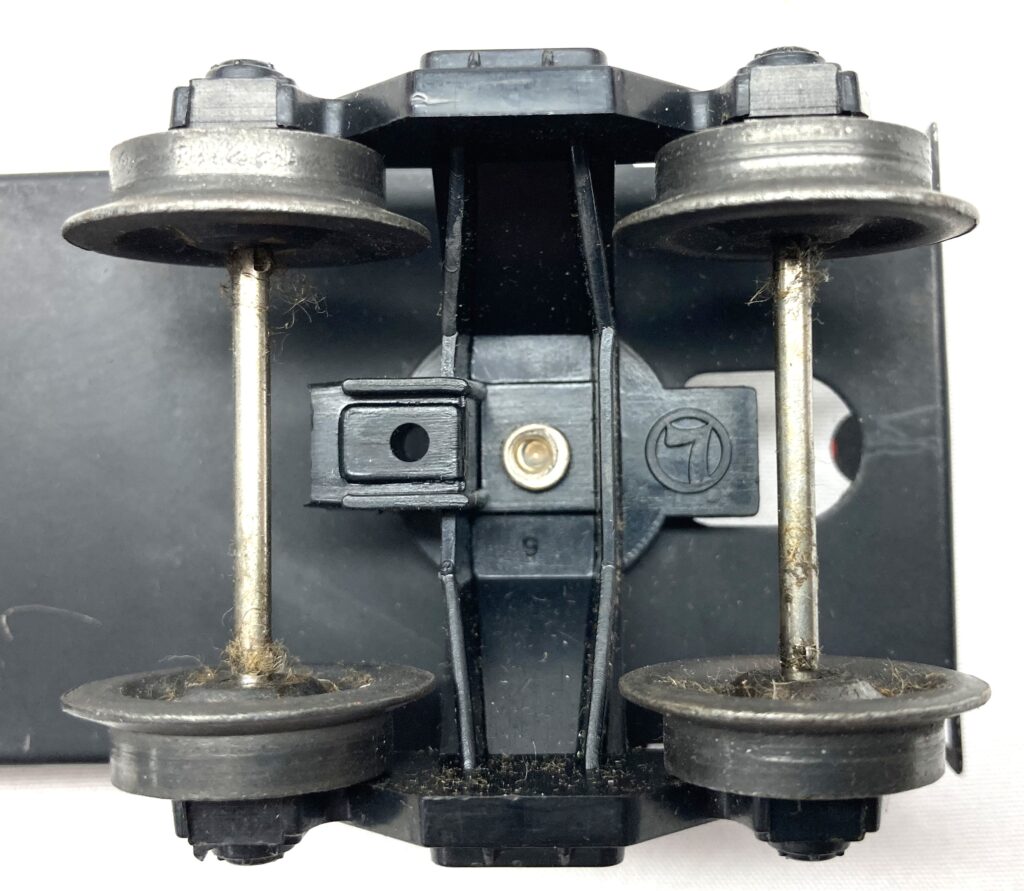
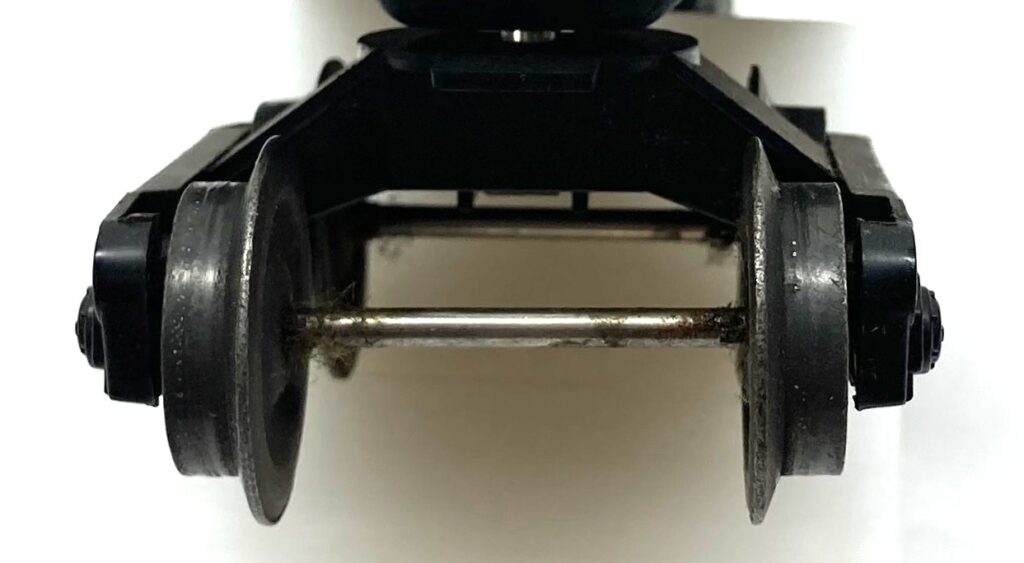
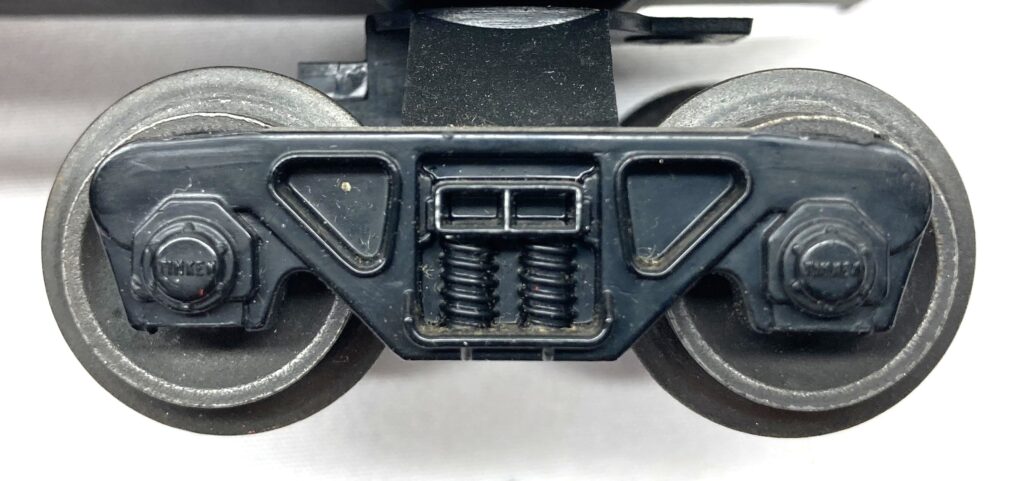
1958 -1969 PLASTIC AAR TRUCKS
1959 – 1969 ARCH BAR TRUCKS
1948 – 1964 “027” PASSENGER TRUCKS
1952 – 1966 “O” GAUGE PASSENGER CARS
1946 – 1950 THREE AXLE SIX WHEEL TRUCKS
TERMS
1945 – 1951
STAPLE END TRUCKS
1945
Die cast Staple end trucks with Flying shoe, with black fiber board, coupler head attached with one rivet, plain web on knuckle, black pin.
These trucks all have thick axles.
The trucks could have one of three types of wheels:
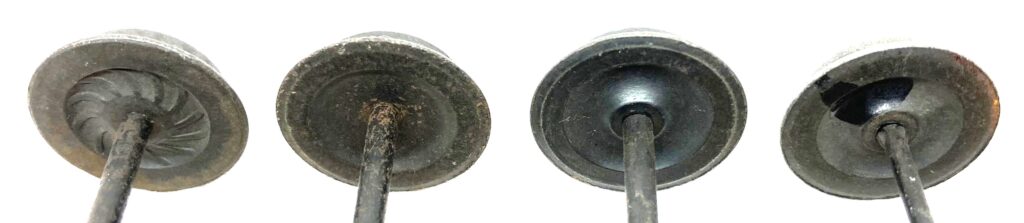
Whirly wheel on thick axle-Deep dish wheel on thick axle-Regular wheel on thick axle-regular wheel on thin axle
Whirly wheels. The backside of the wheel has a whirly ribbed pattern. On the prototype these ribs were for strength and to prevent warping of the wheel.
Deep dish wheels. The backside of the wheel has a deep depression.
Regular wheels. The common postwar wheel.
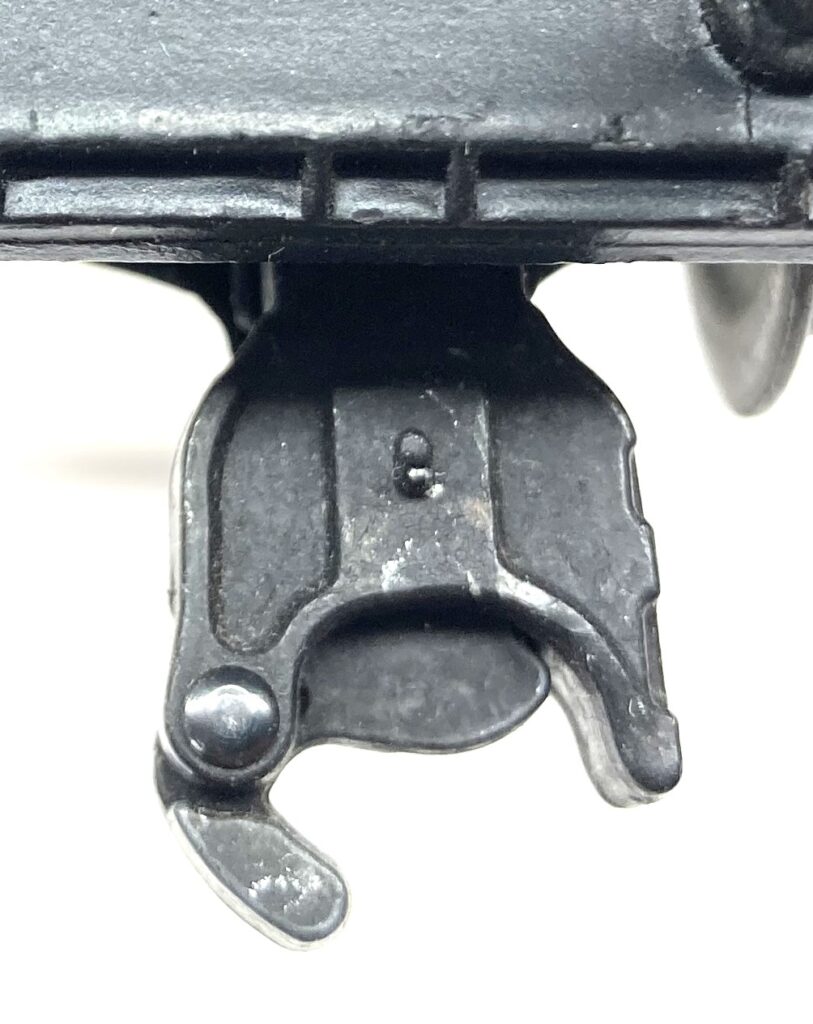
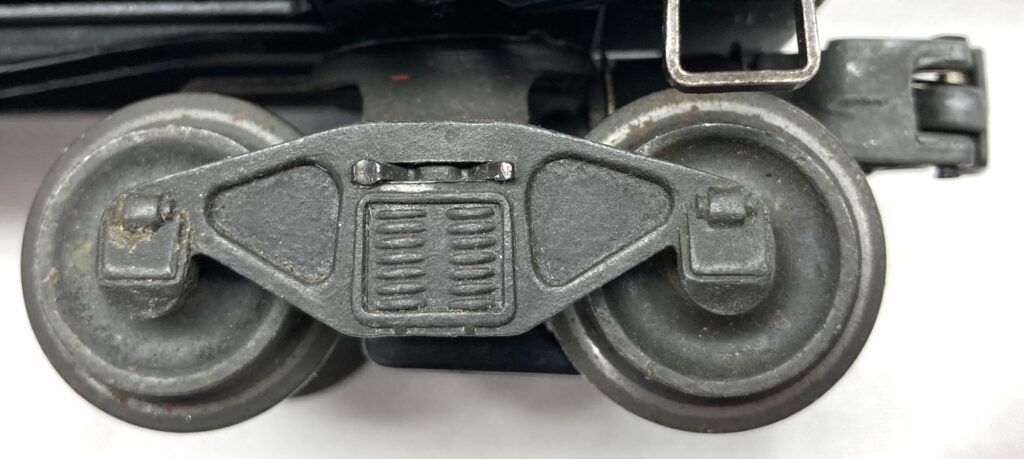
1946
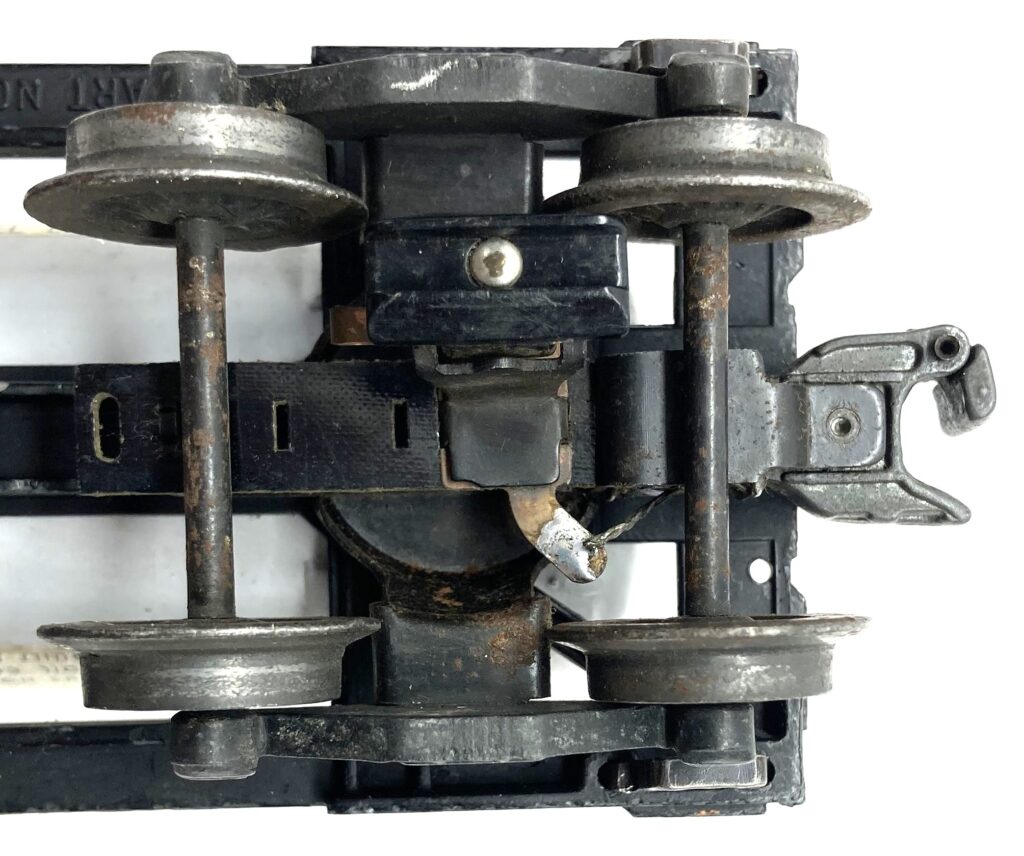
Die cast Staple end trucks with Flying shoe with brown fiber board, coupler head attached with one rivet, thin axle and regular wheels, plain web on knuckle, black pin.
These trucks have the common postwar wheel on the common thin axle, from this date on.
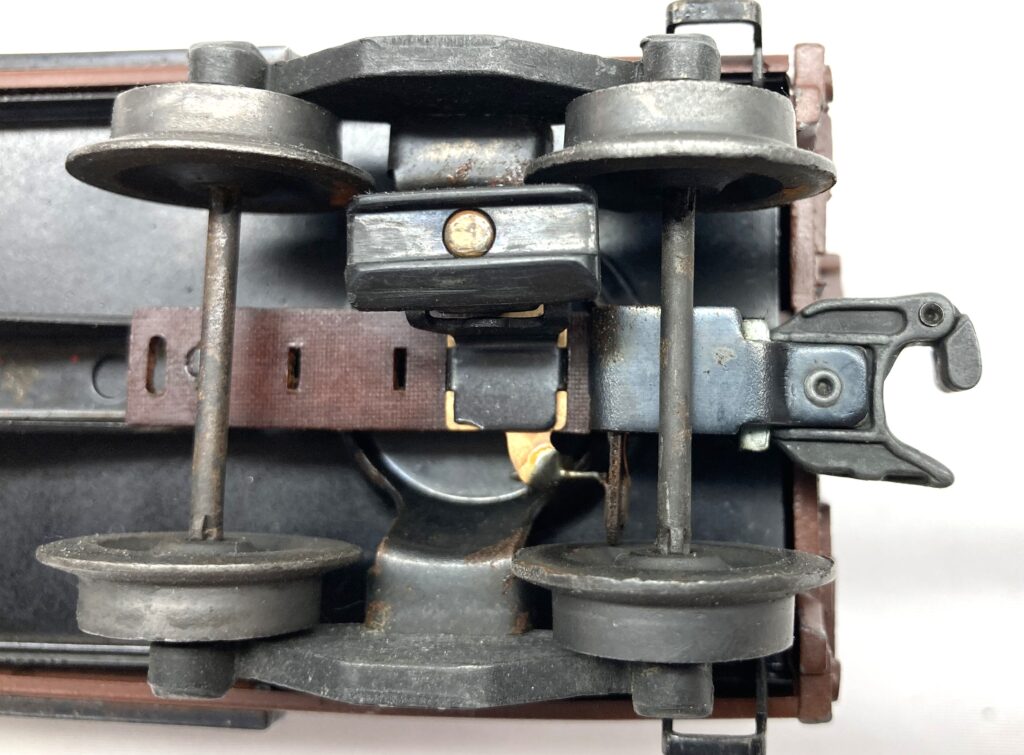
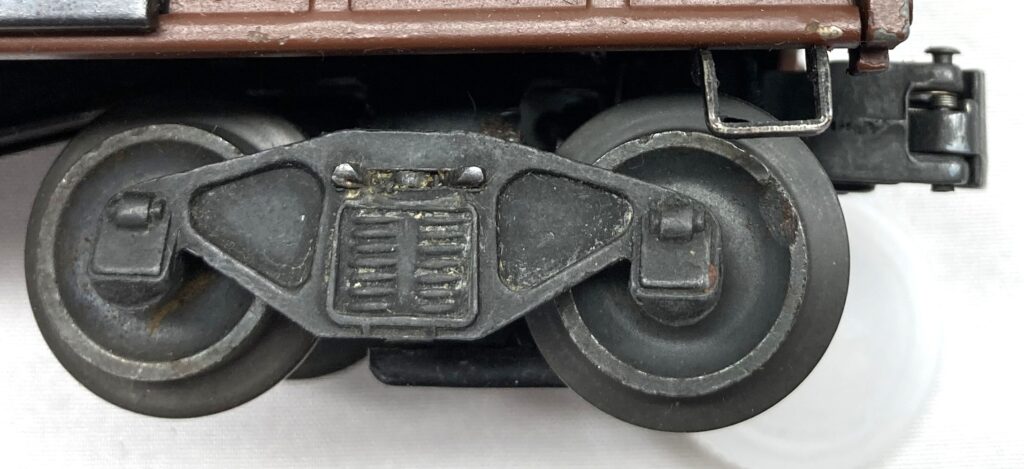
1946
Die cast Staple end trucks with coil couplers, the coupler head is attached with one rivet and swedged (pinched) to the support, plain web on knuckle, black pin
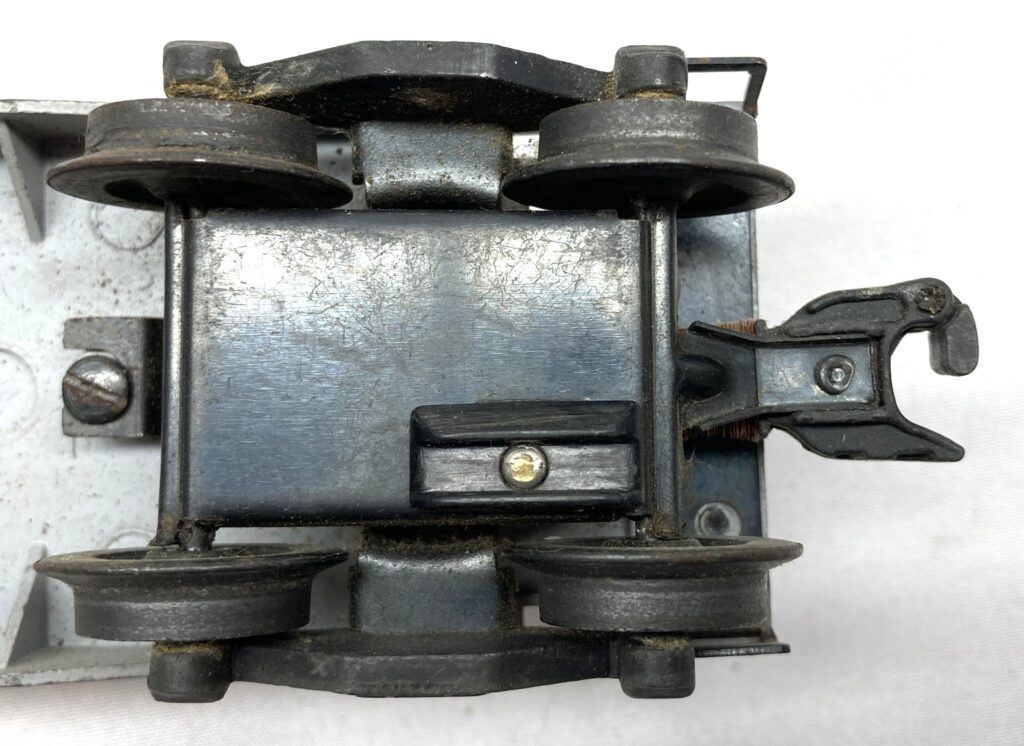
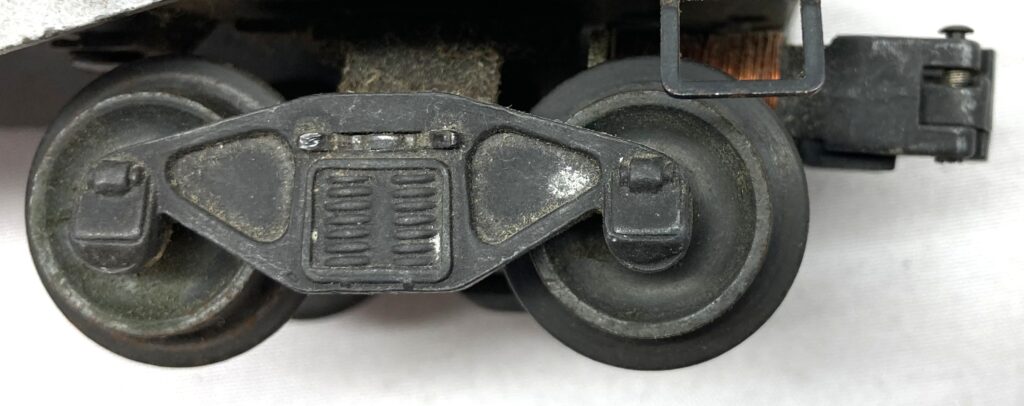
1947 – 1948
Die cast Staple end trucks with coil couplers, the coupler head is attached with one rivet and staked (crosswise) to the support, plain web on knuckle, black pin
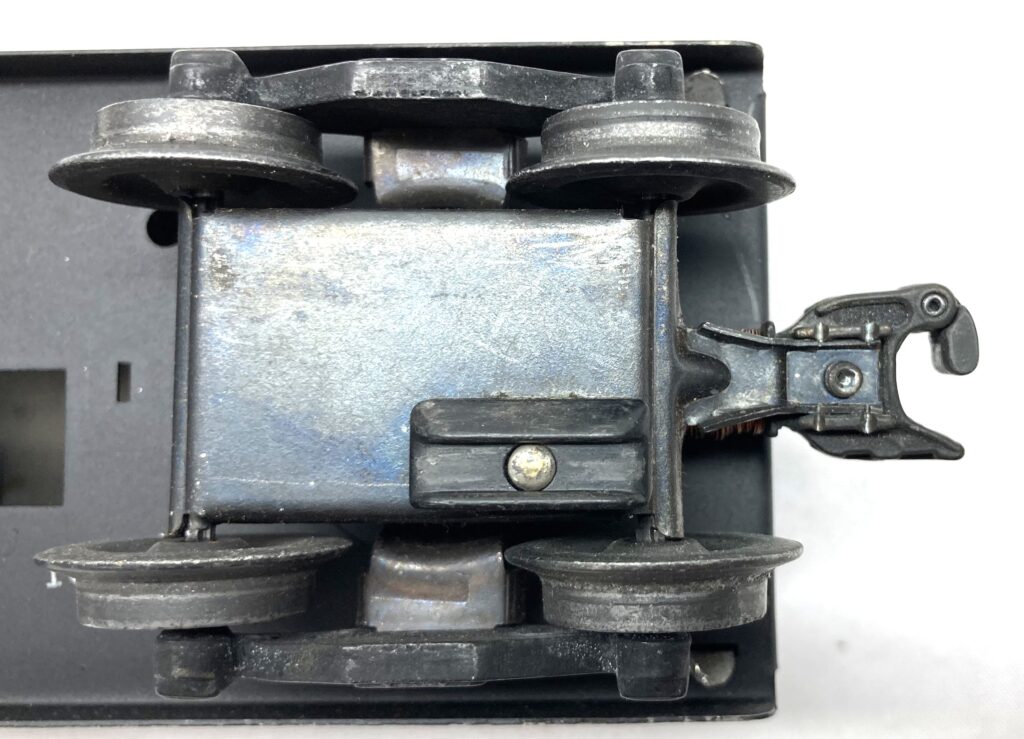
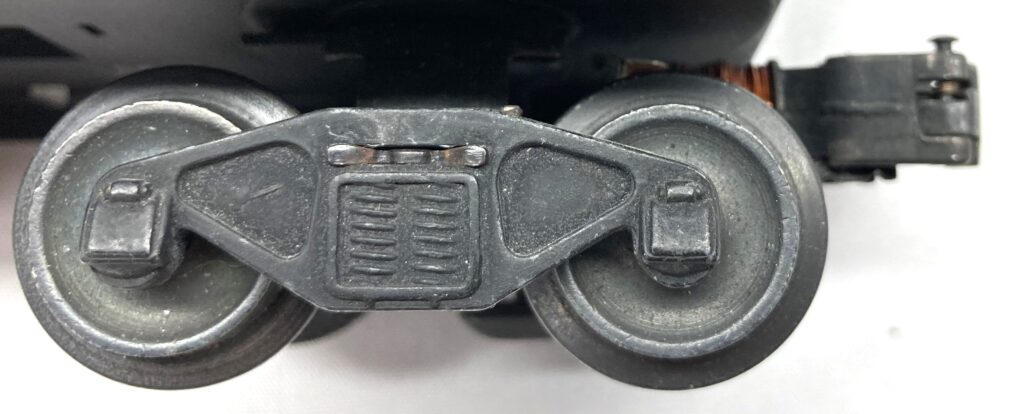
1948 – 1950
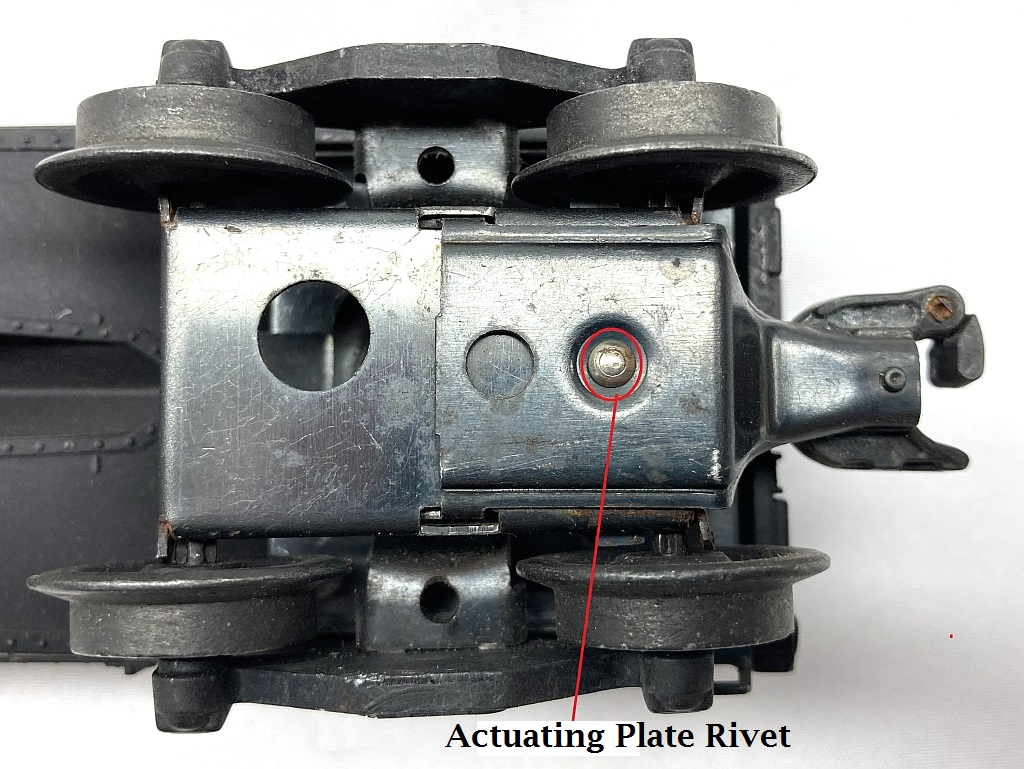
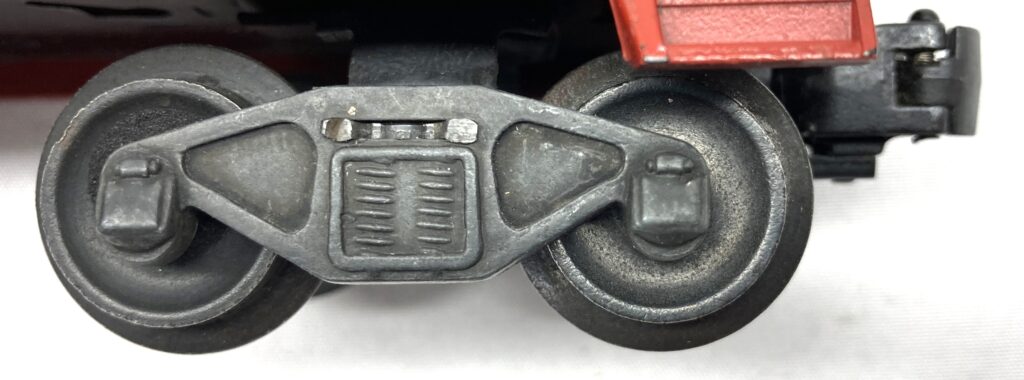
Die cast Staple end trucks with magnetic couplers, the rivet in the center of the actuating plate is flared facing down, plain web on knuckle, black pin
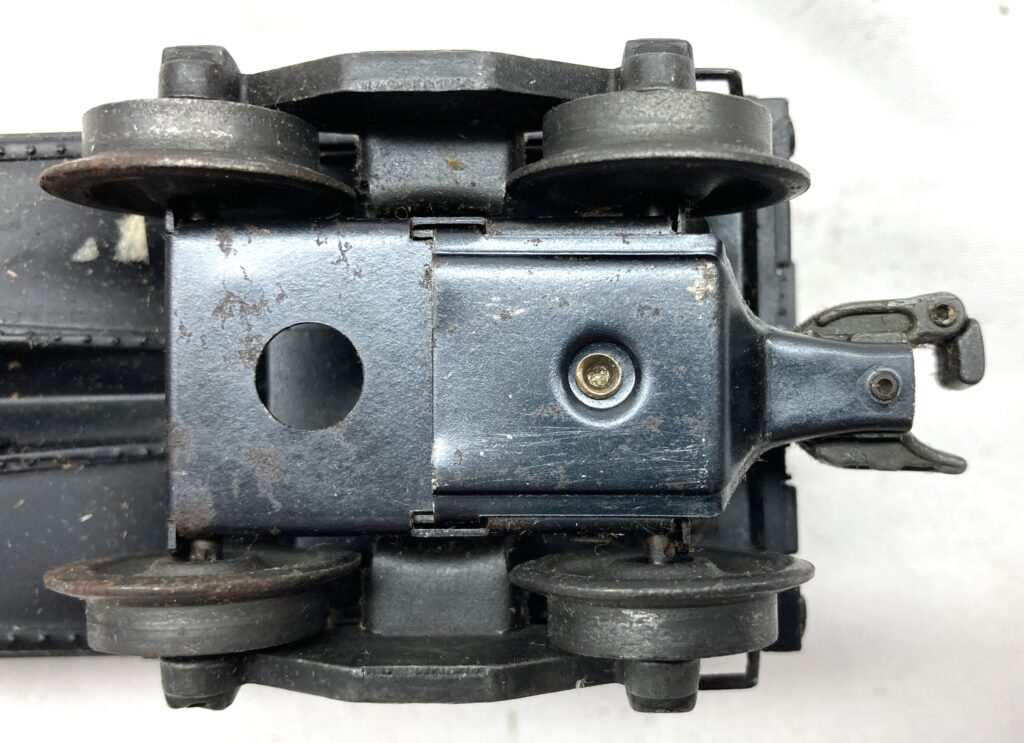
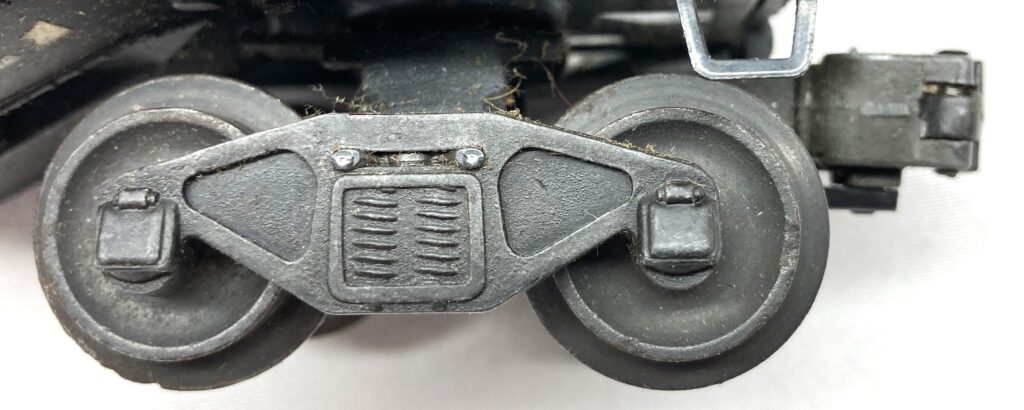
1950
Die cast Staple end trucks with magnetic couplers, the rivet in the center of the actuating plate is flared facing down, the actuating plate has an extra hole in it, plain web on knuckle, black pin
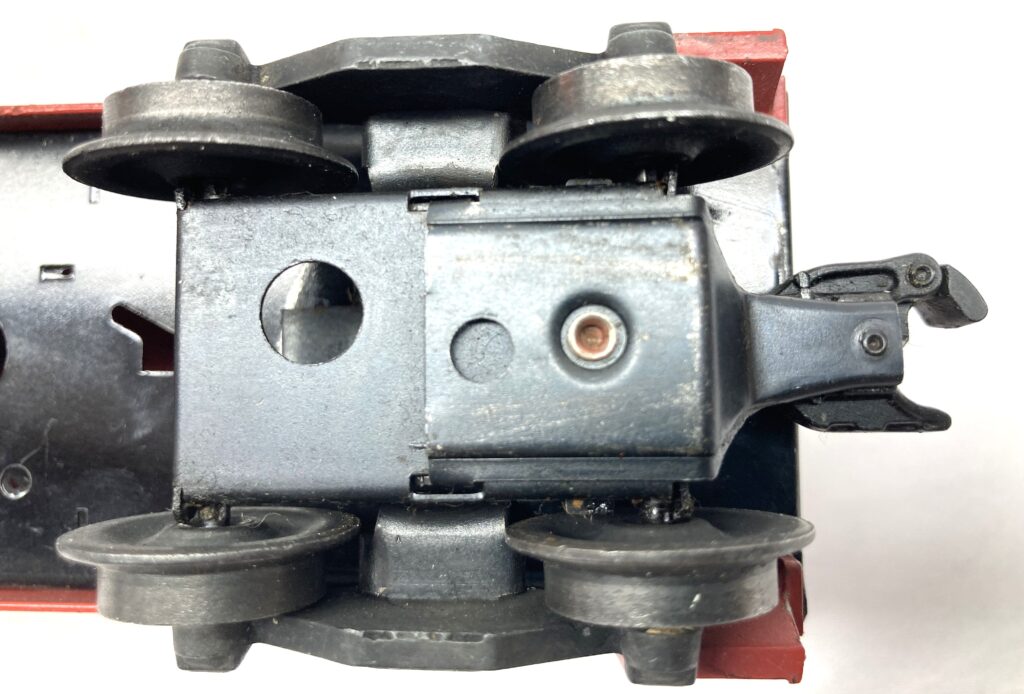
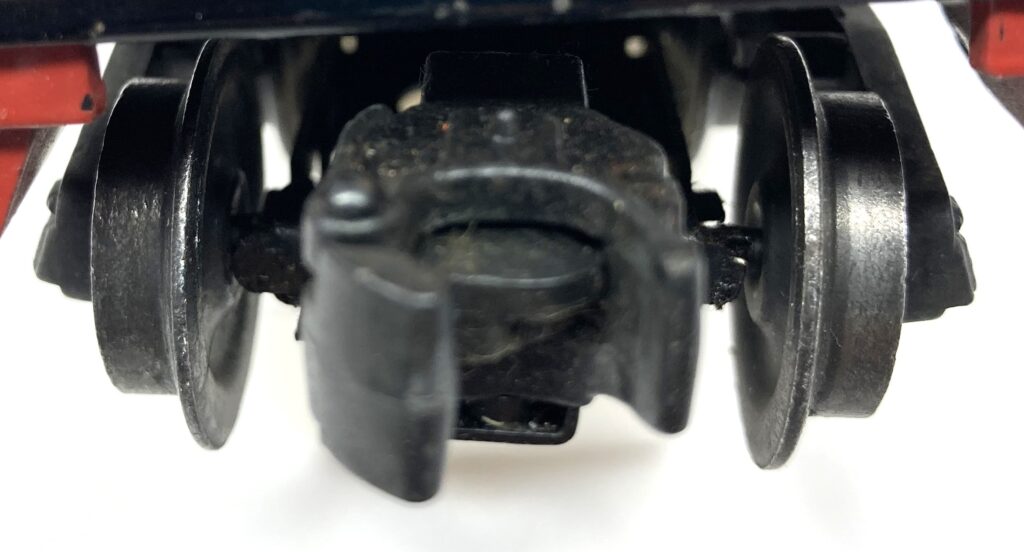
1950 – 1951
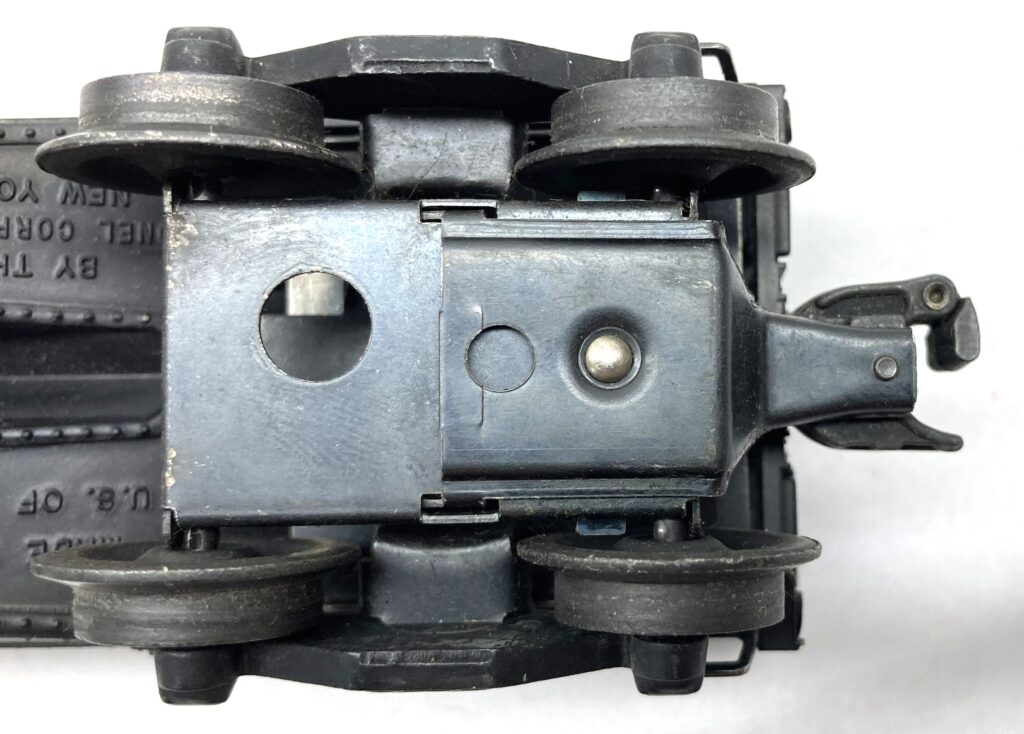
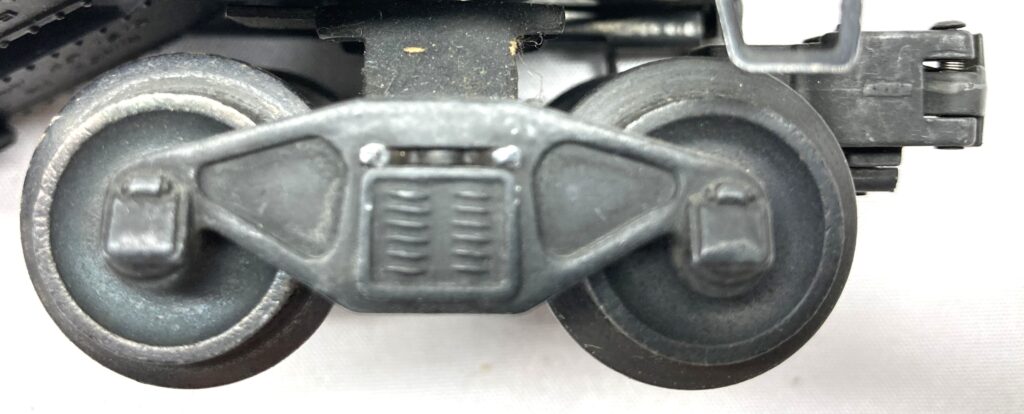
Die cast Staple end trucks with magnetic couplers, the rivet in the center of the actuating plate is flared facing up, plain web on knuckle, black pin
1952 – 1969
BAR END TRUCKS
1952 – 1953
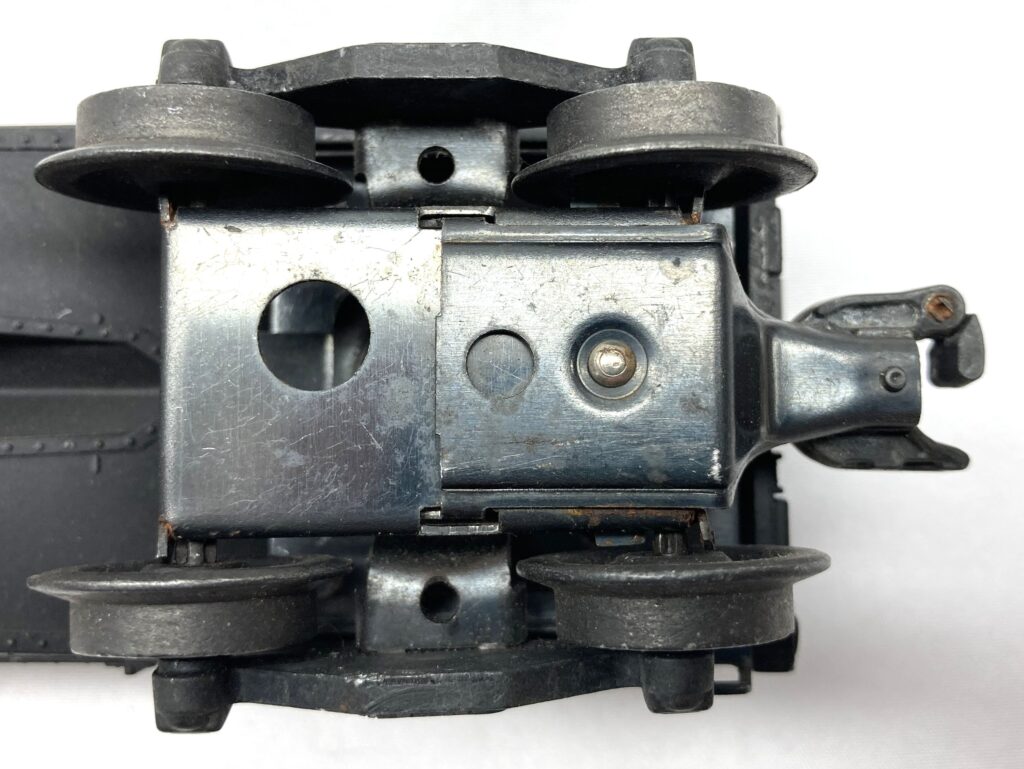
Die cast Bar end trucks with magnetic couplers, the rivet in the center of the actuating plate is flared facing up, plain web on knuckle, black pin
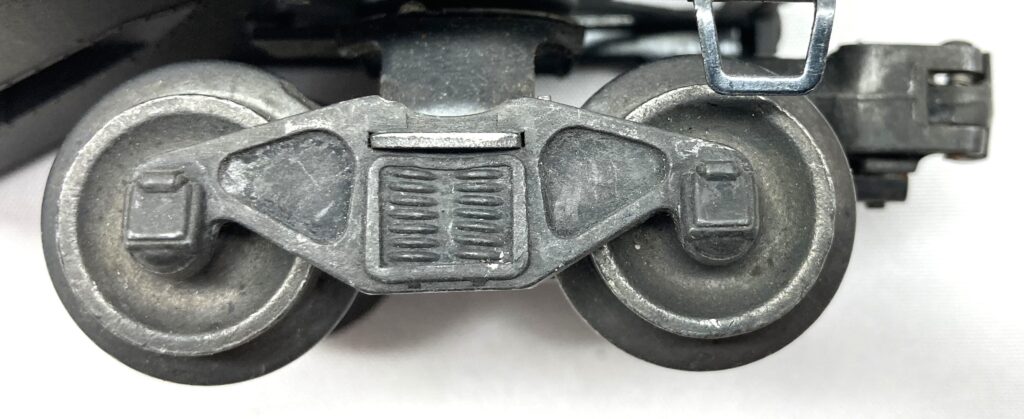
1954
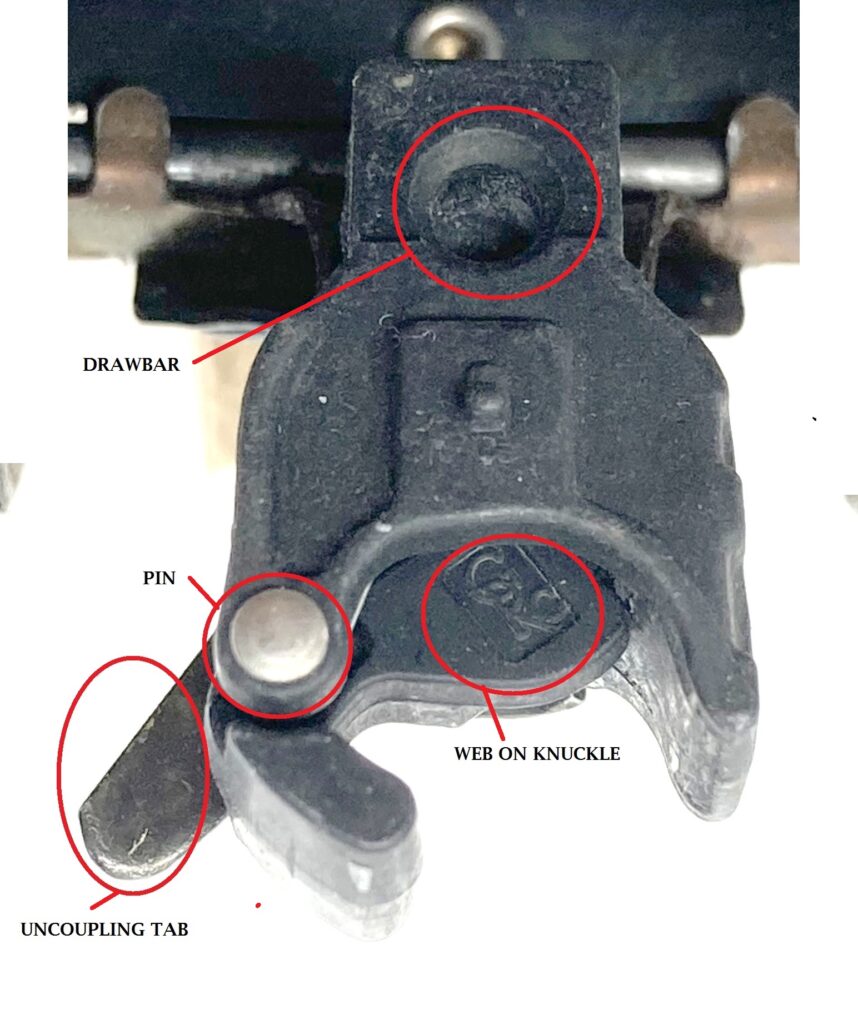
Die cast Bar end trucks with magnetic couplers, the rivet in the center of the actuating plate is flared facing up, engraved web on knuckle, black pin
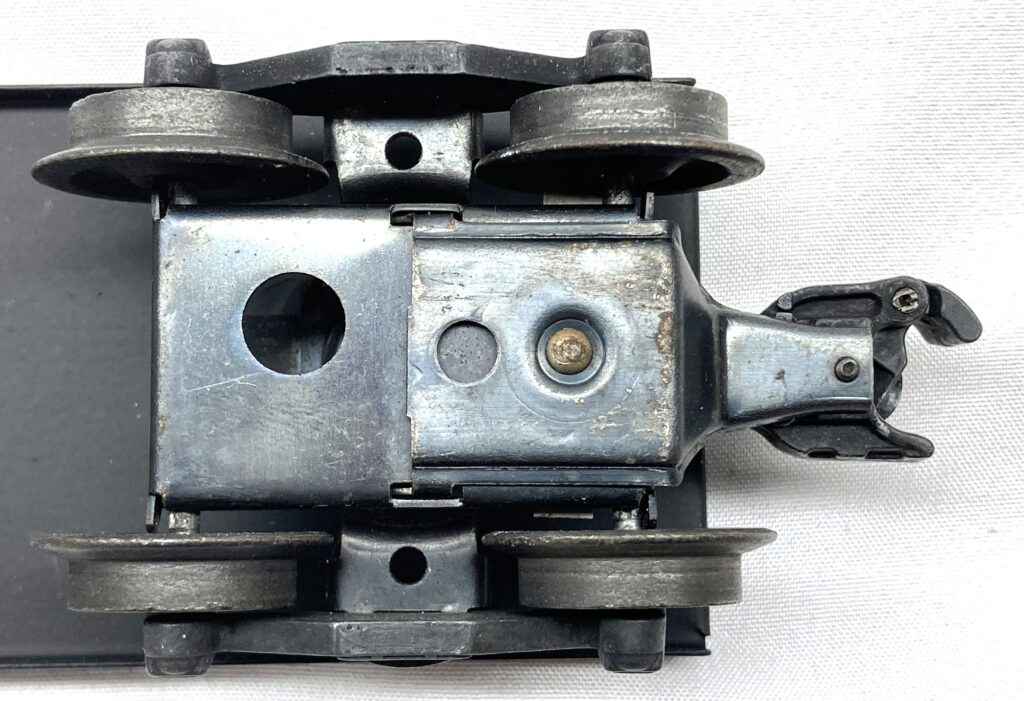
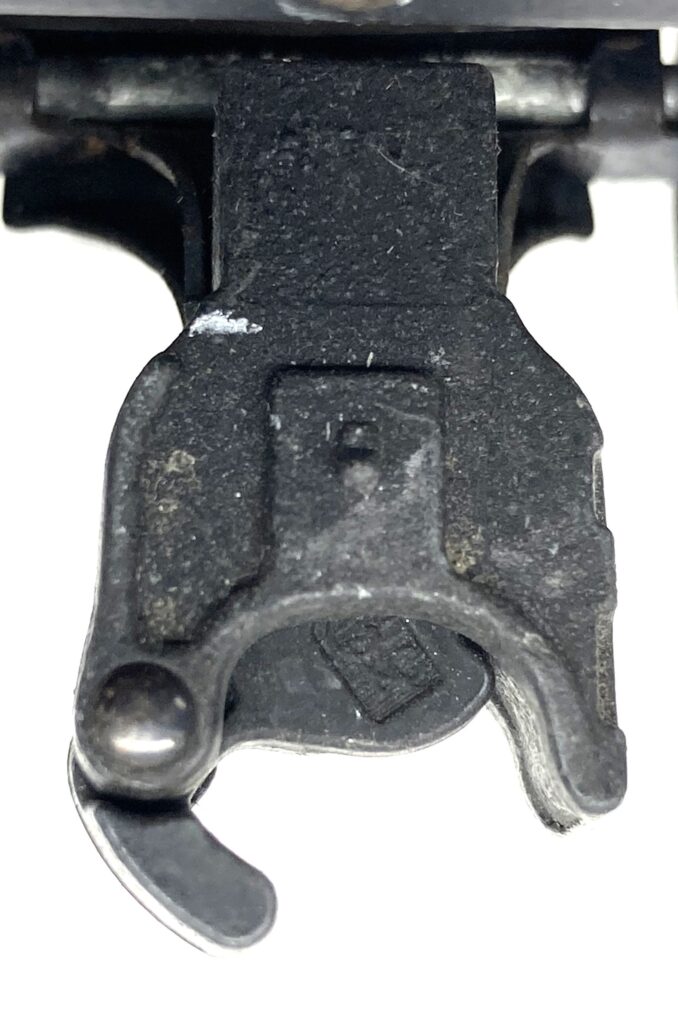
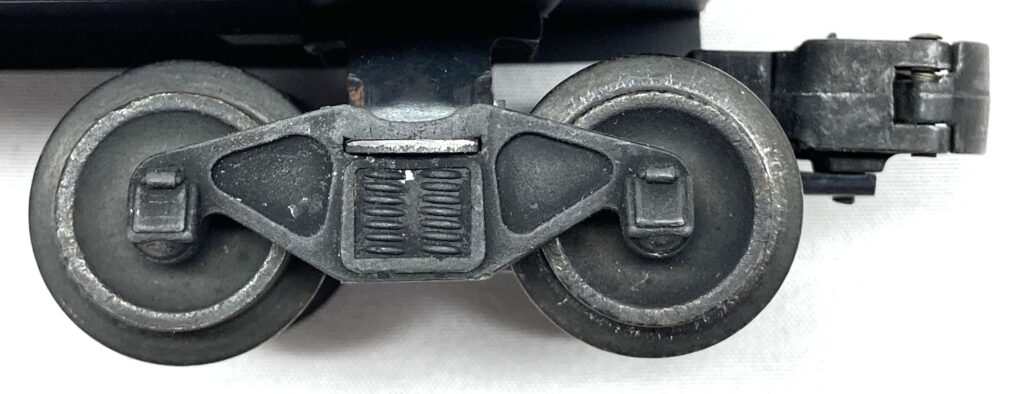
1955
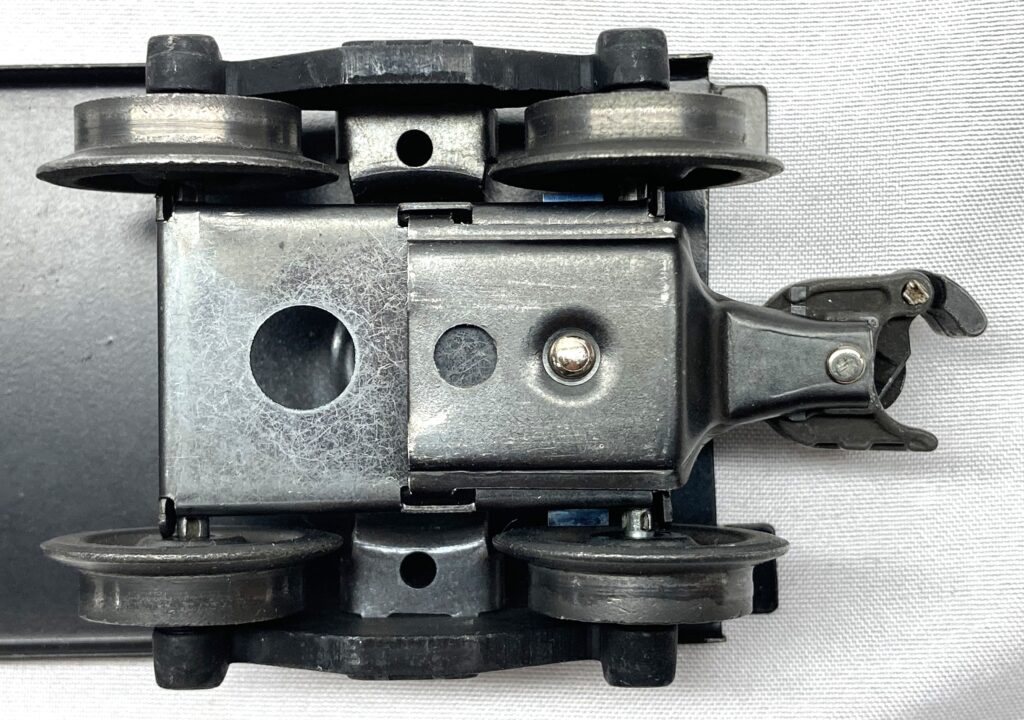
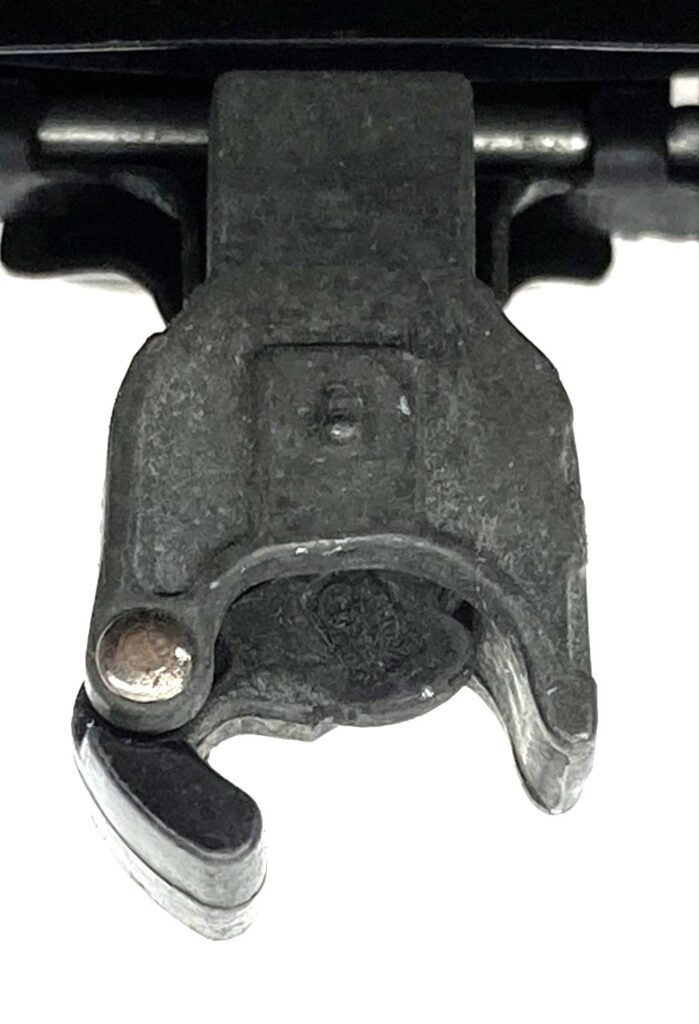
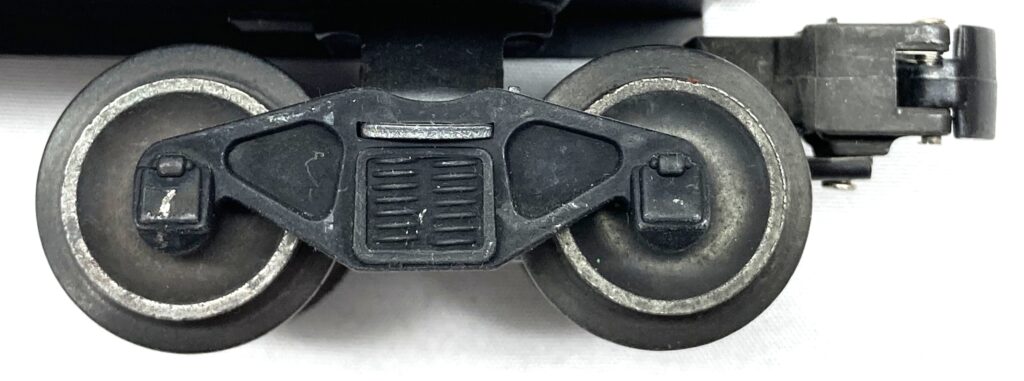
Die cast Bar end trucks with magnetic couplers, the rivet in the center of the actuating plate is flared facing up, engraved web on knuckle, shiny pin
1955 – 1956
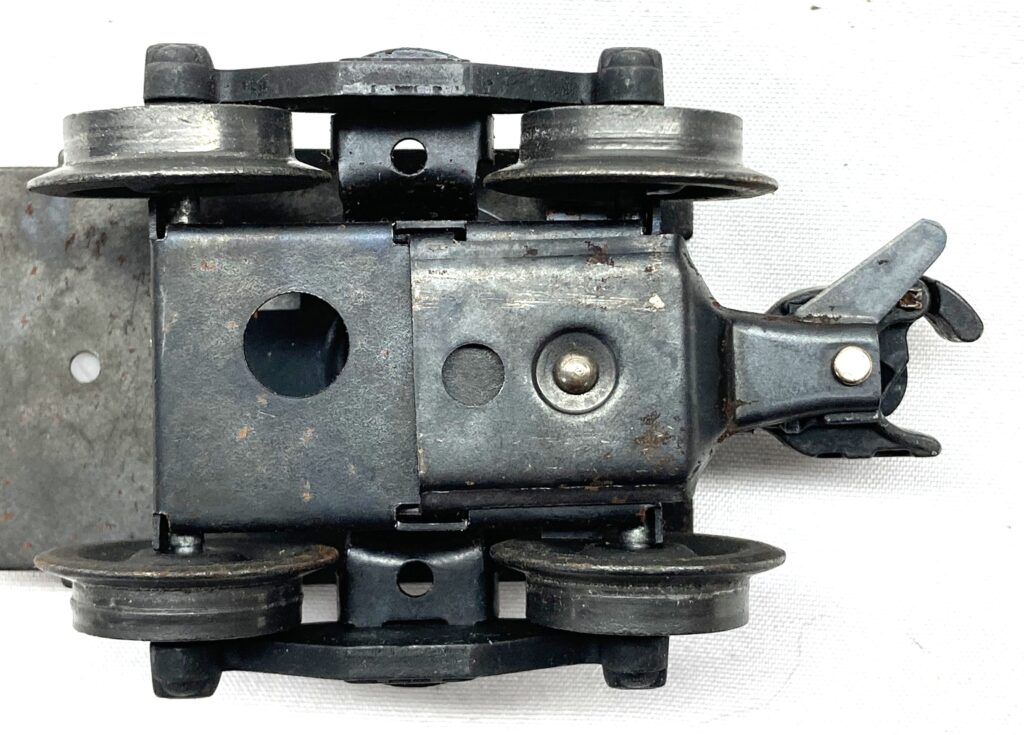
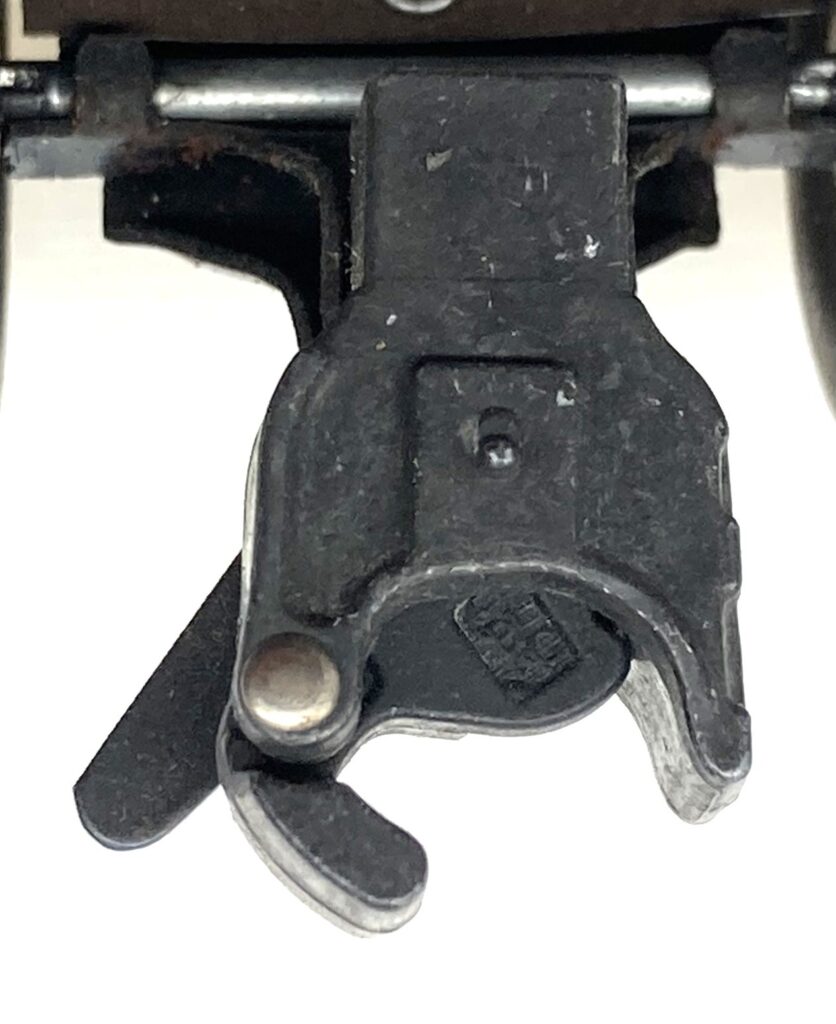
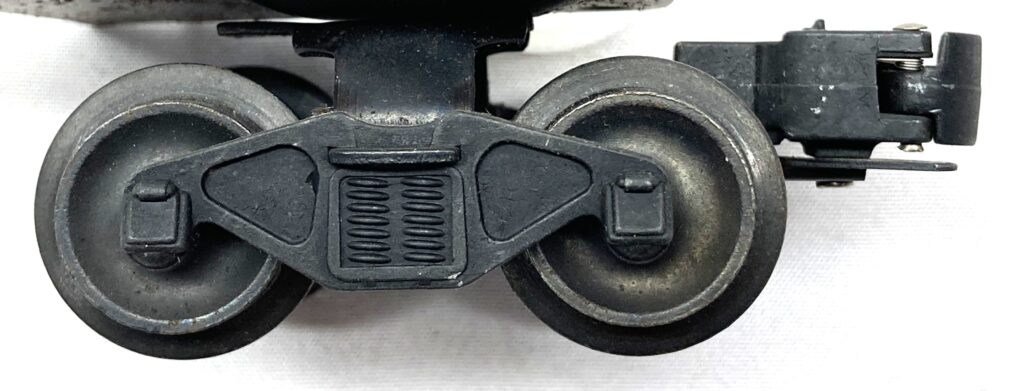
Die cast Bar end trucks with magnetic couplers, the rivet in the center of the actuating plate is flared facing up, engraved web on knuckle, shiny pin, with uncoupling tab
1957 – 1958 & 1969
Die cast Bar end trucks with magnetic couplers, the rivet in the center of the actuating plate is flared facing up, engraved web on knuckle, shiny pin, with uncoupling tab, with hole in drawbar
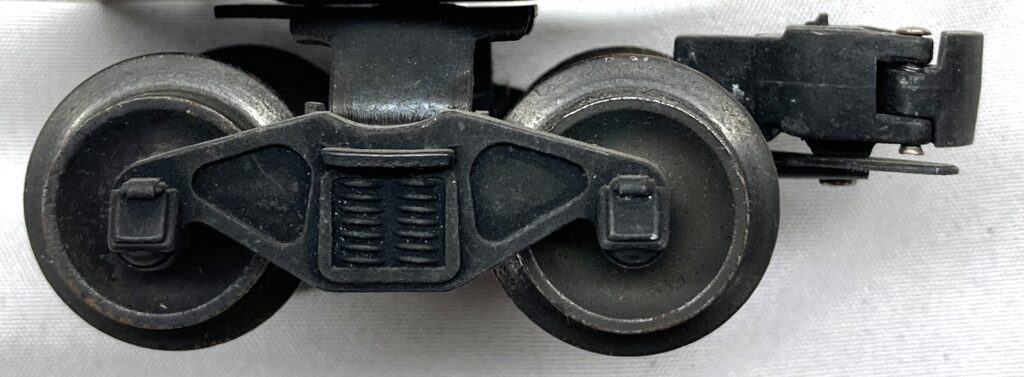
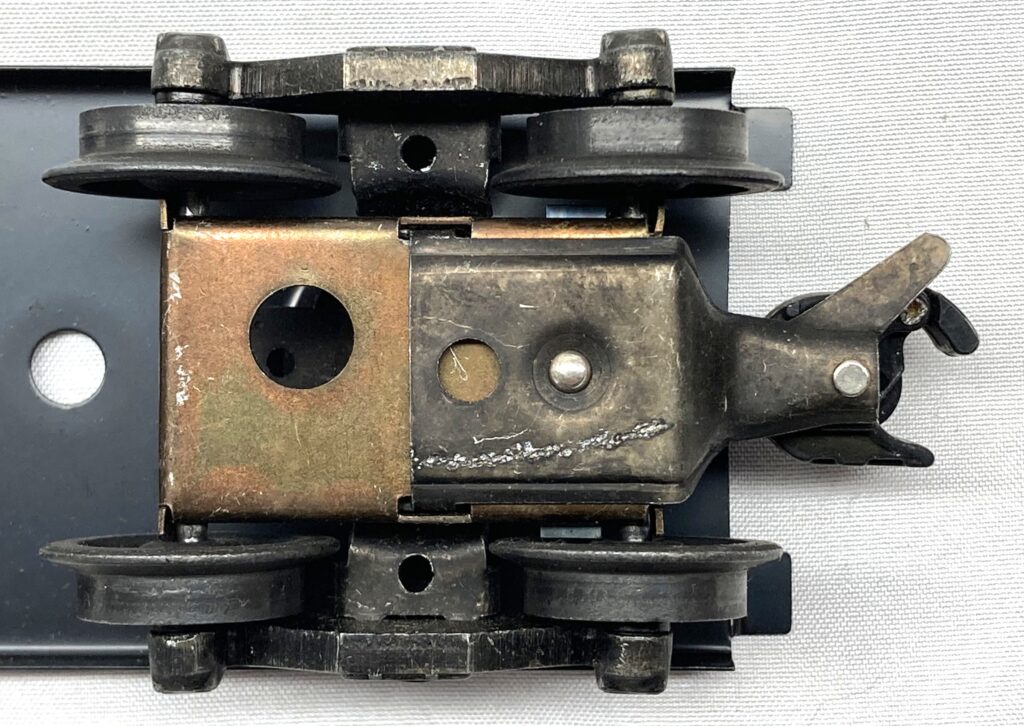
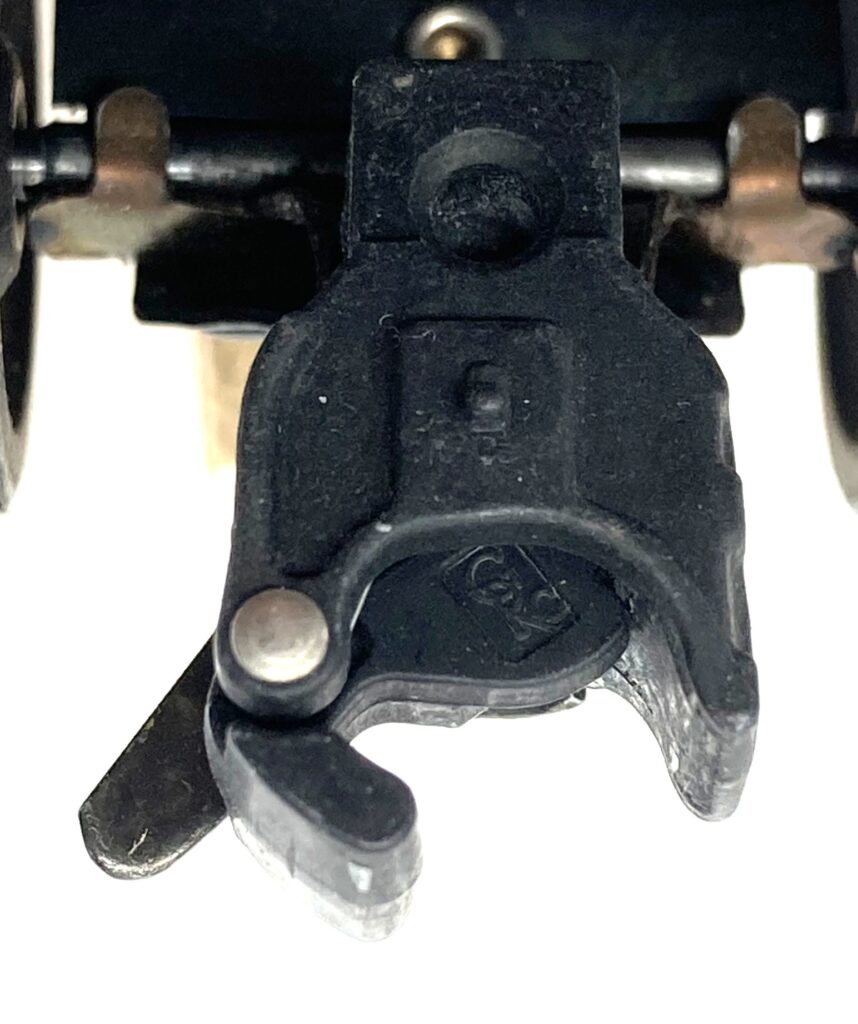
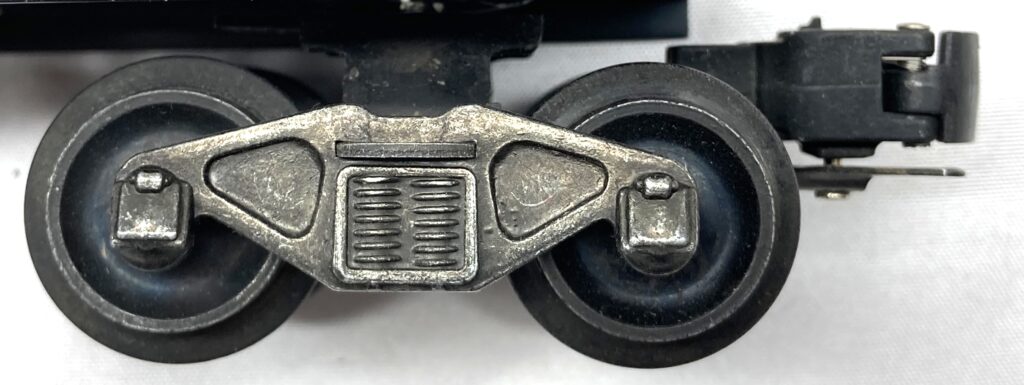
1969
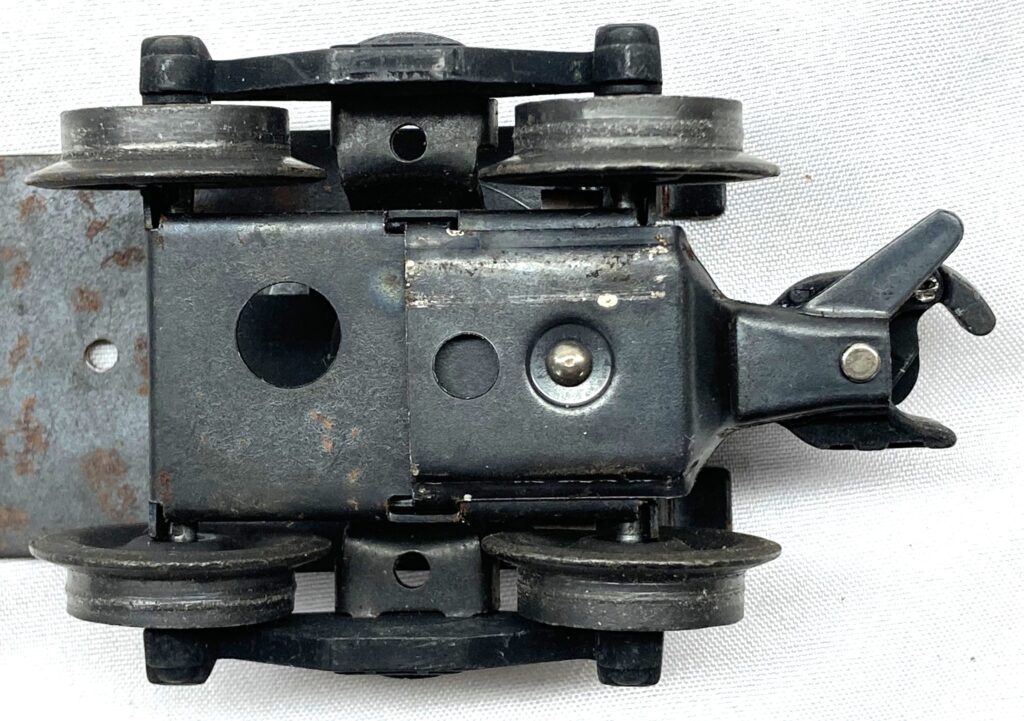
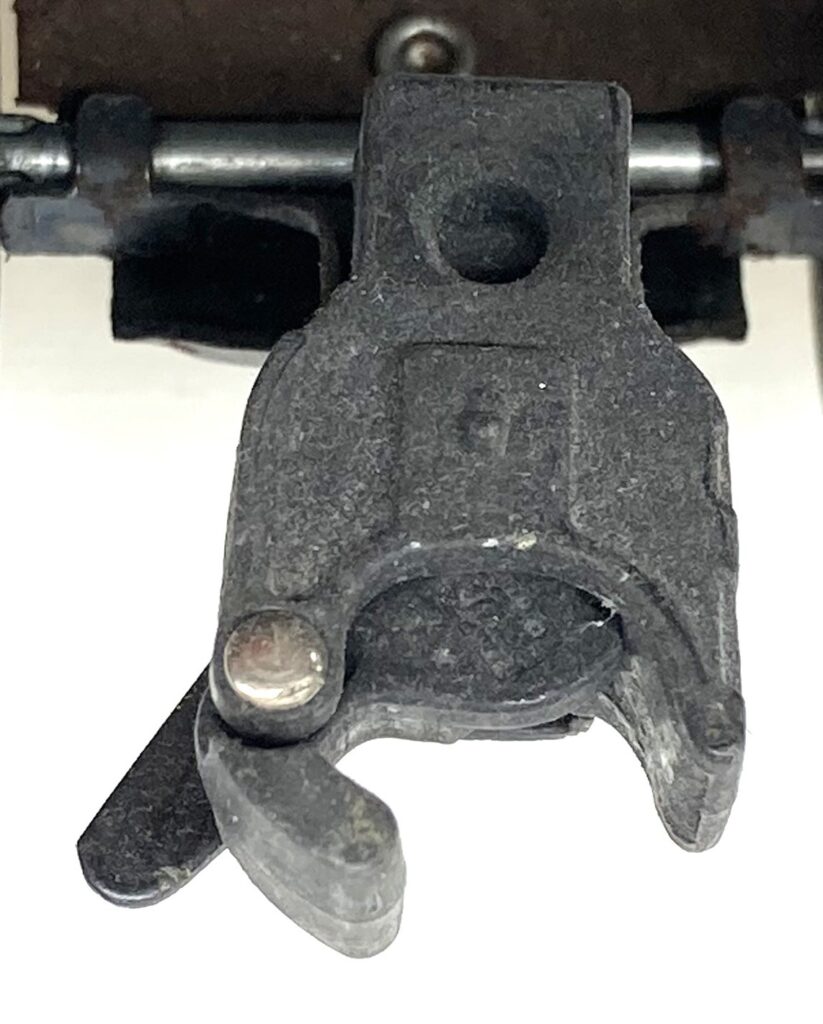
Die cast Bar end trucks with magnetic couplers, the rivet in the center of the actuating plate is flared facing up, engraved web on knuckle, shinny pin, with uncoupling tab, with hole in drawbar, with copper tone parts
1948 – 1951
SCOUT TRUCKS
1948
OPERATING
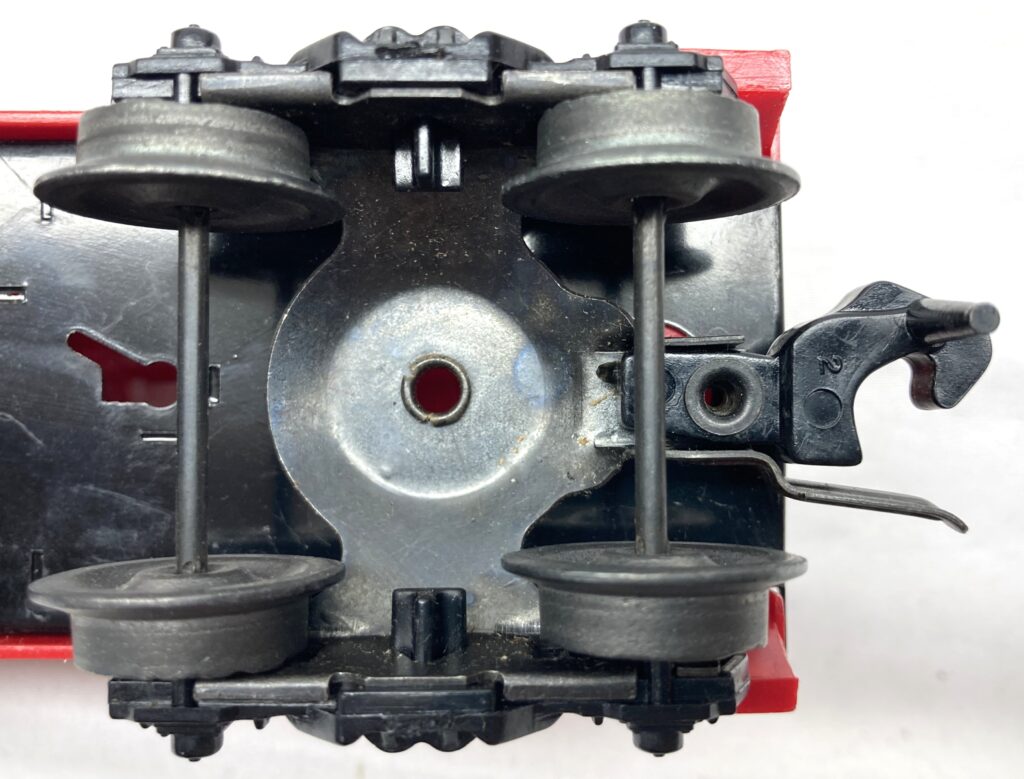
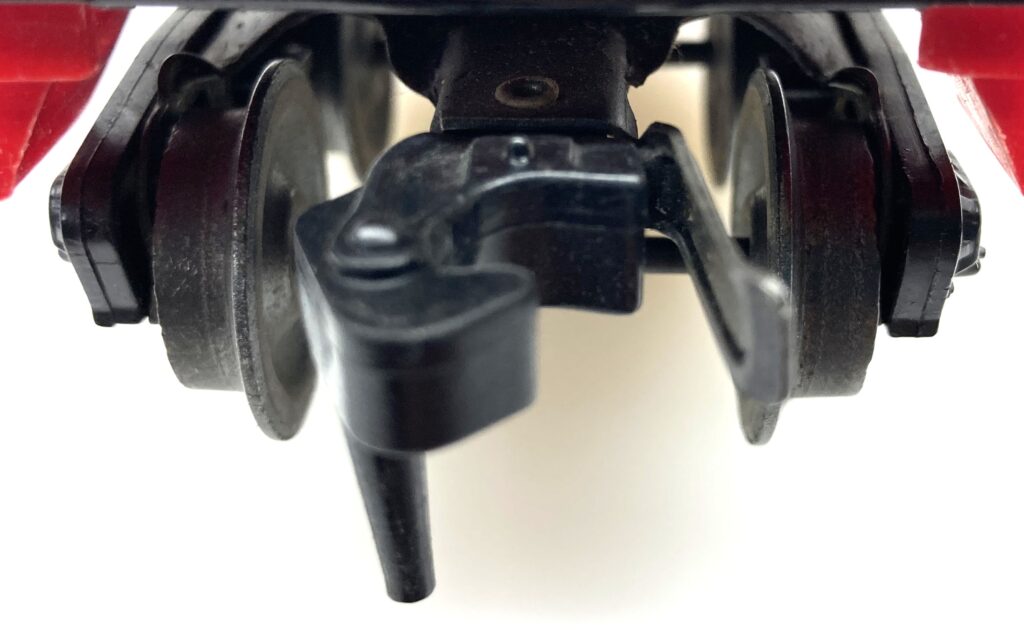
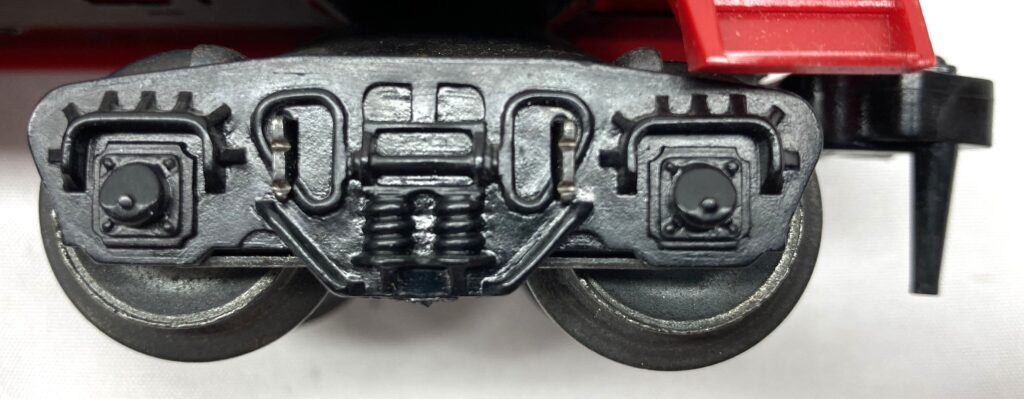
The metal support that holds the side frames is smooth on the bottom.
1948
DUMMY
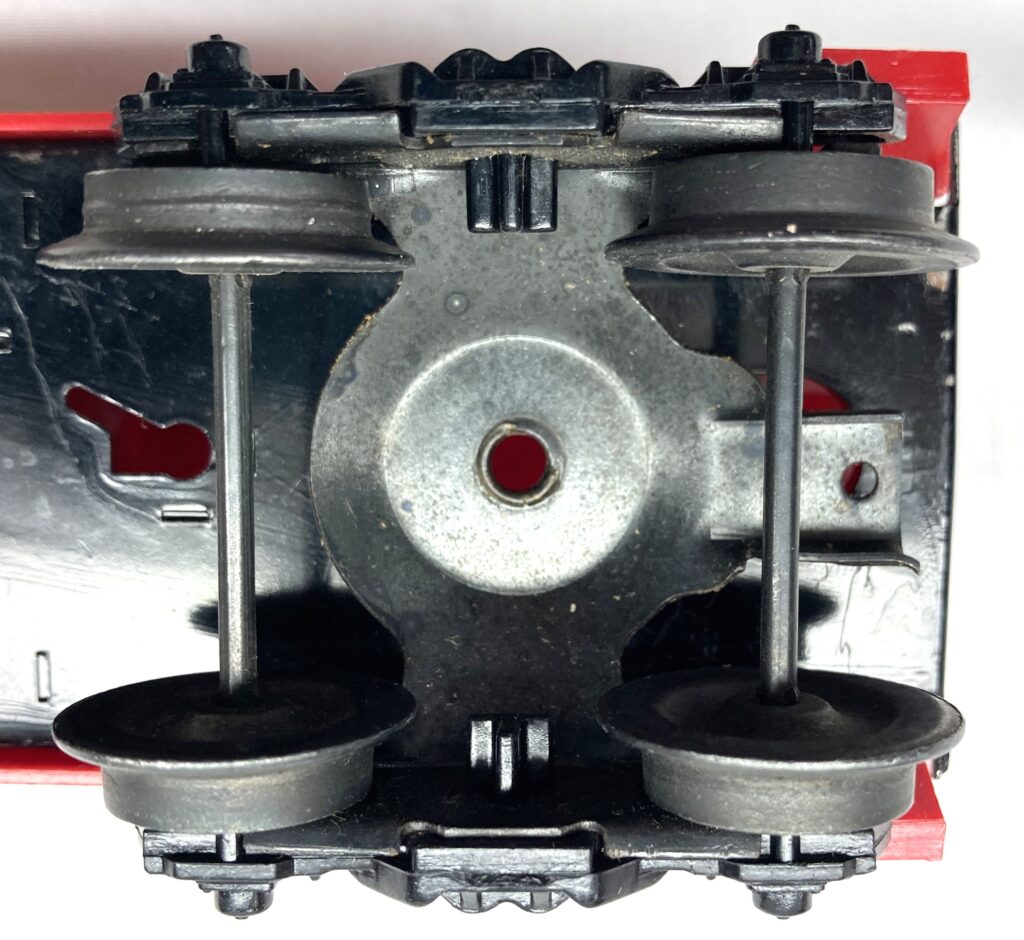
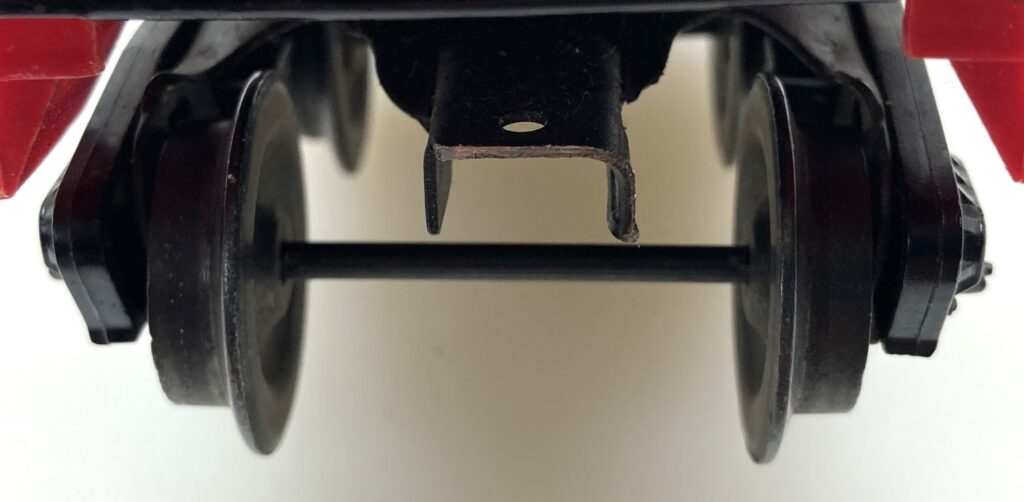
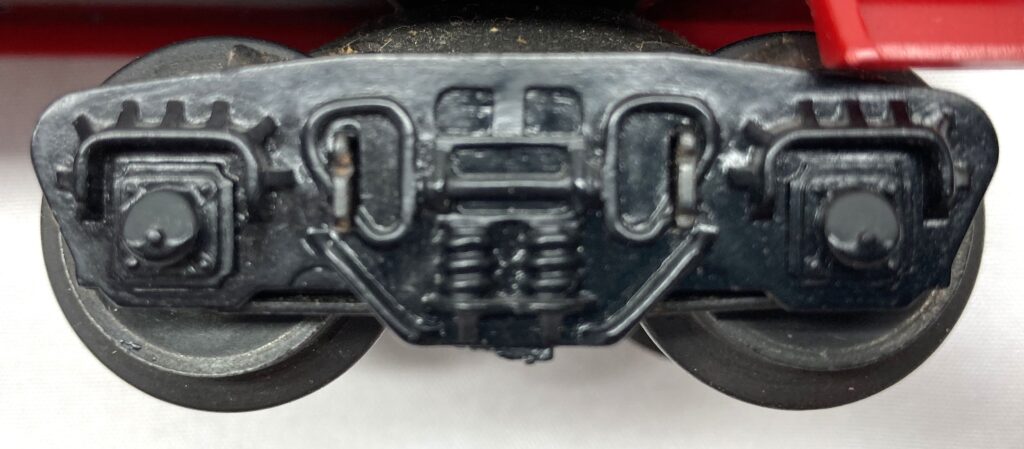
The metal support that holds the side frames is smooth on the bottom.
1949 – 1951
OPERATING
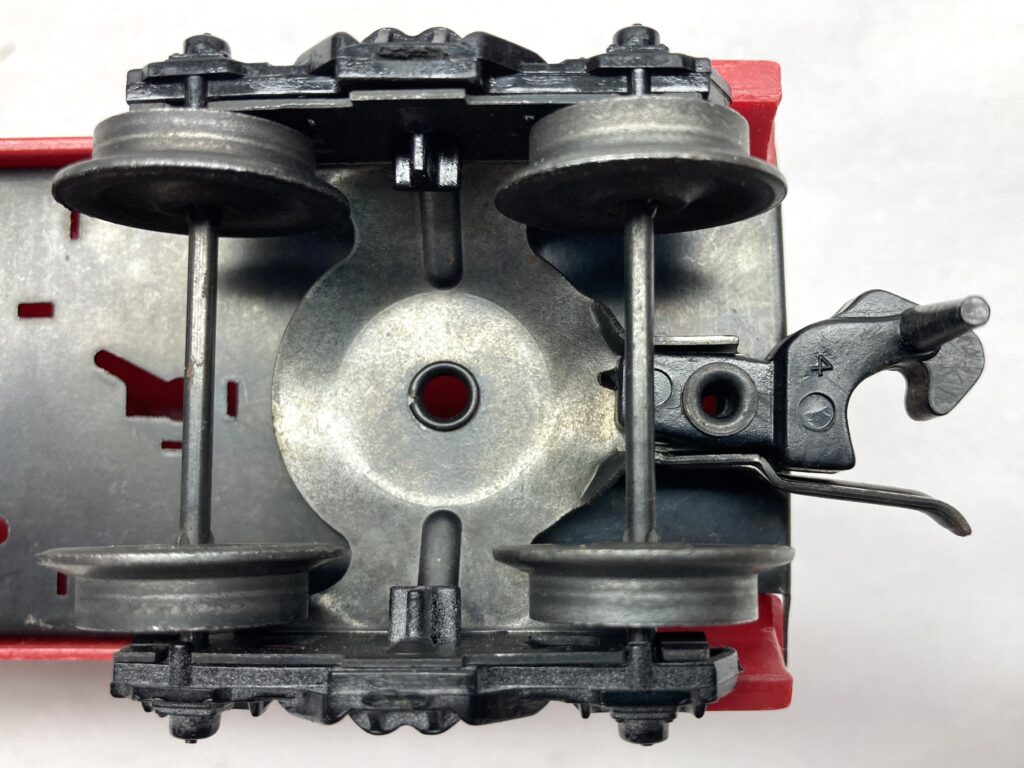
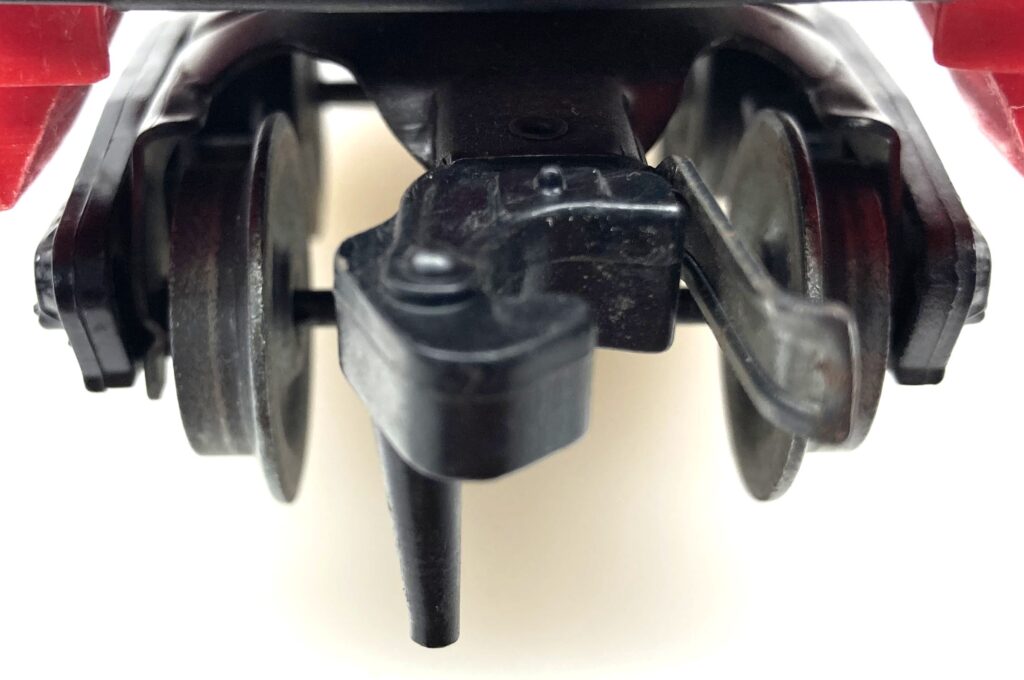
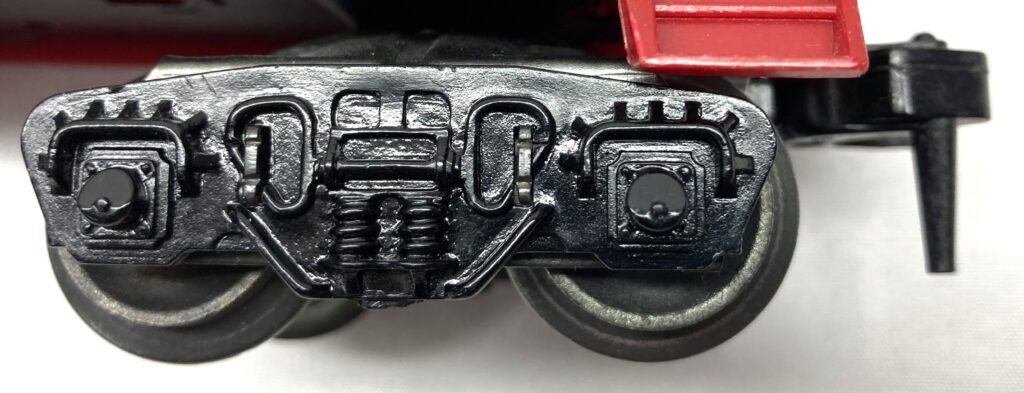
The metal support that holds the side frames has a rib on the bottom.
1949 – 1951
DUMMY
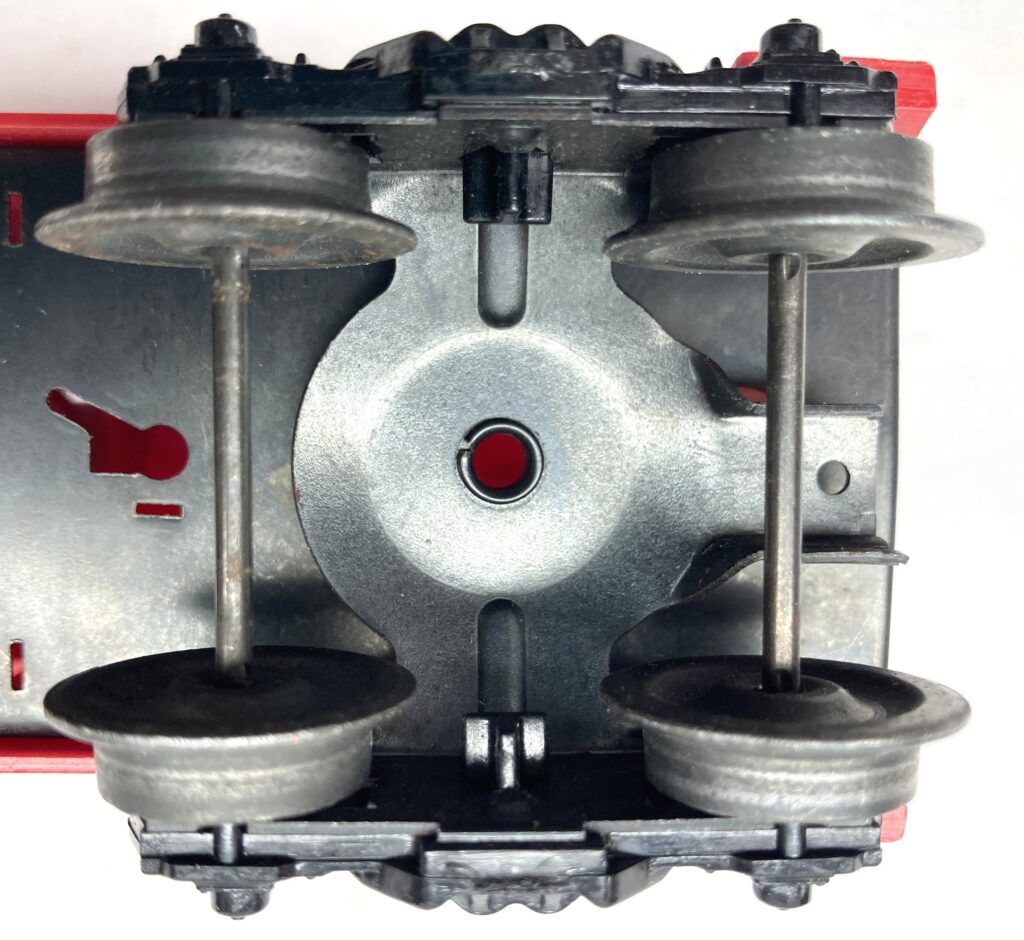
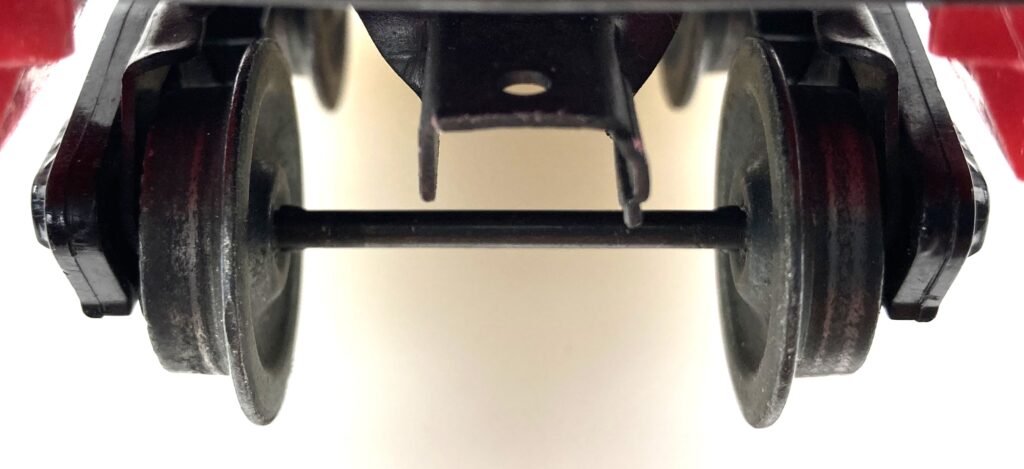
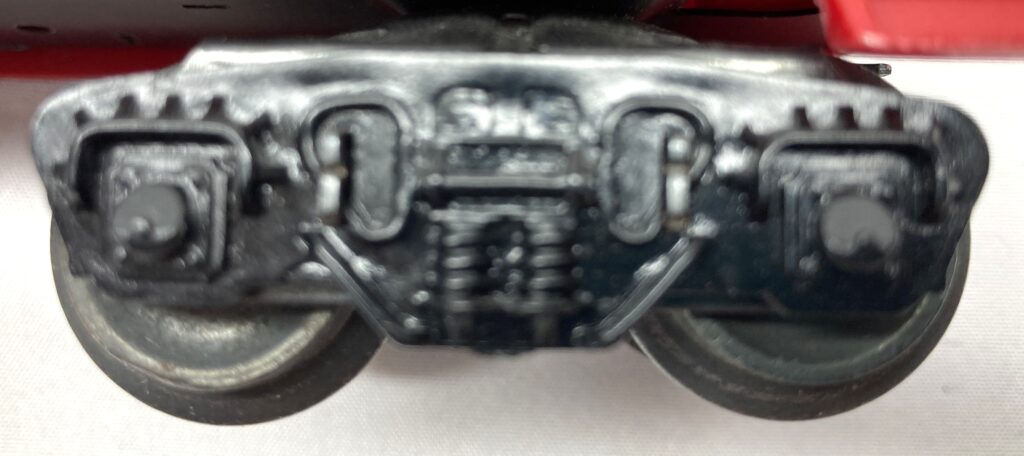
The metal support that holds the side frames has a rib on the bottom.
1952 – 1955
SEMI SCOUT TRUCKS
OPERATING
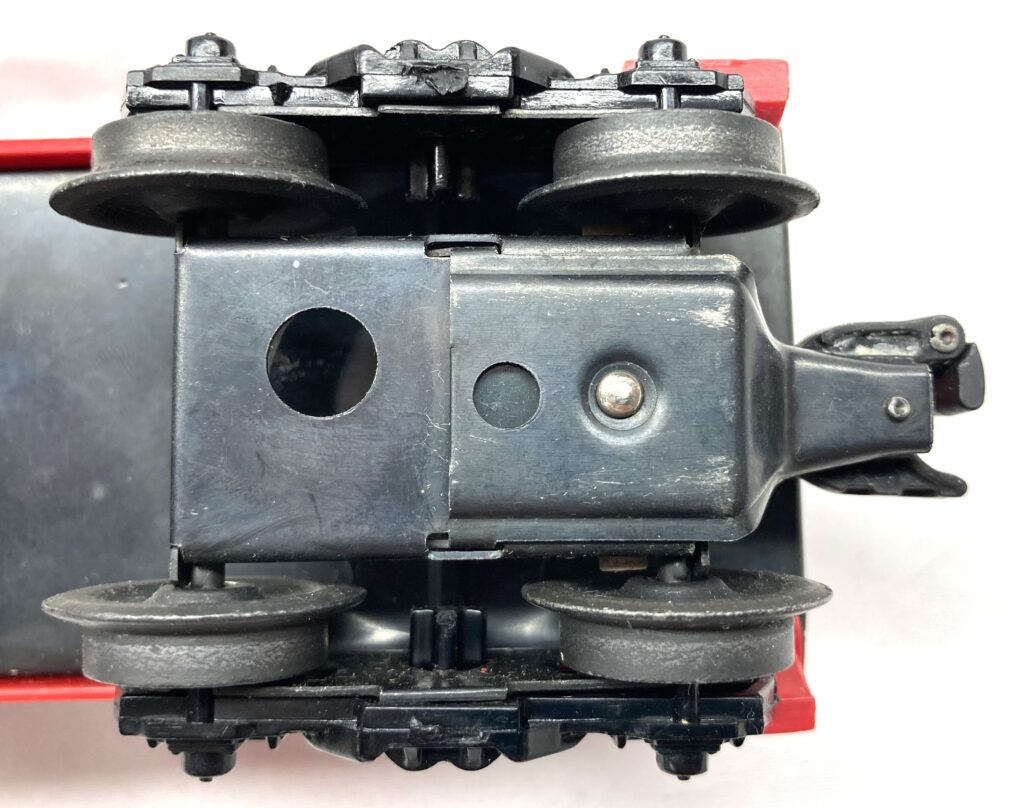
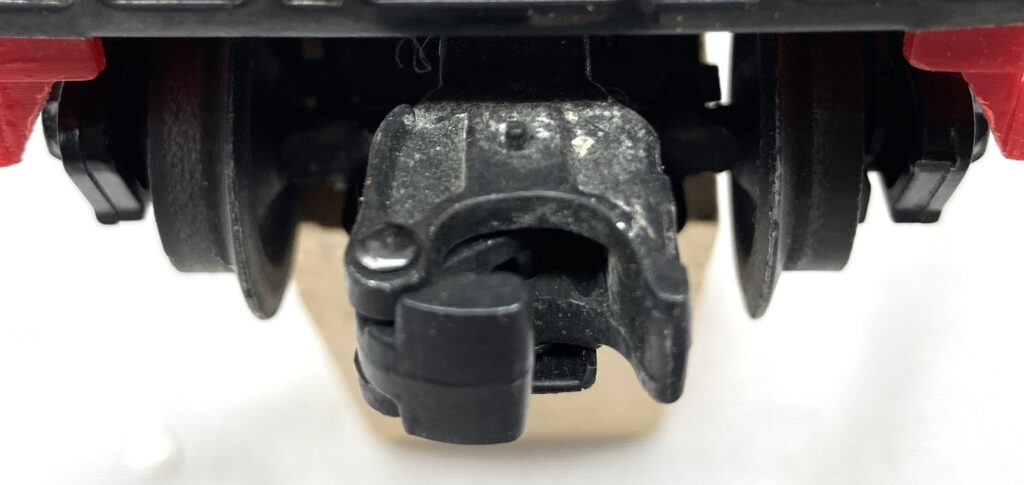
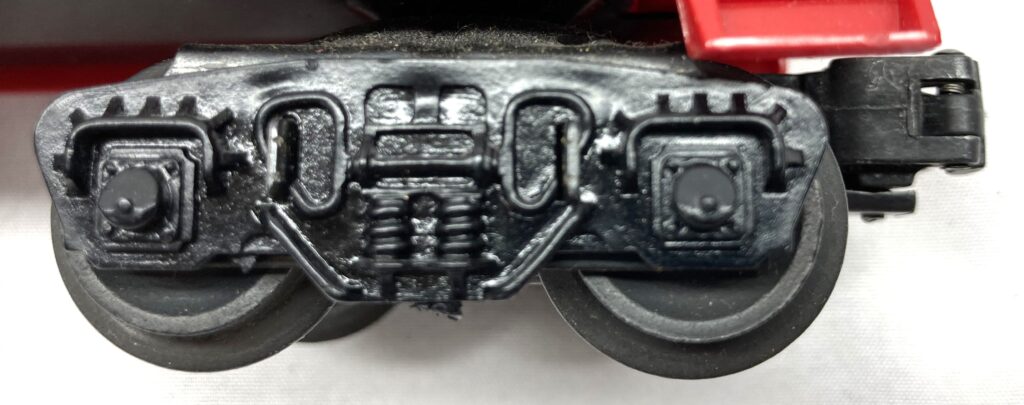
The metal support that holds the side frames has a rib on the bottom.
DUMMY
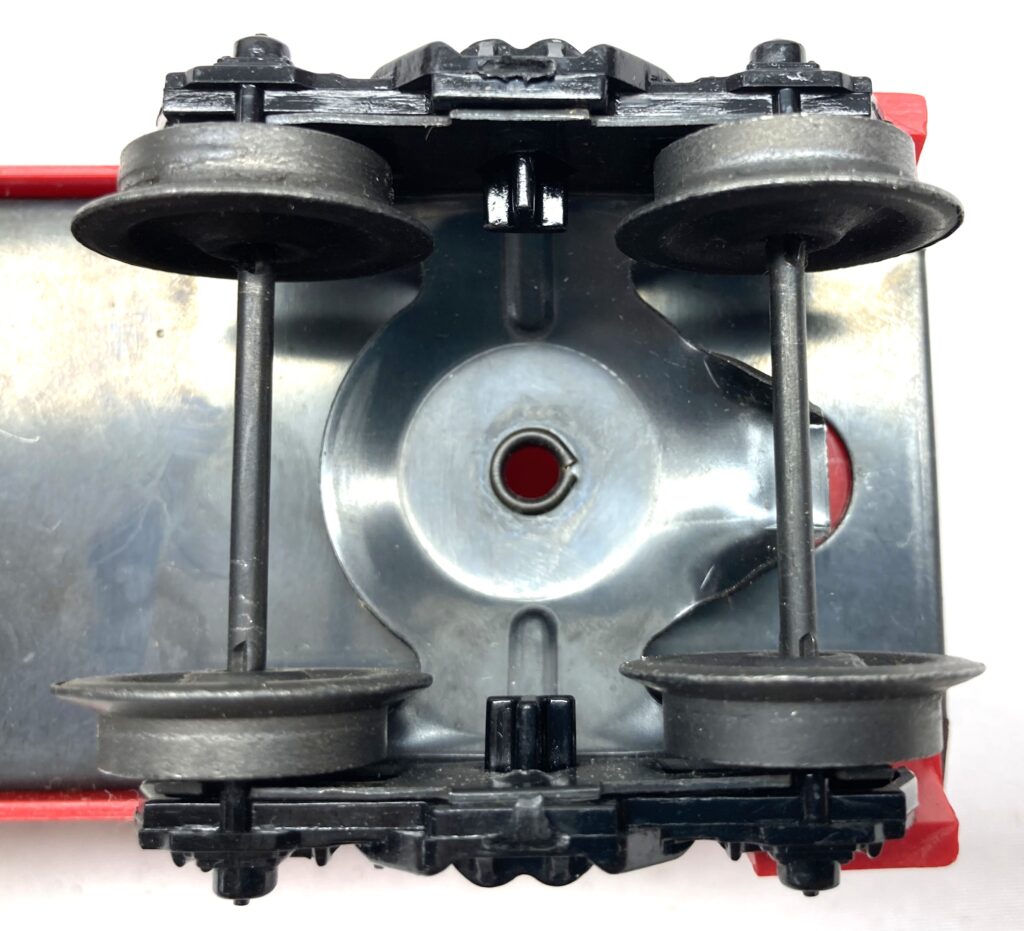
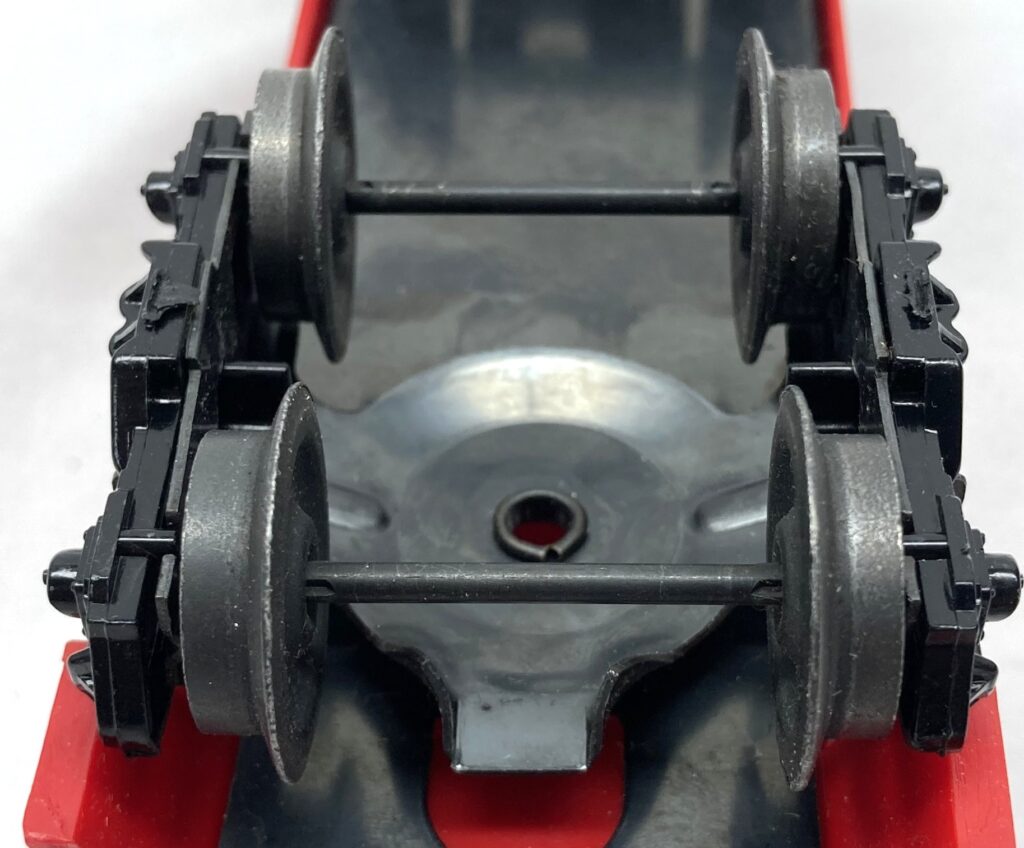
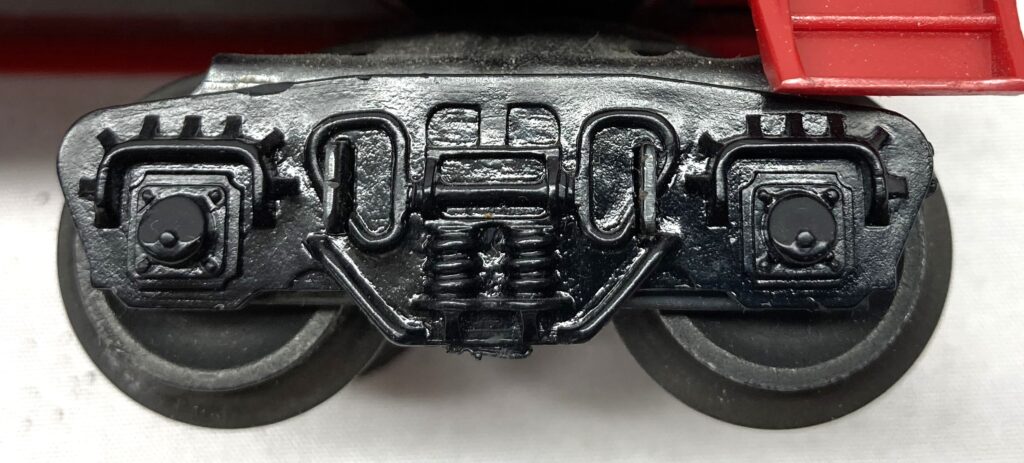
The metal support that holds the side frames has a rib on the bottom.
1958 -1969
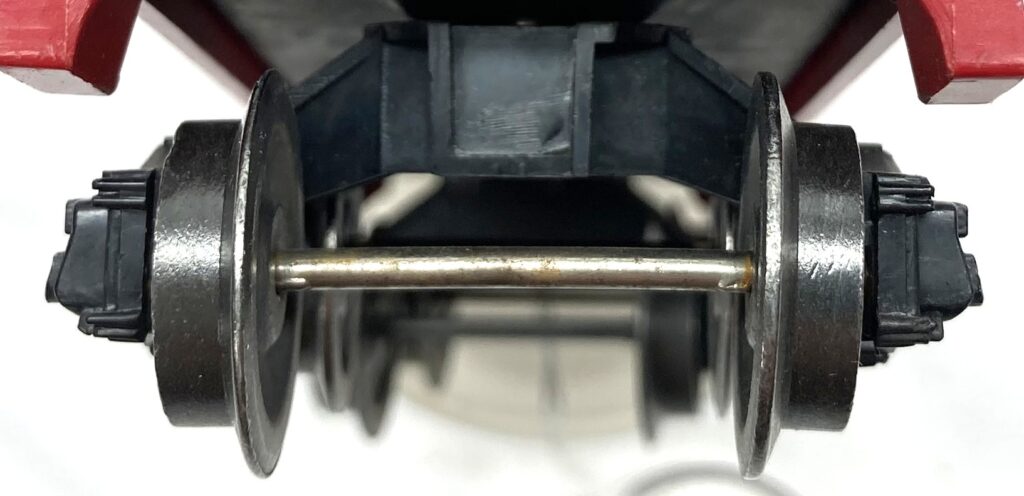
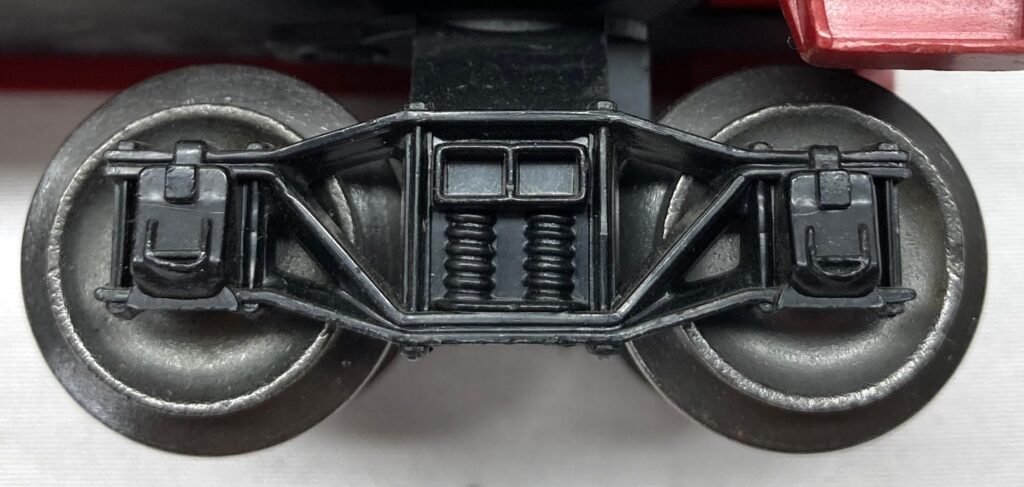
PLASTIC AAR TRUCKS
There are three different knuckles used with these trucks:
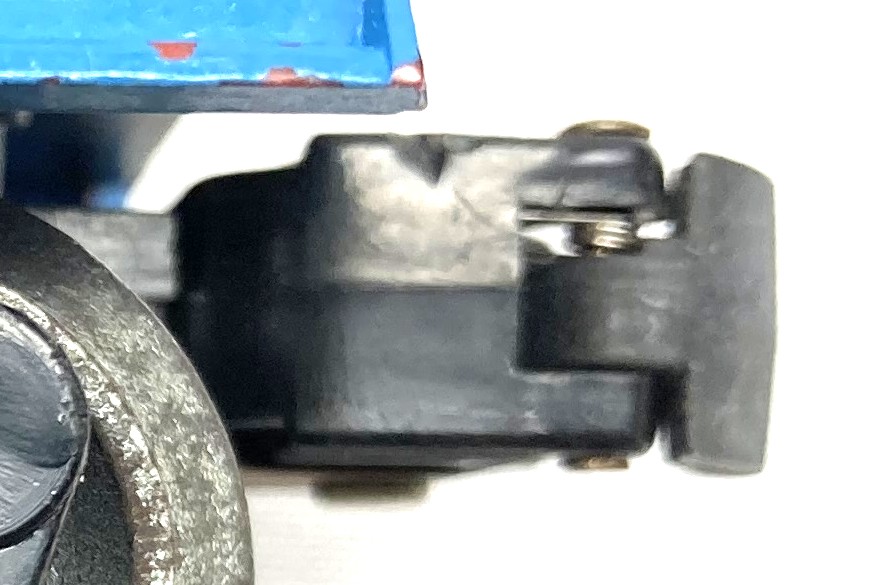
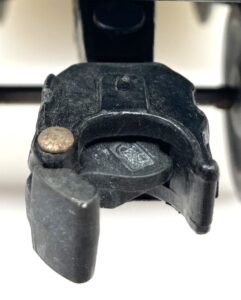
Metal knuckle attached to the plastic body with a silver knuckle pin. 1958 – 1961

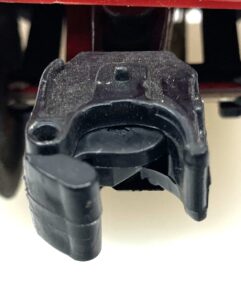
Delrin knuckle with an integral copper spring, 1963 – 1964
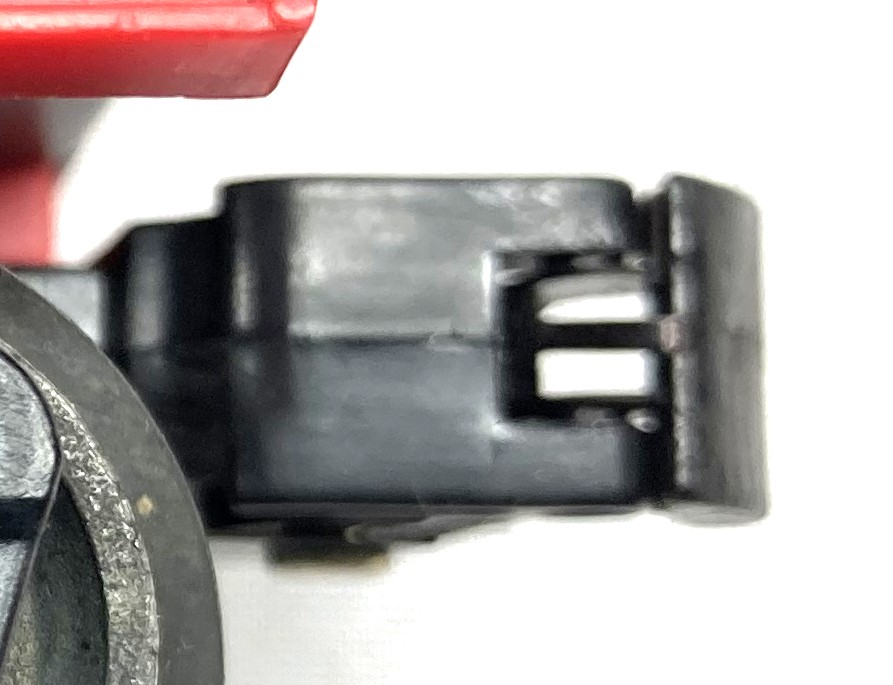
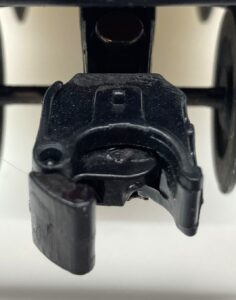
Delrin knuckle with an integral plastic spring, 1961 – 1969
1958 – 1962
PLASTIC AAR TRUCKS WITH CLOSED JOURNALS
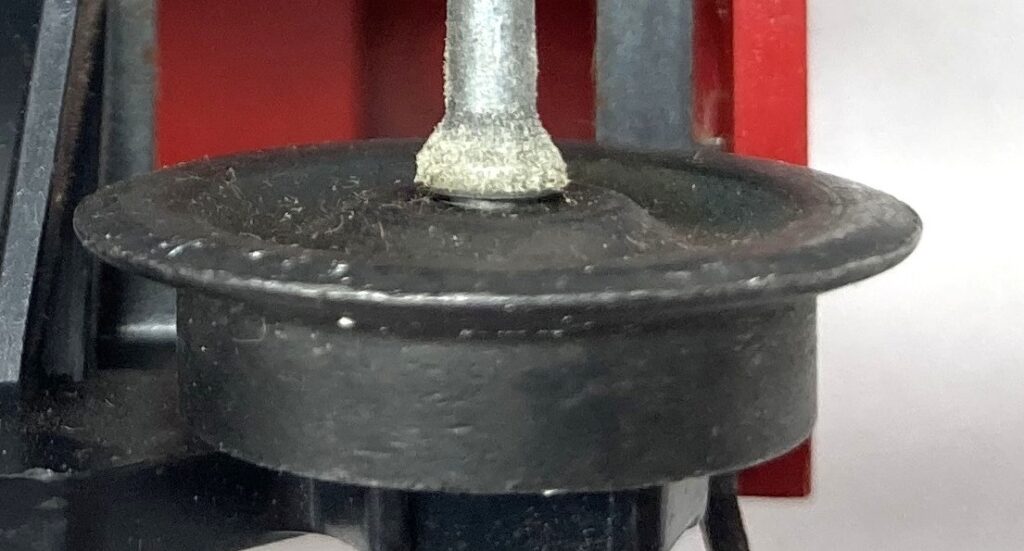
In 1958 there is a nub on the axle behind the wheels
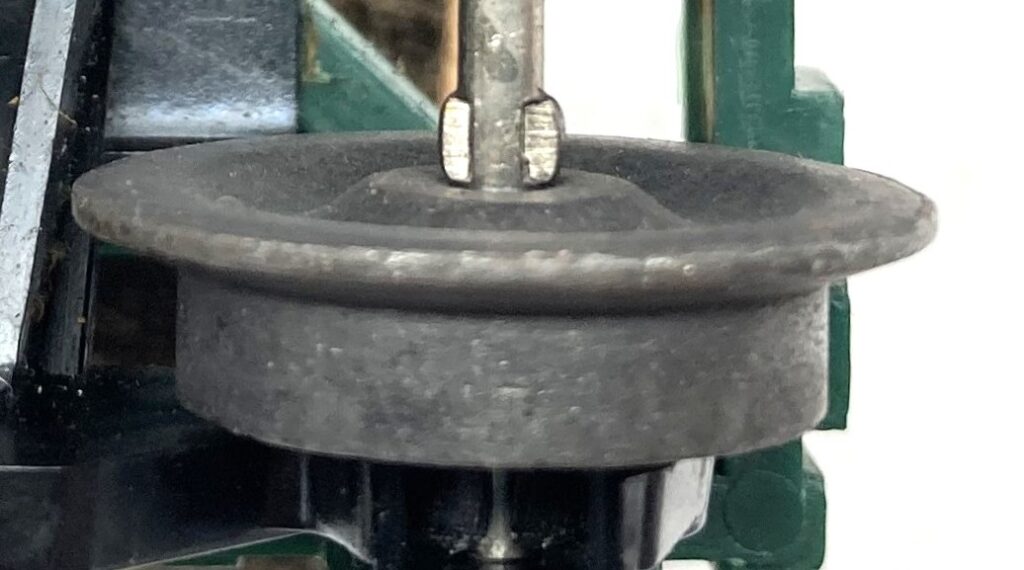
In 1959 – 1969 the axle is pinched behind the wheels
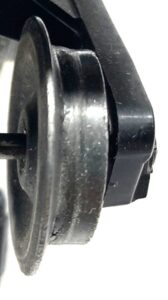
From 1958 – 1959 & 1959 – 1969 the top of the side frame above the axle is smooth and complete
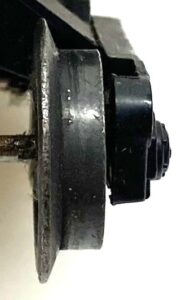
In 1960 there is a notch on the top of the side frame above the axle
OPERATING
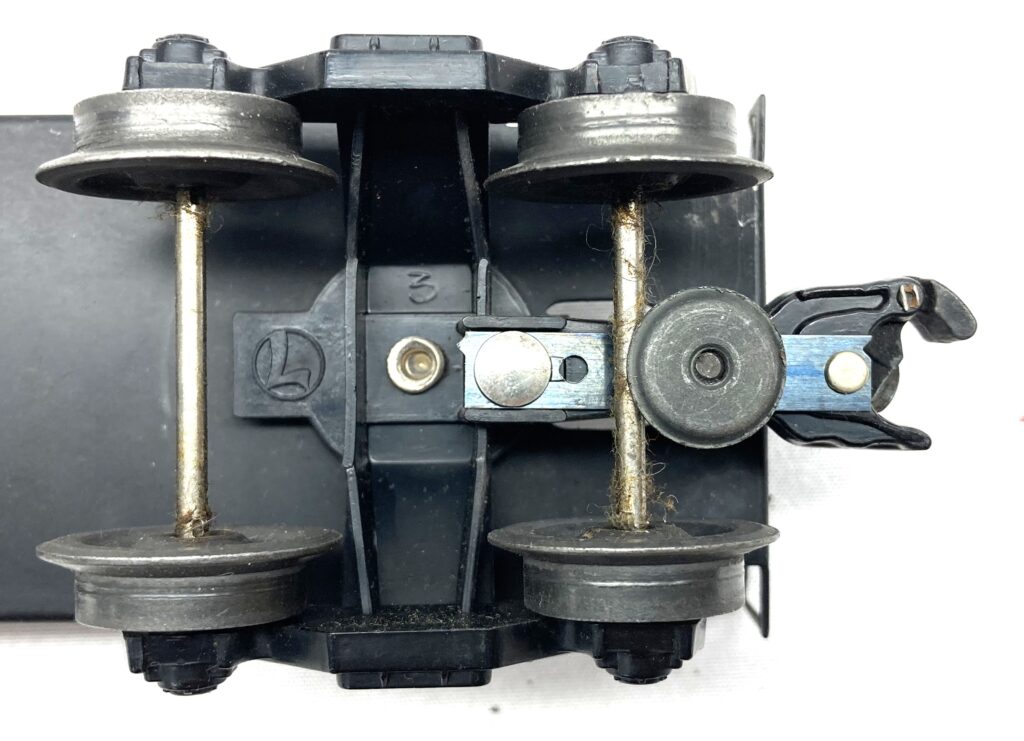
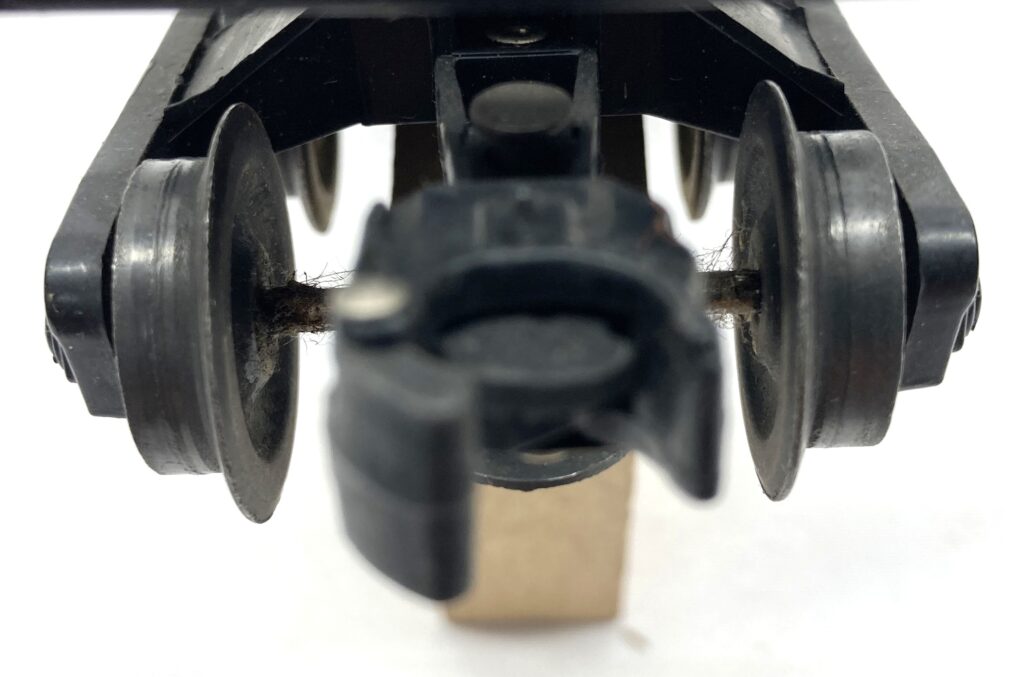
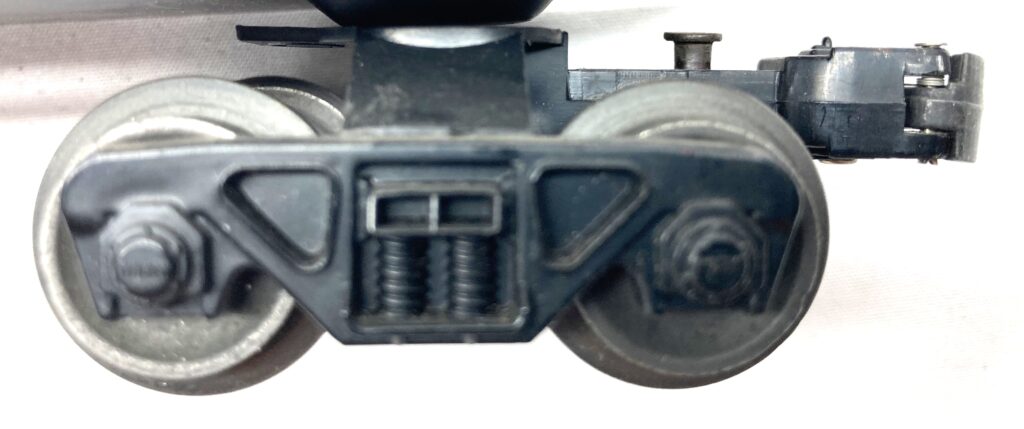
NON – OPERATING
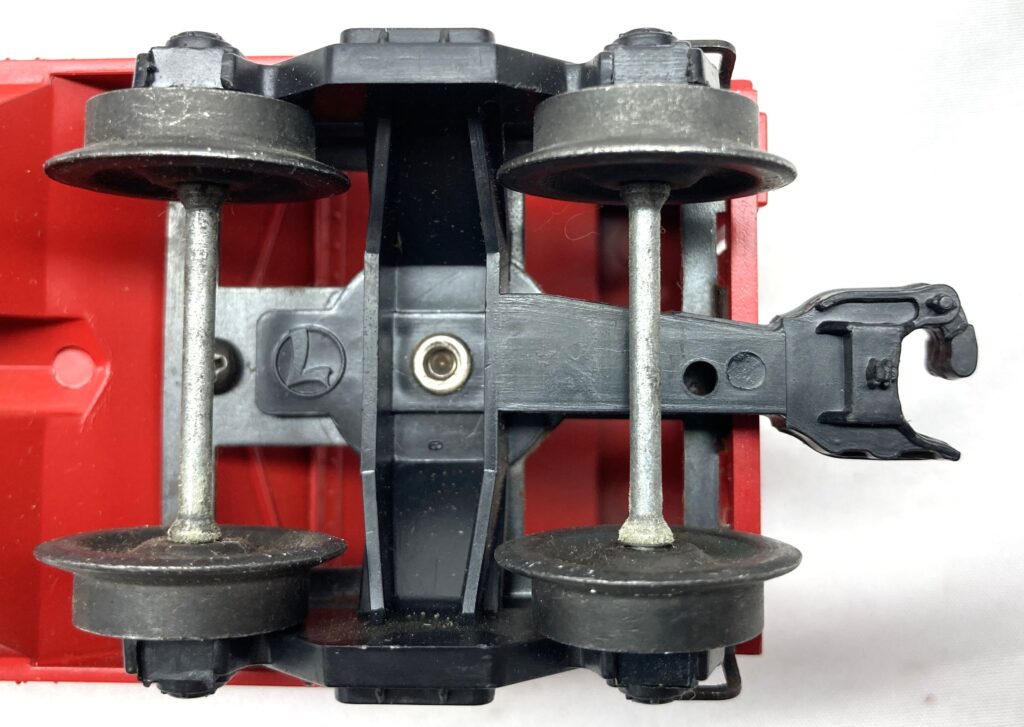
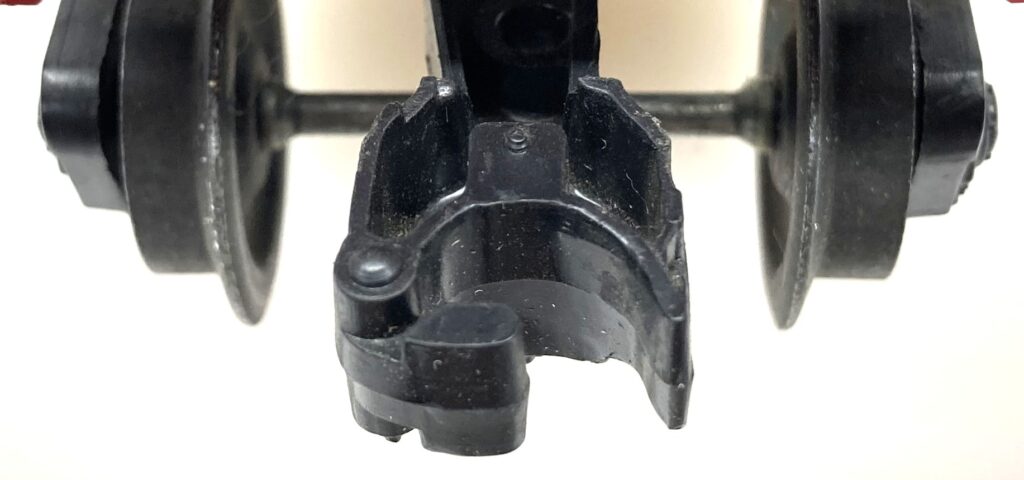
DUMMY
1963 – 1969
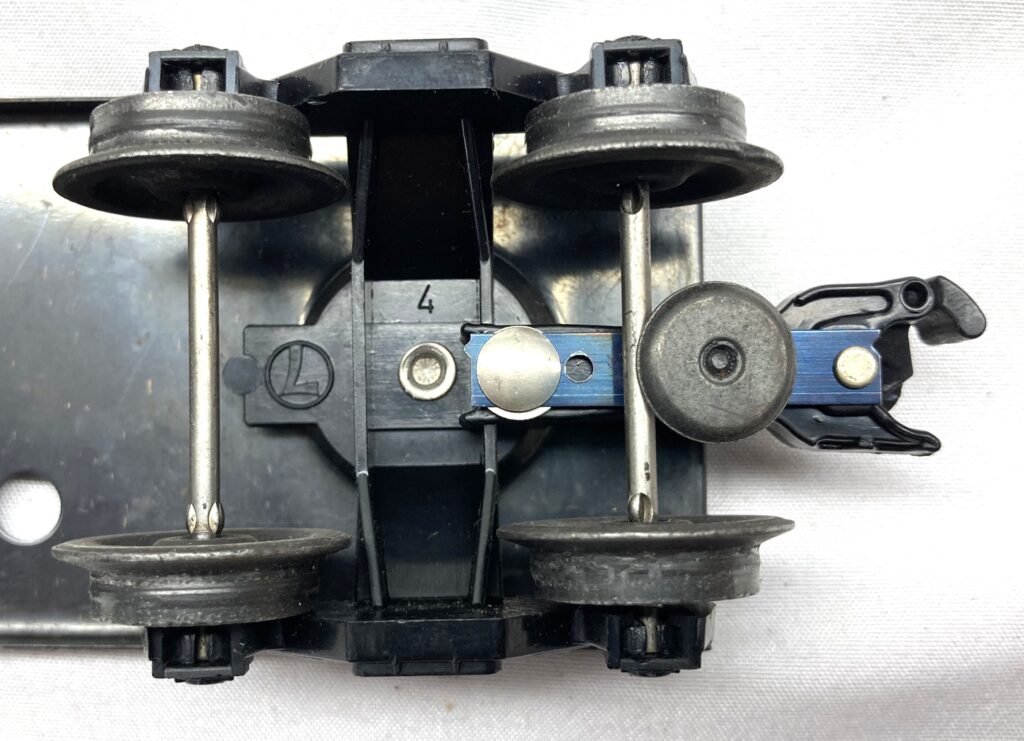
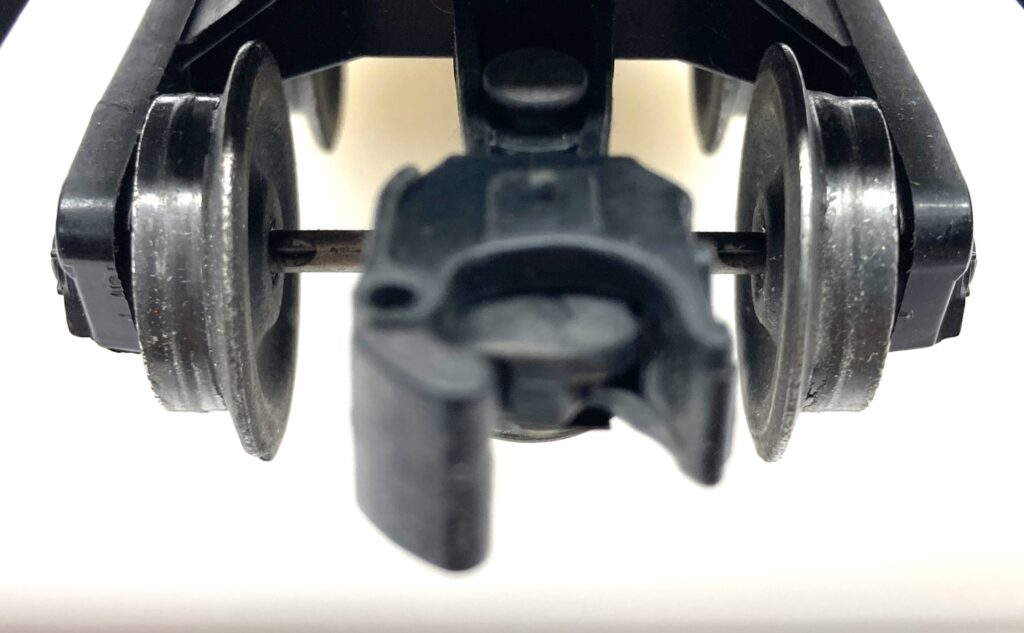
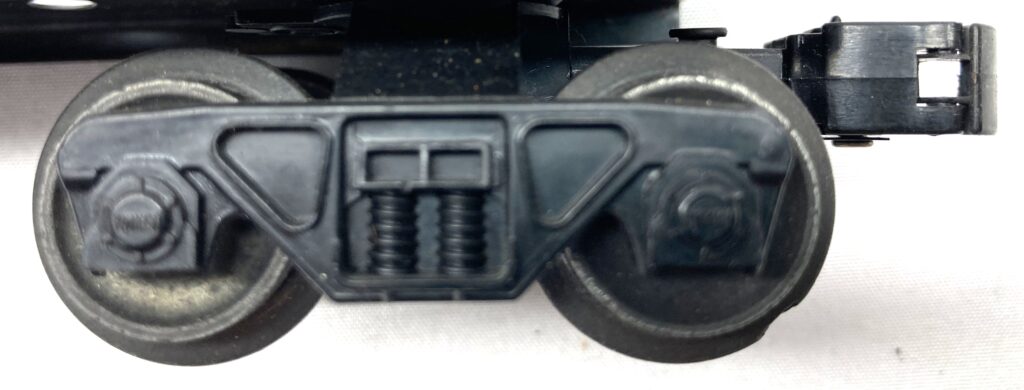
PLASTIC AAR TRUCKS WITH OPEN JOURNALS
OPERATING
NON – OPERATING
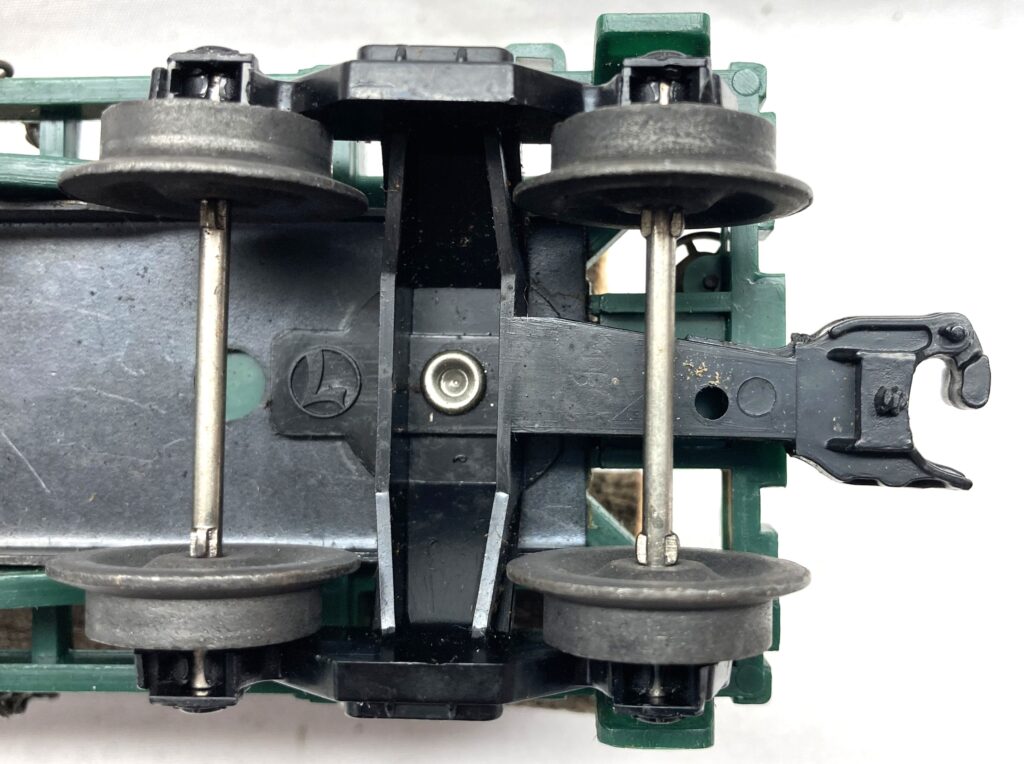
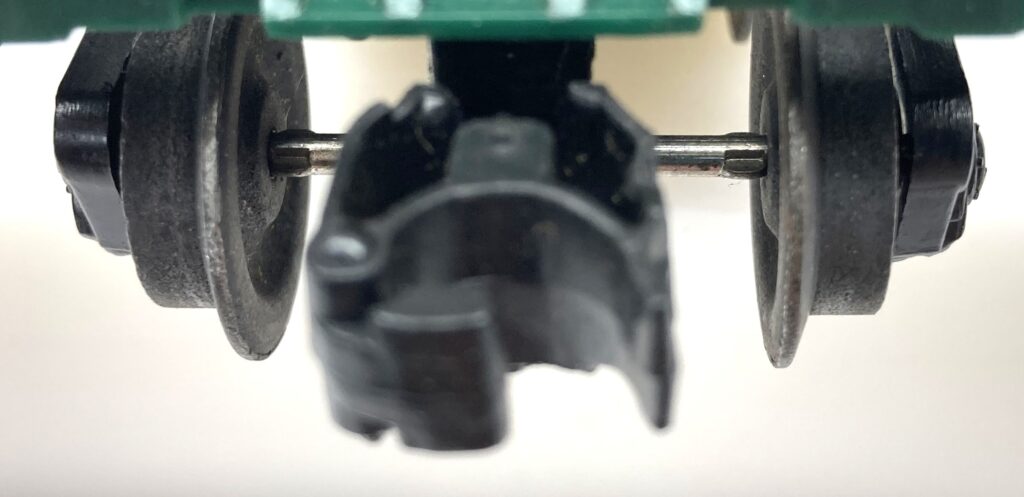
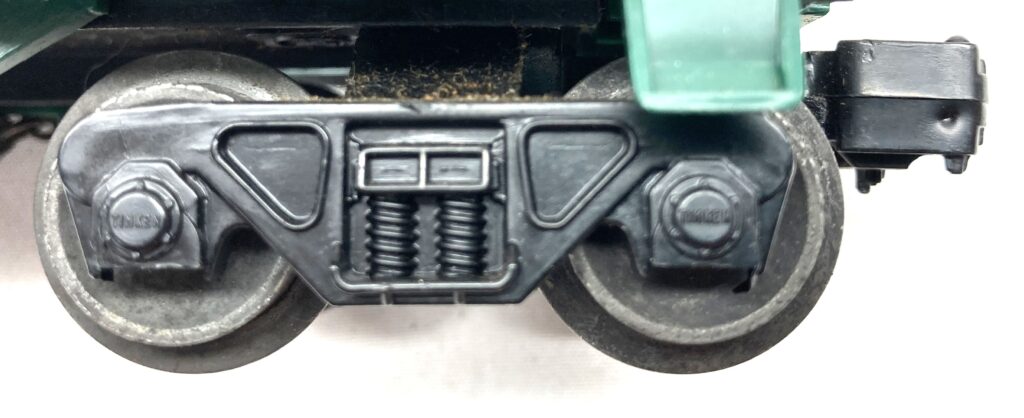
DUMMY
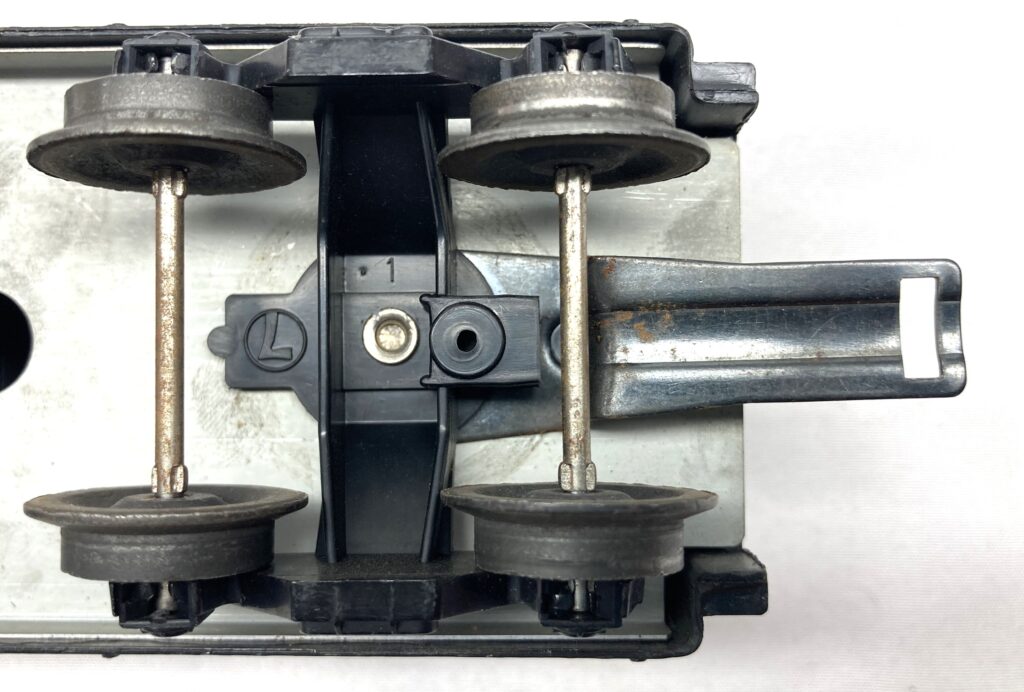
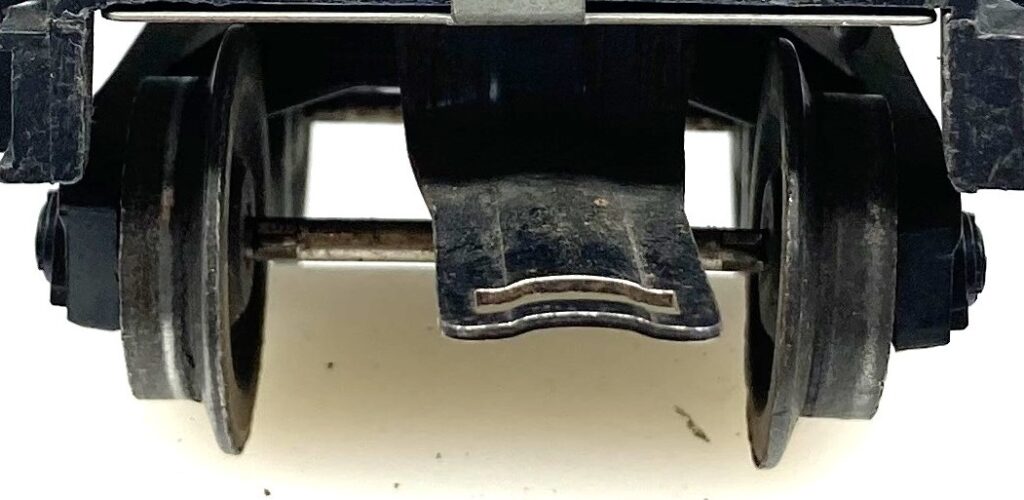
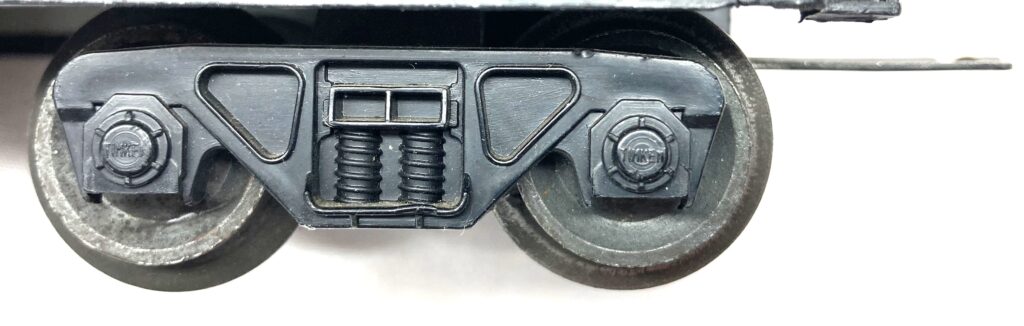
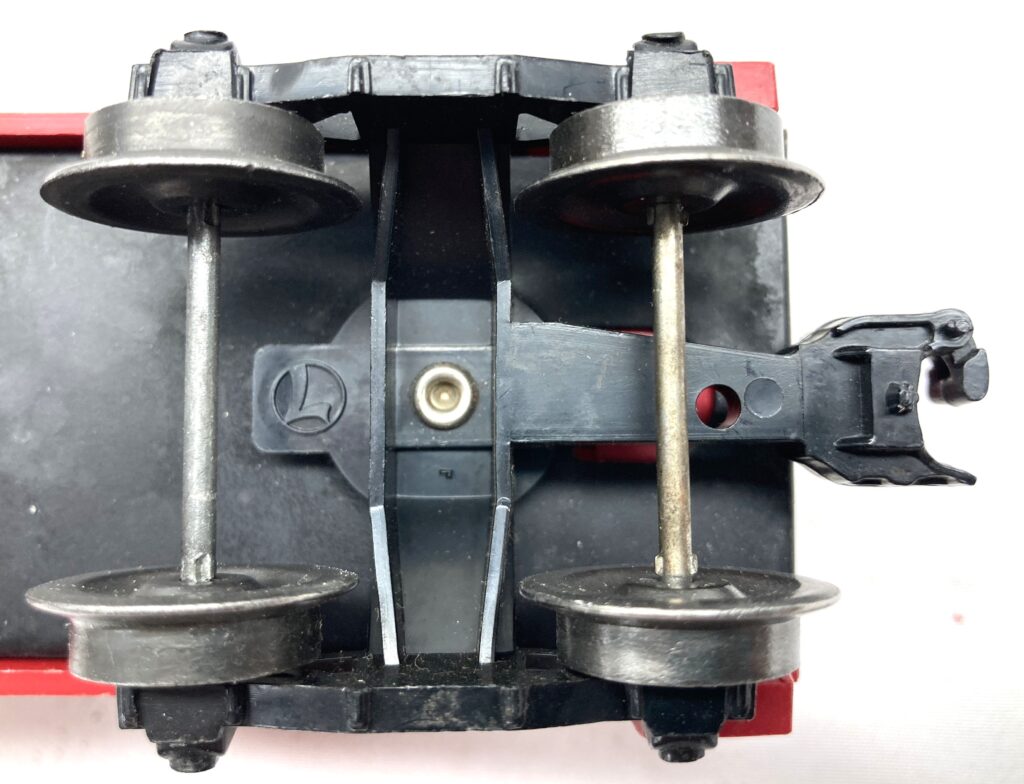
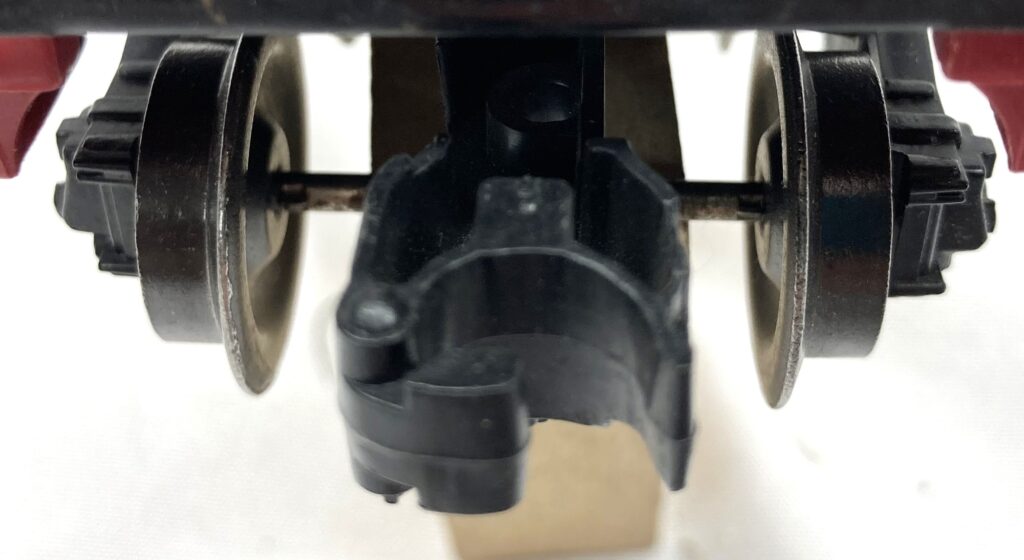
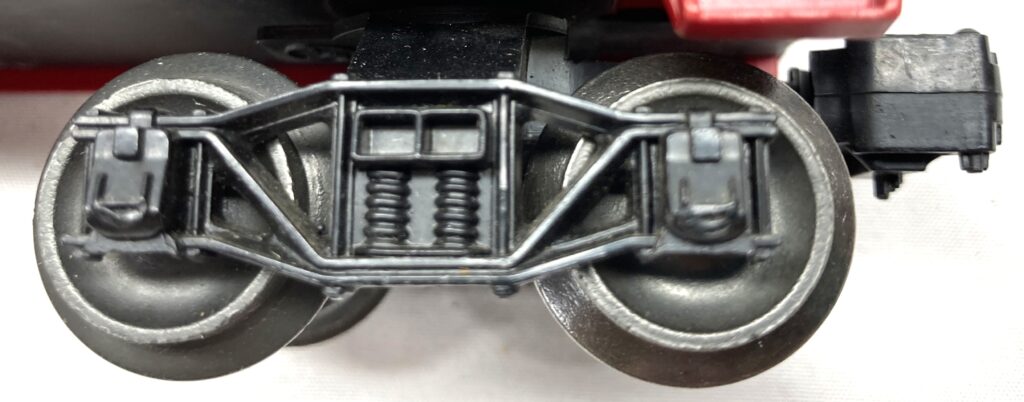
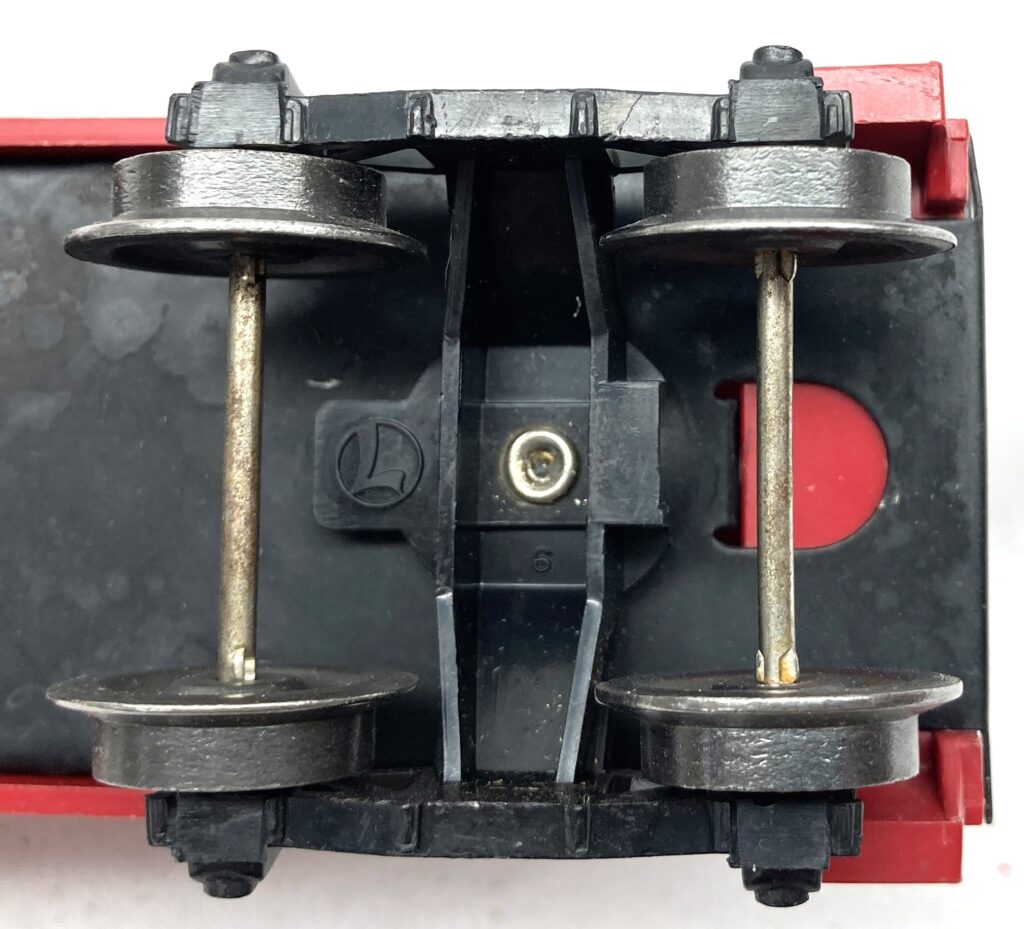
1959 – 1969
ARCH BAR TRUCKS
1959 – 1962
OPERATING
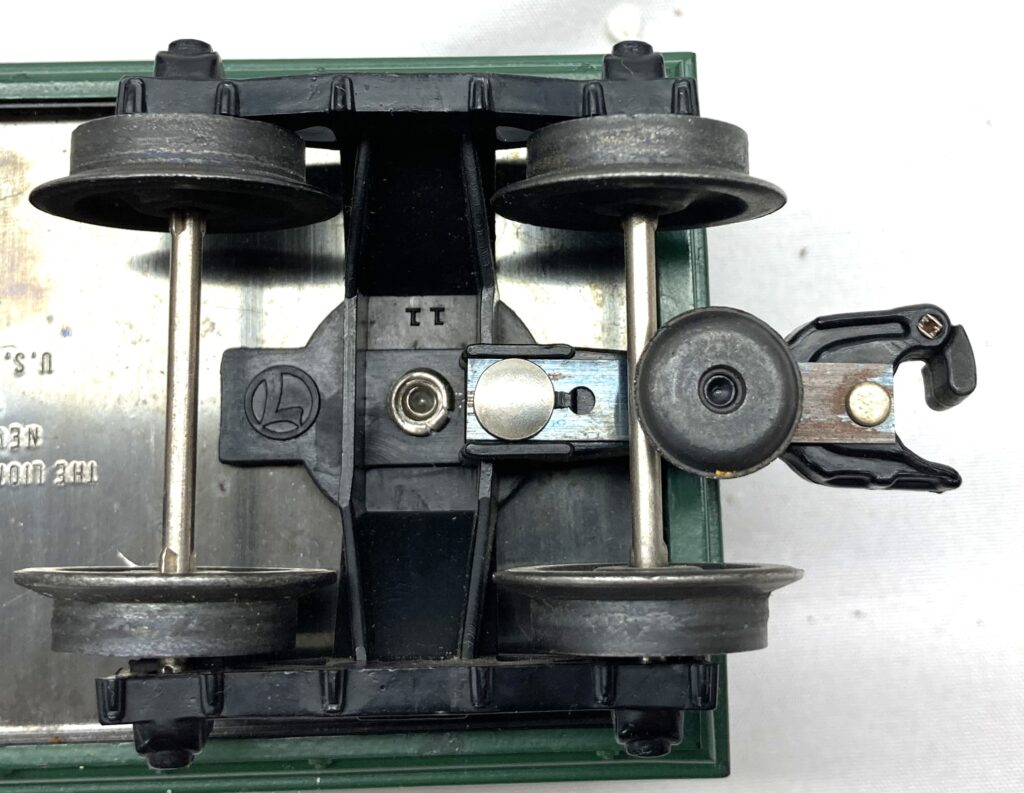
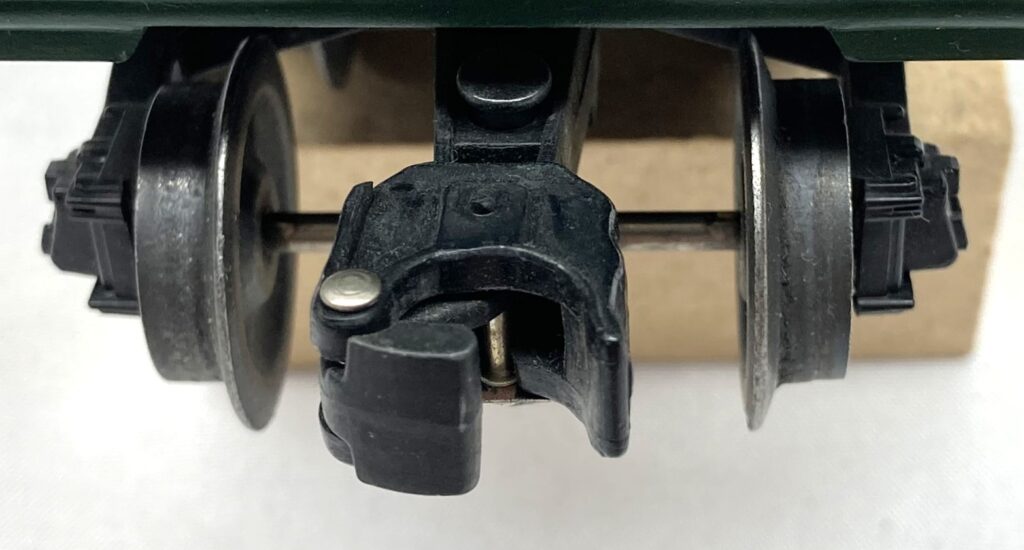
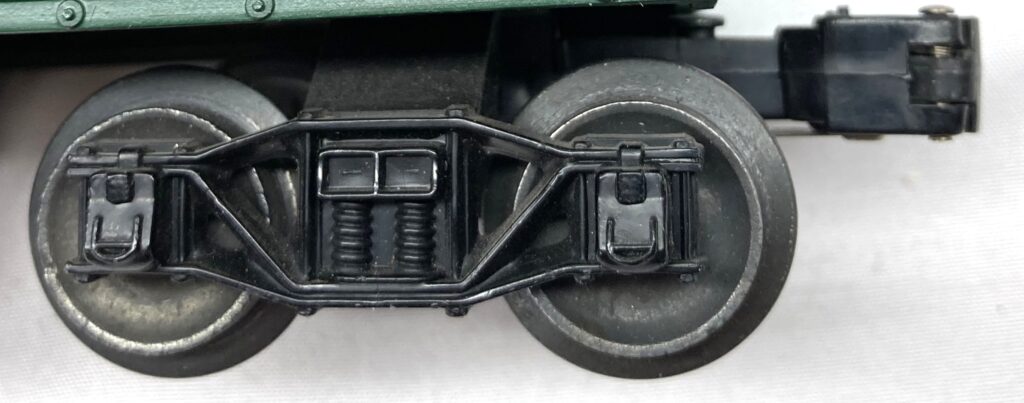
1959 – 1969
NON – OPERATING
1959 – 1969
DUMMY
1948 – 1964
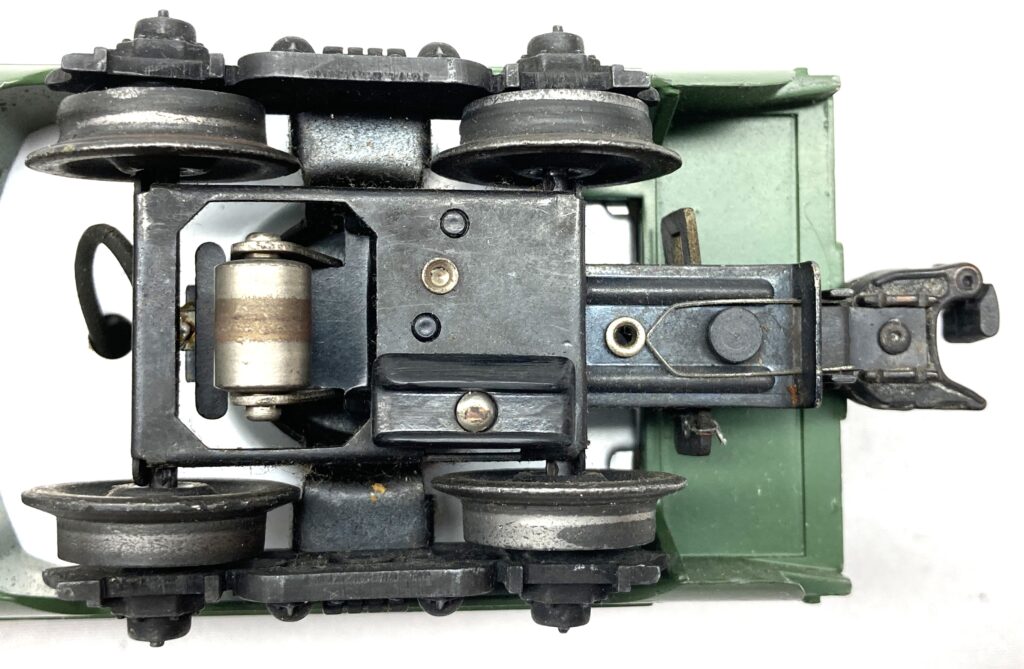
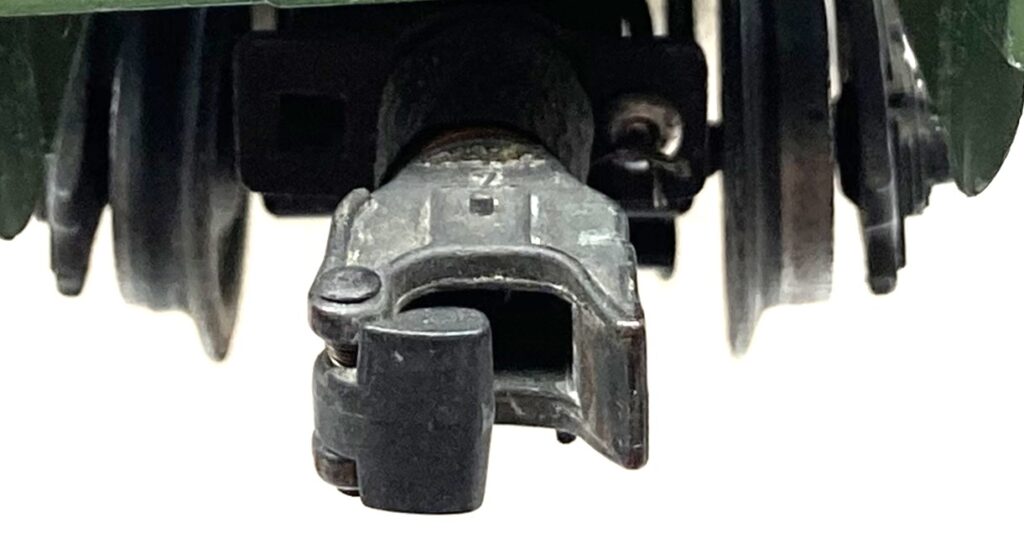
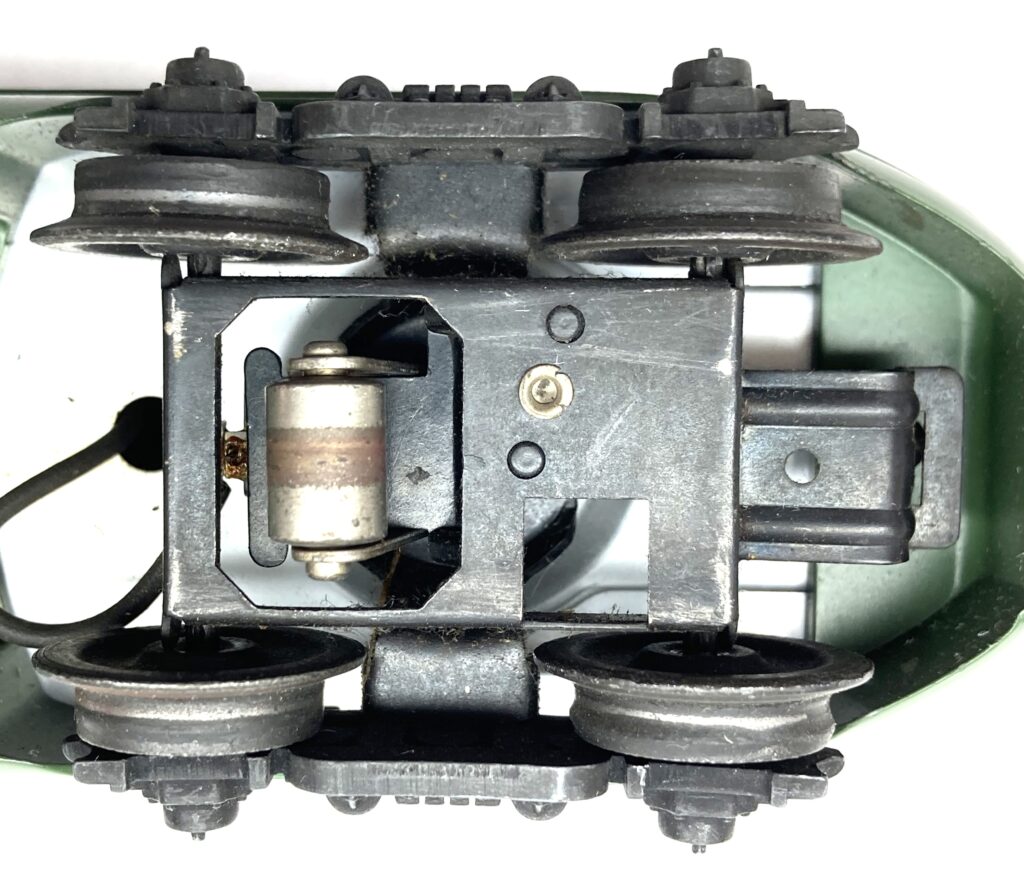
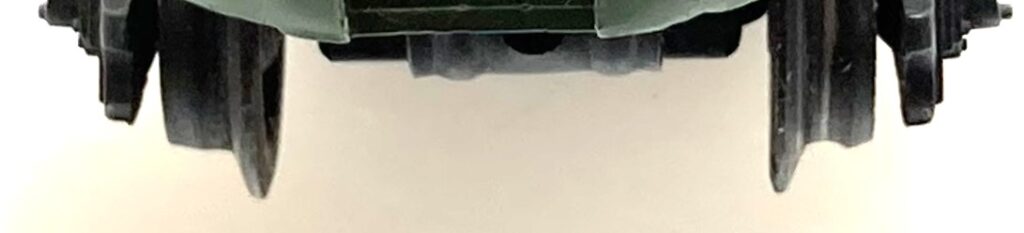
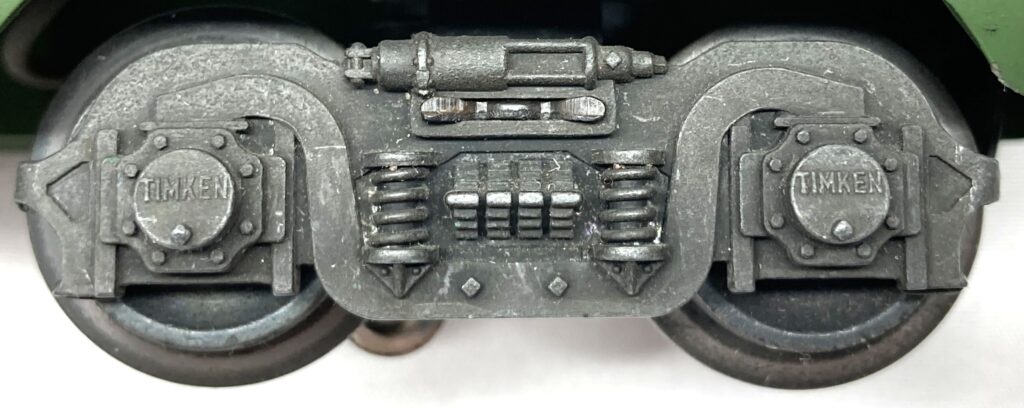
“027” PASSENGER TRUCKS
1948
taped coil couplers
black coupler drawbar pivot rivet
OPERATING
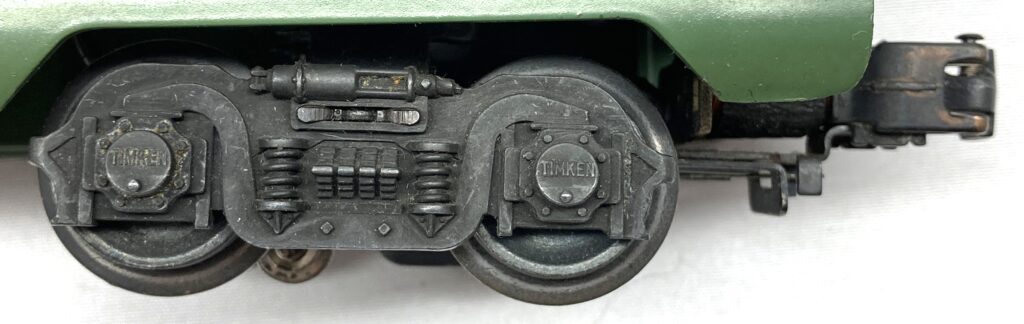
DUMMY
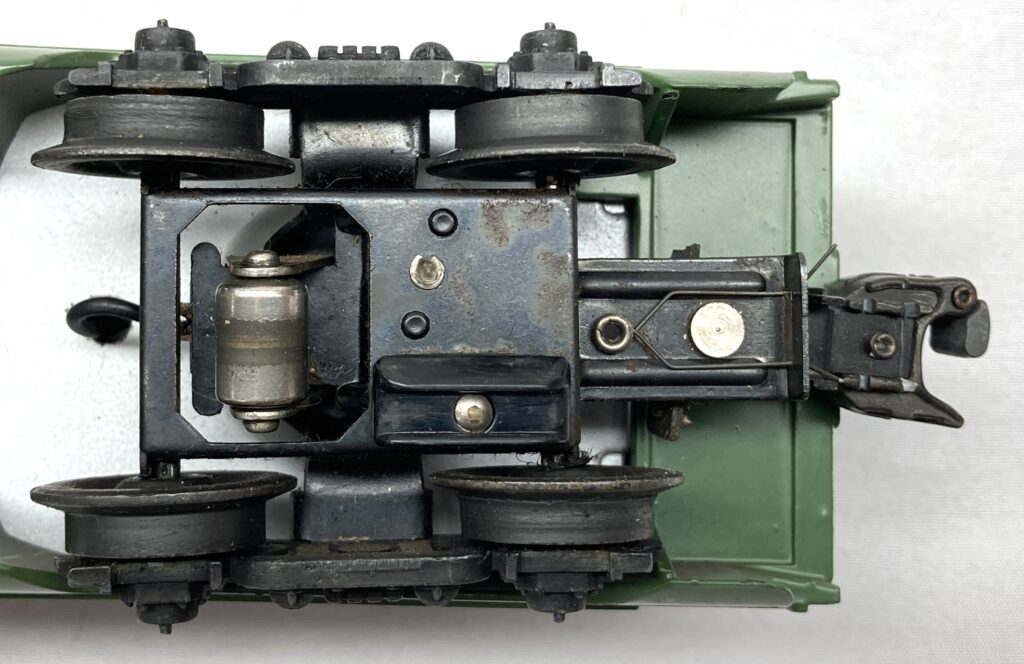
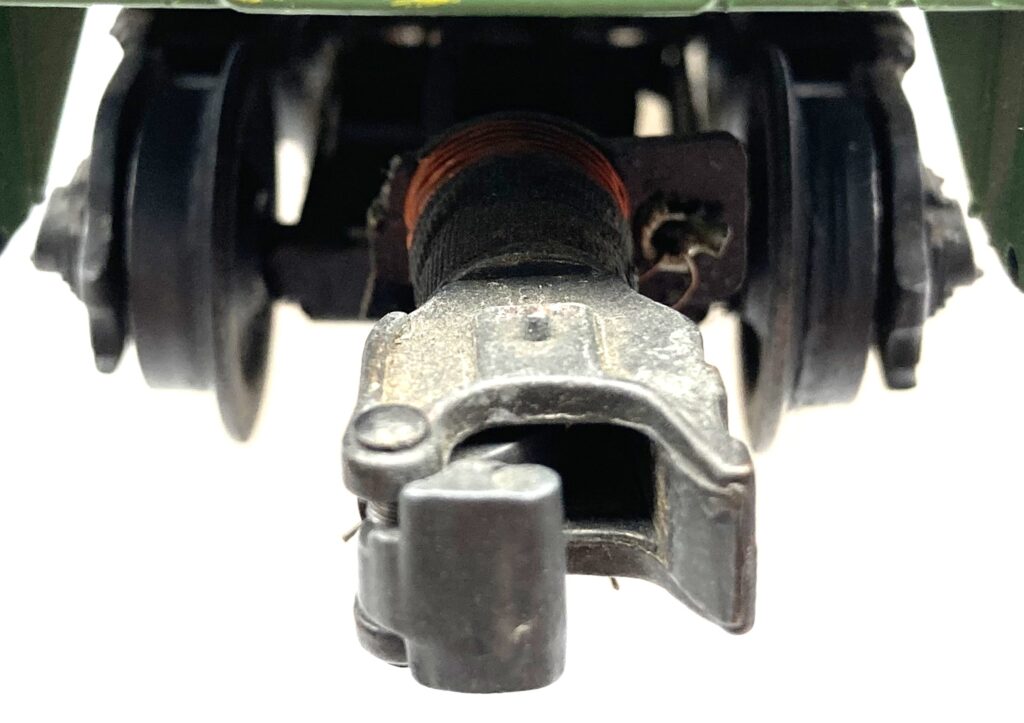
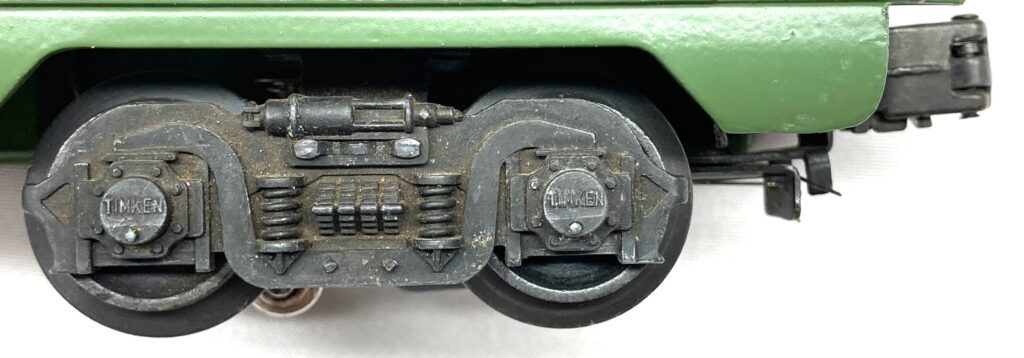
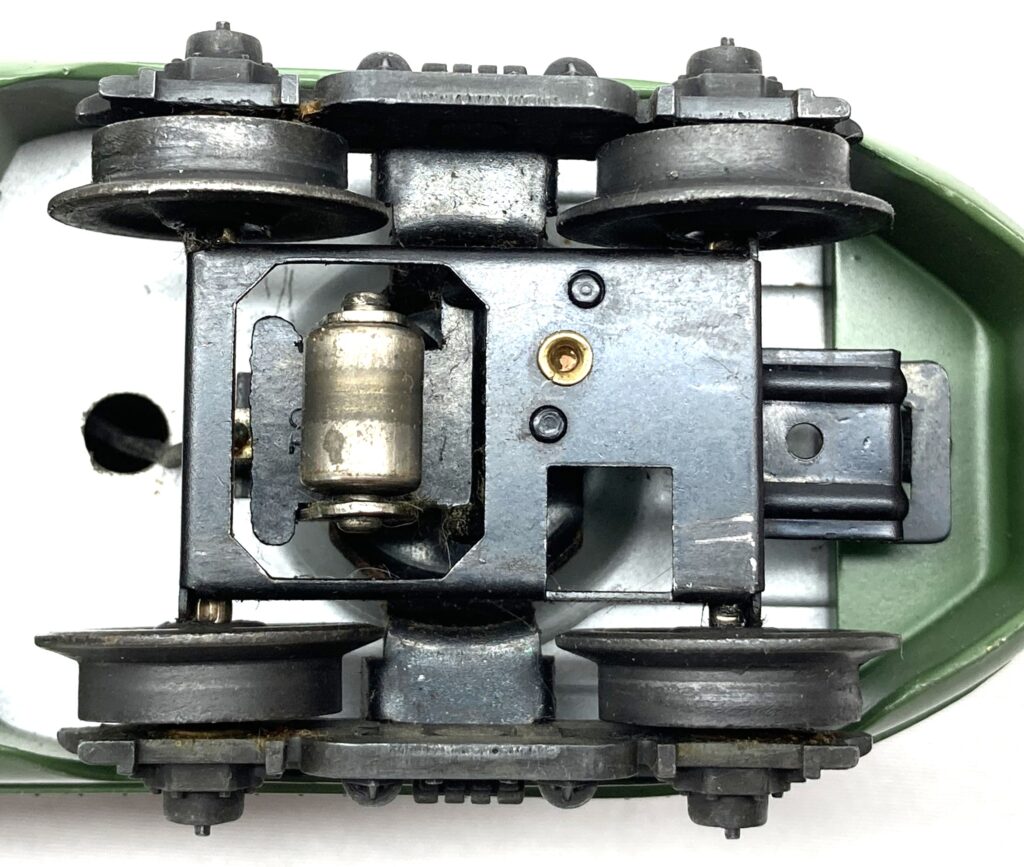
1949 – 1953
taped coil couplers
shinny coupler drawbar pivot rivet
OPERATING
DUMMY
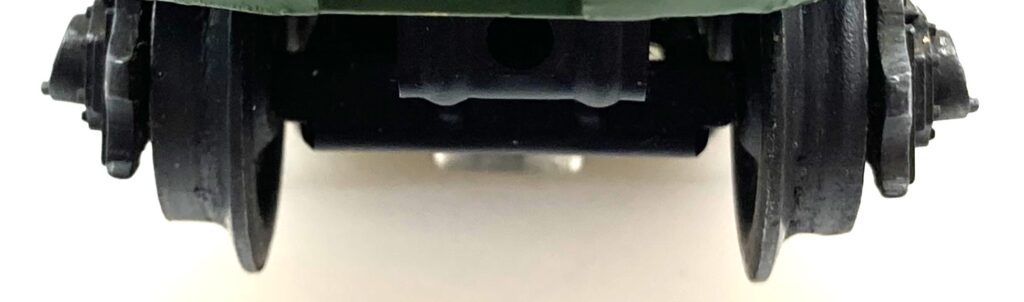
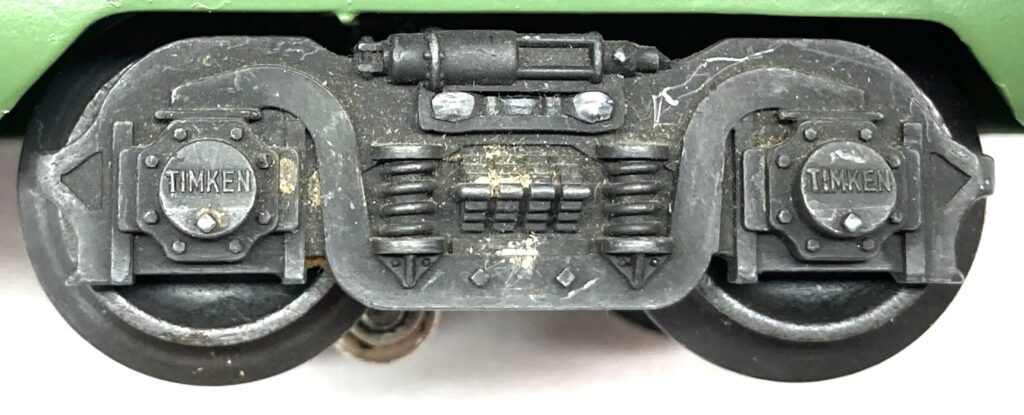
1954 – 1955
magnetic couplers
black pin
OPERATING
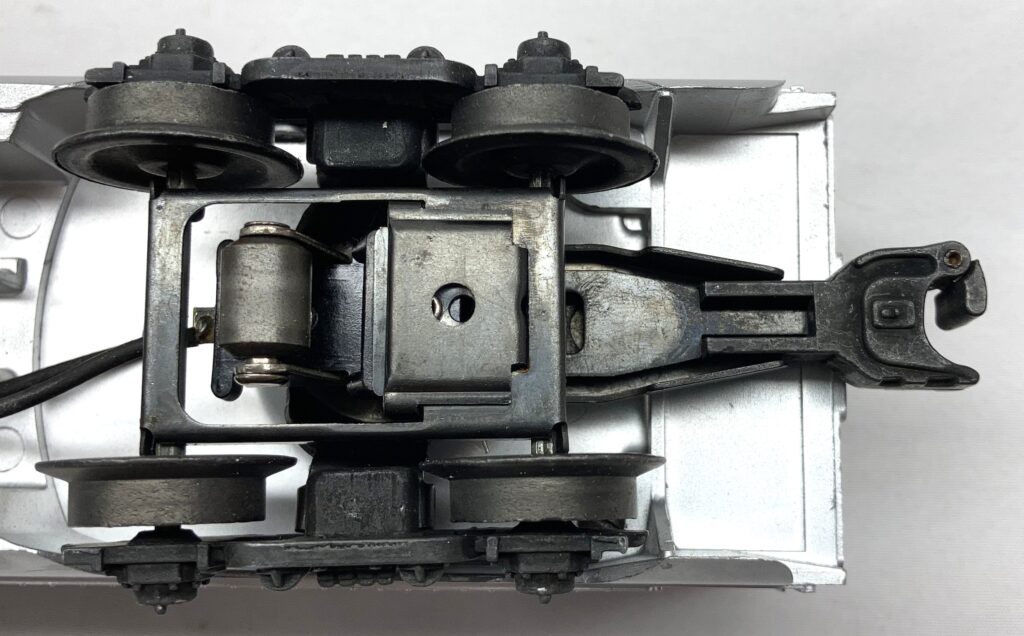
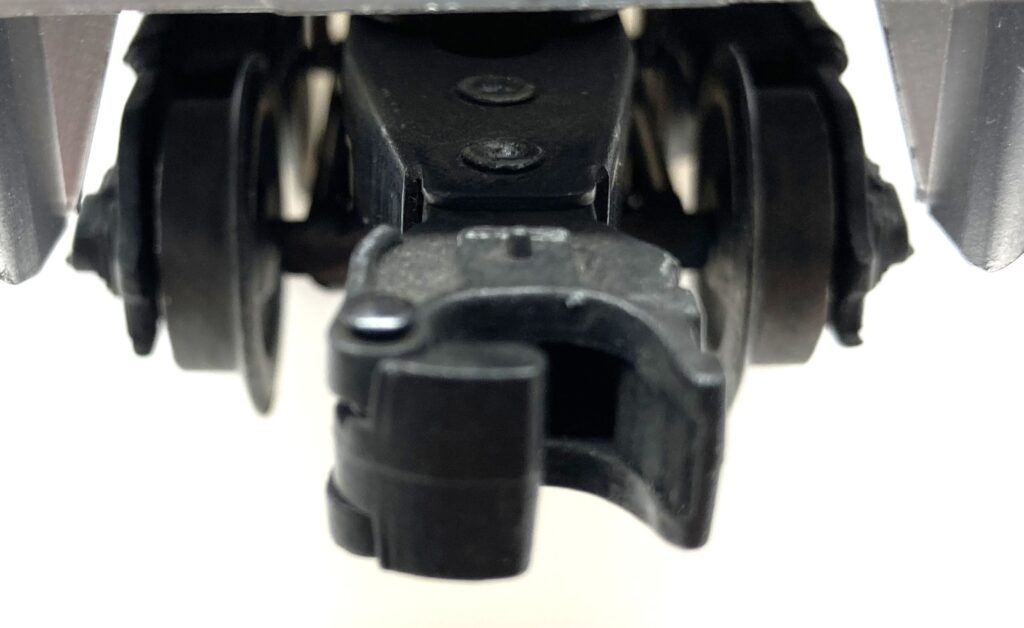
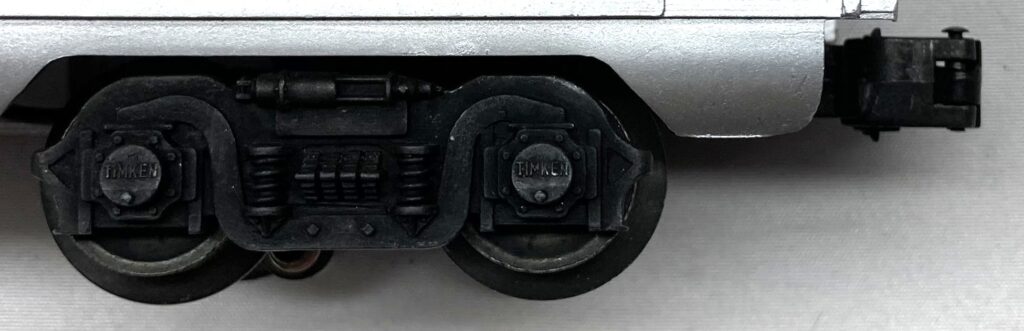
with black pin
DUMMY
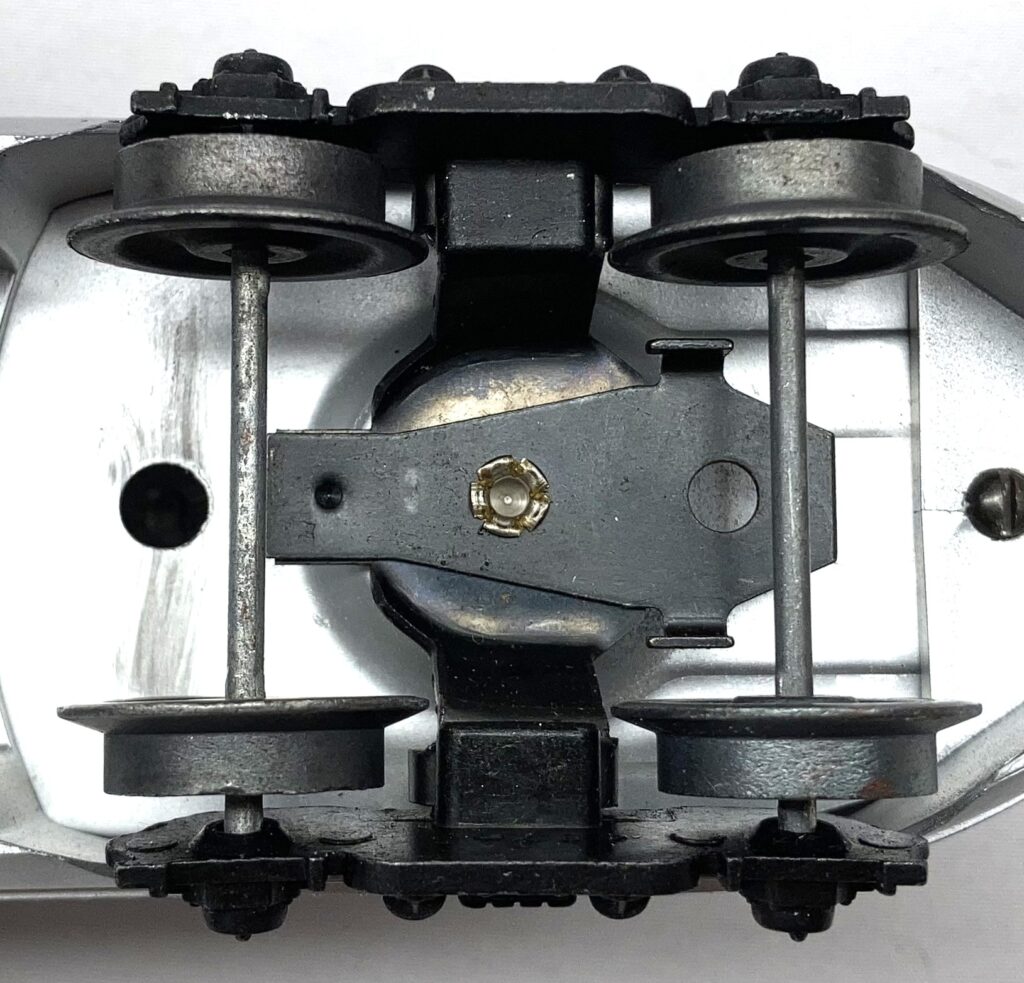
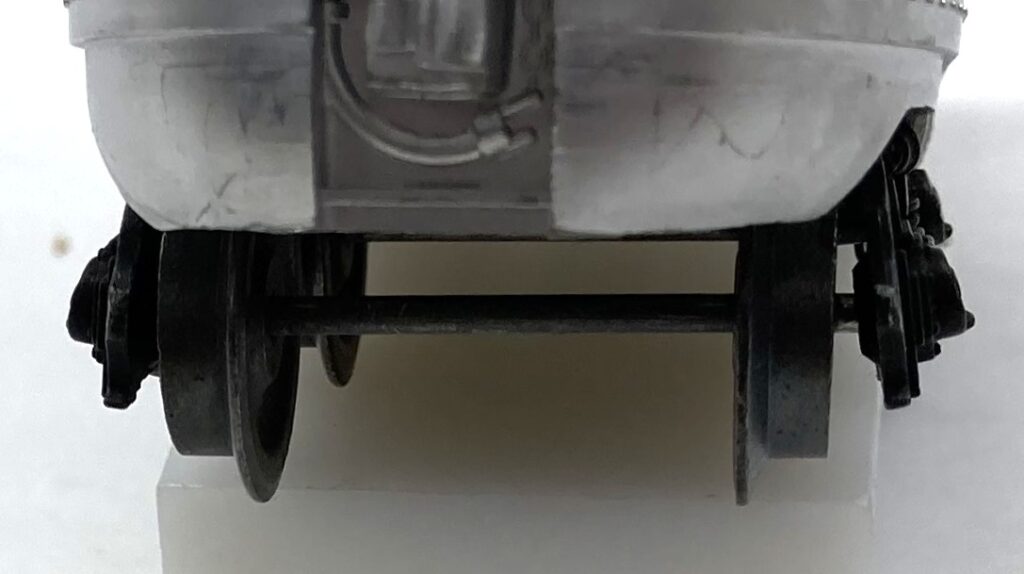
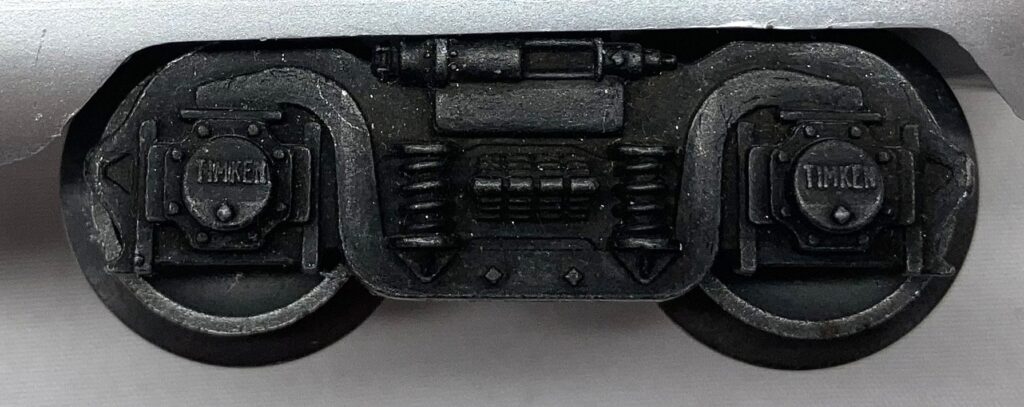
1956 – 1964
magnetic couplers
silver pin
OPERATING
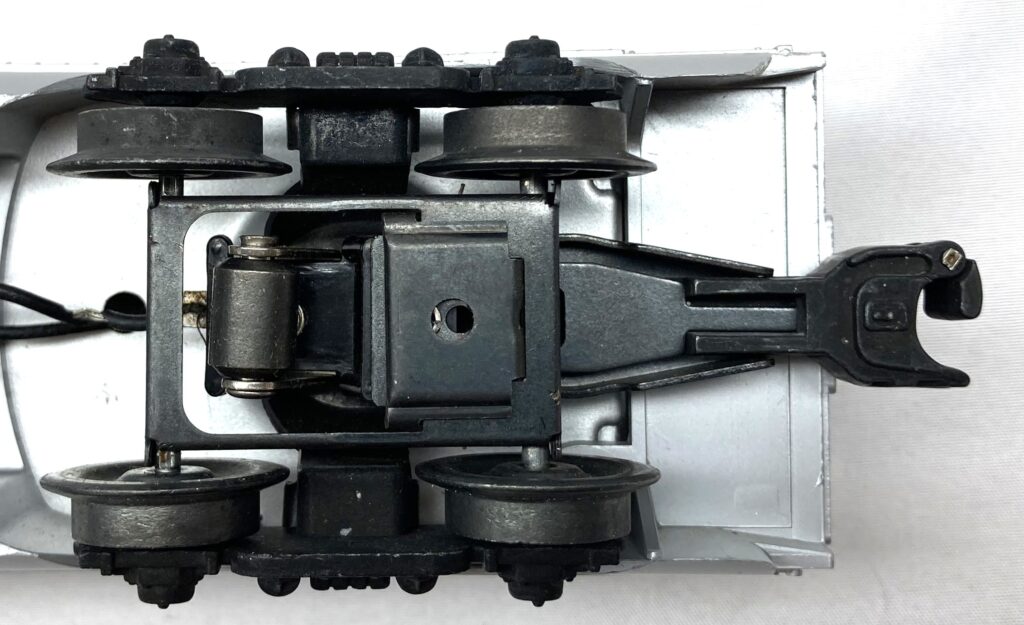
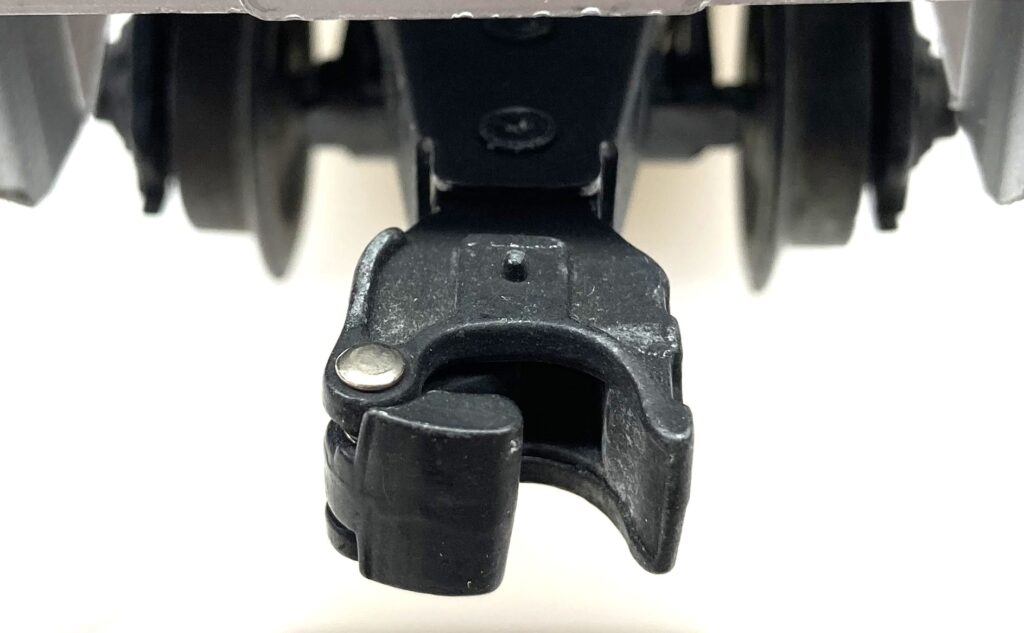
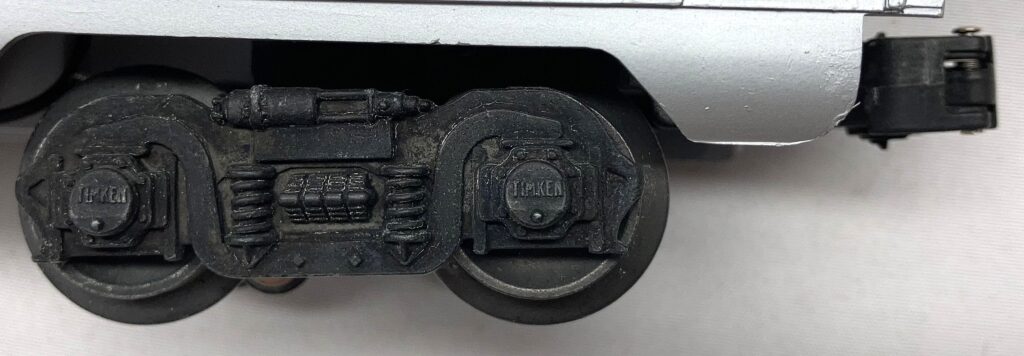
with silver pin
DUMMY
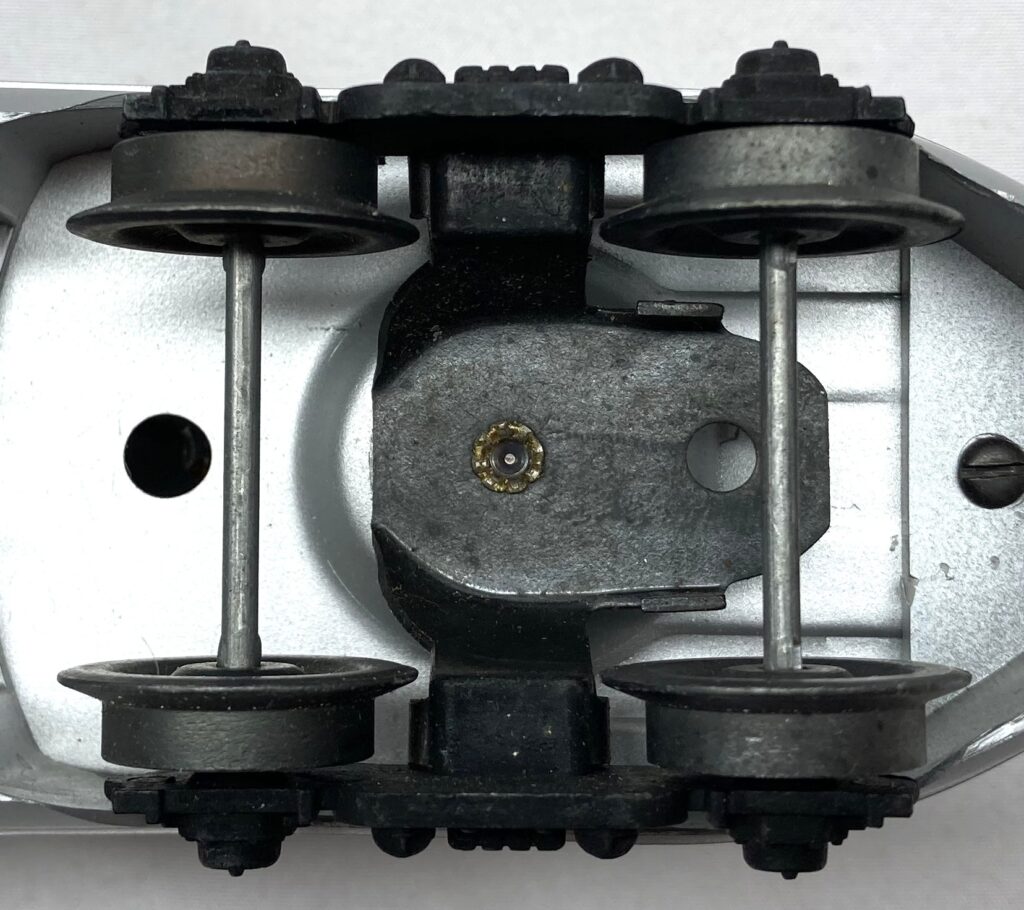
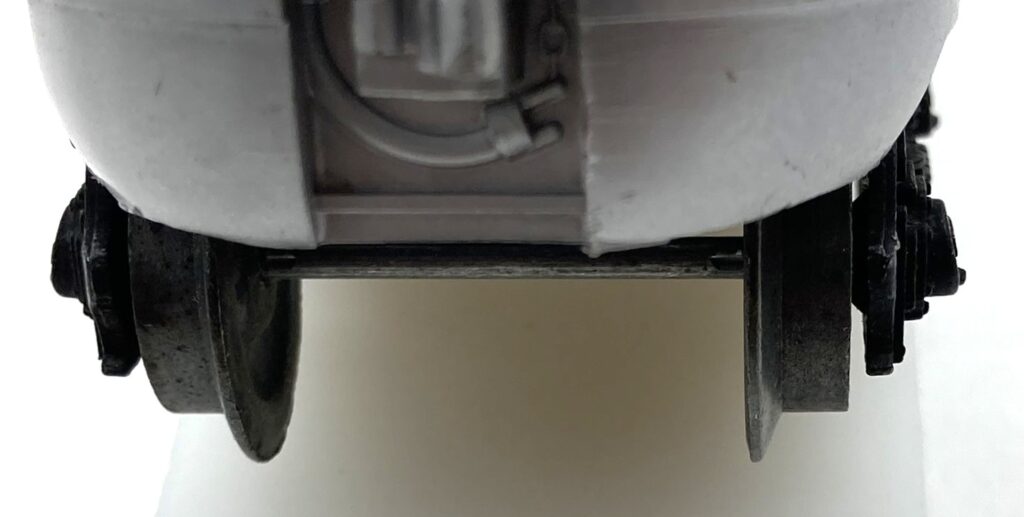
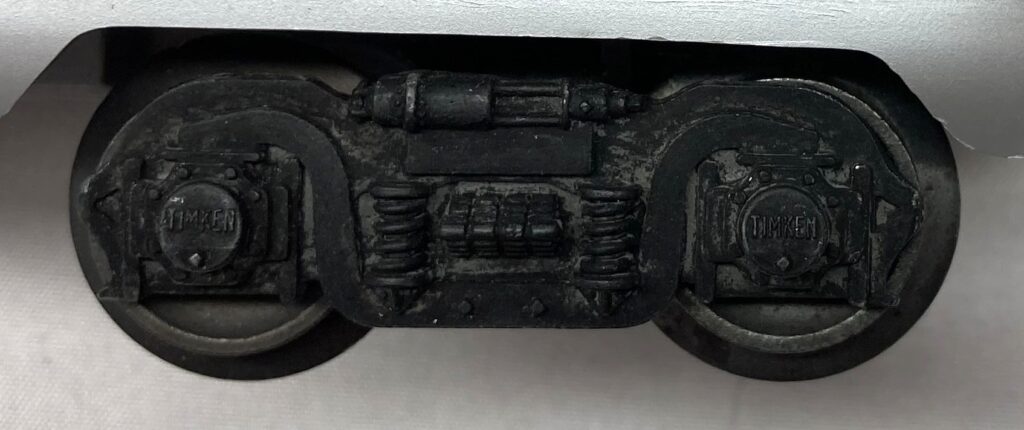
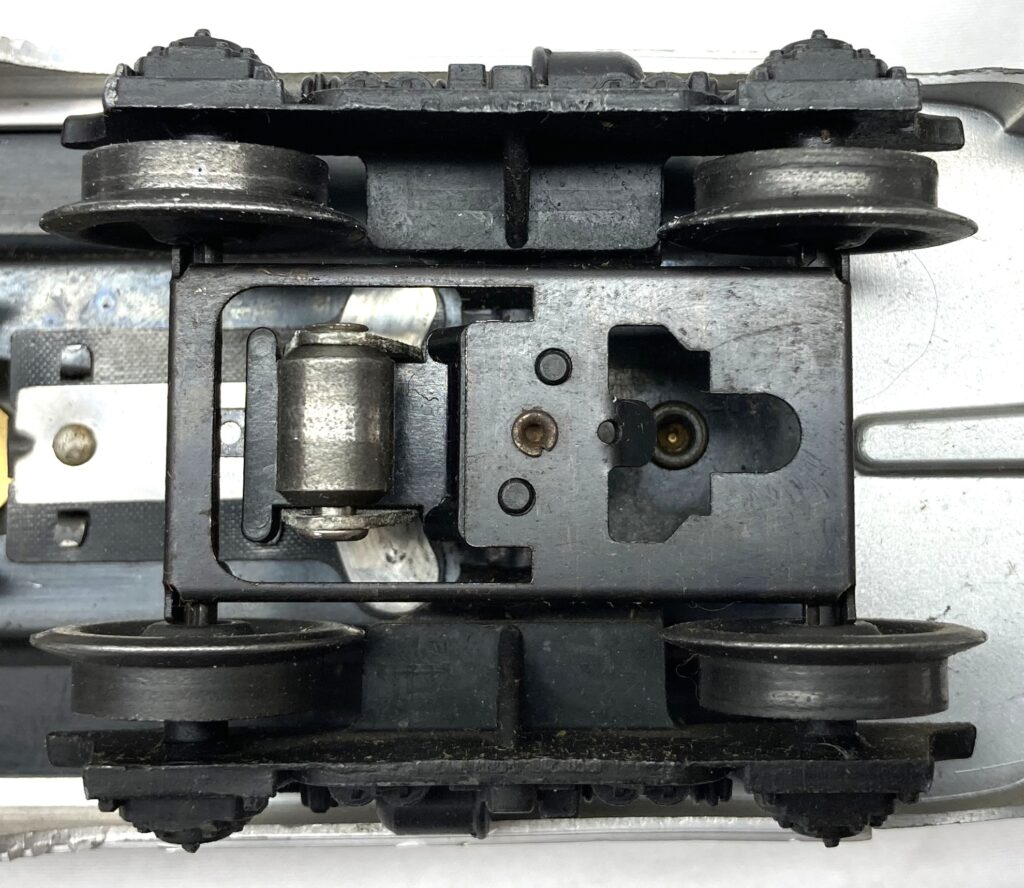
1952 – 1966
“O” GAUGE PASSENGER CARS
OPERATING
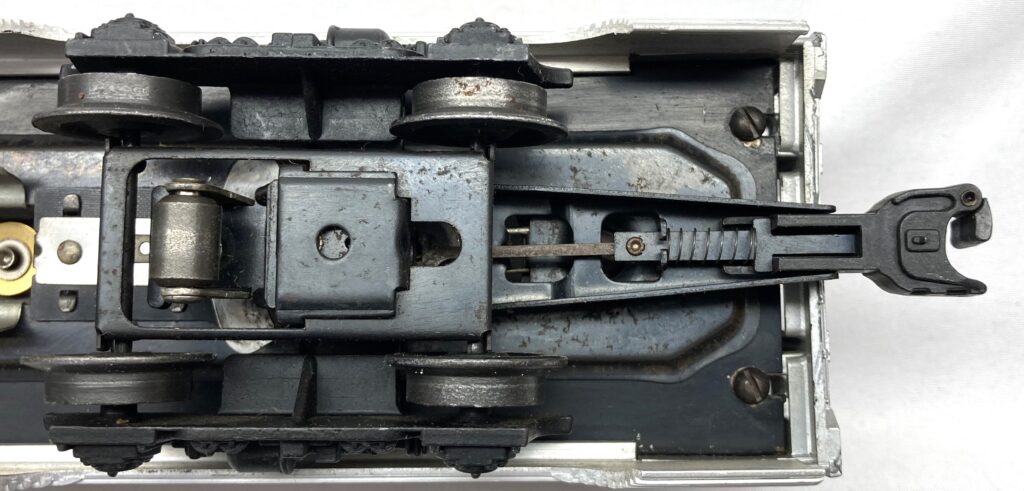
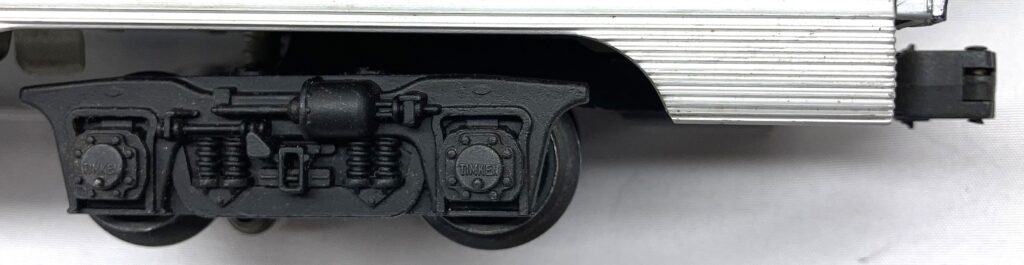
DUMMY
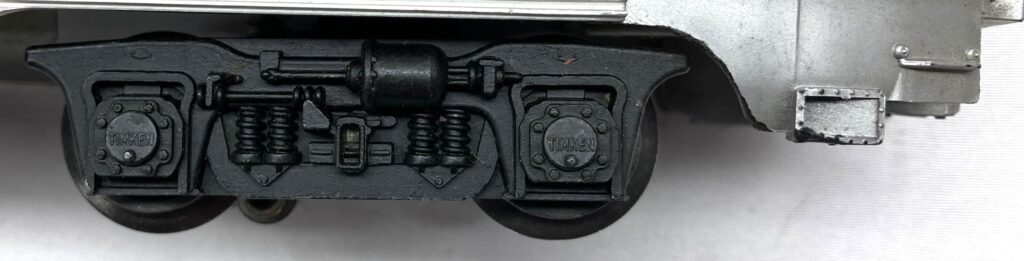
1946 – 1950
THREE AXLE SIX WHEEL TRUCKS
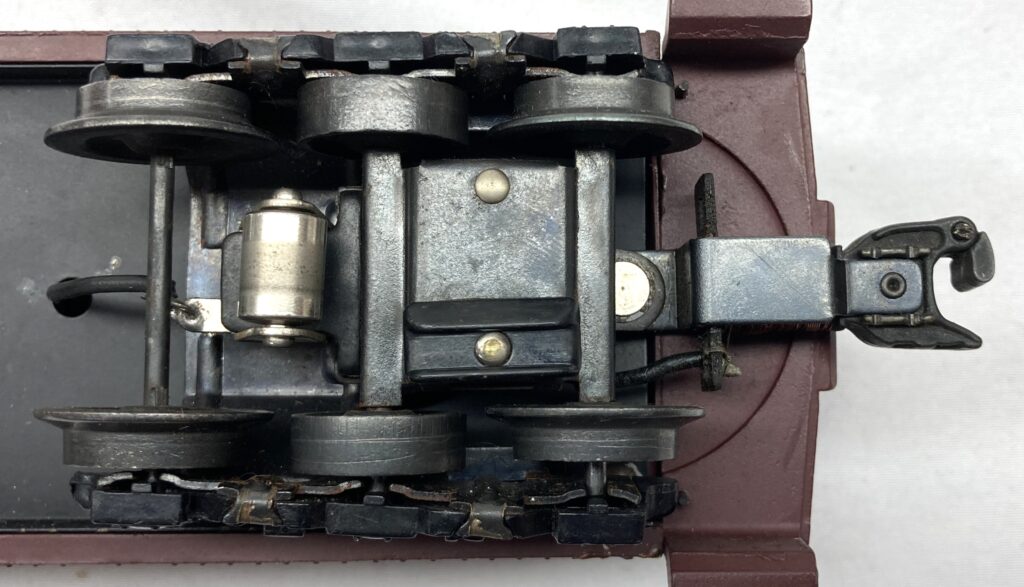
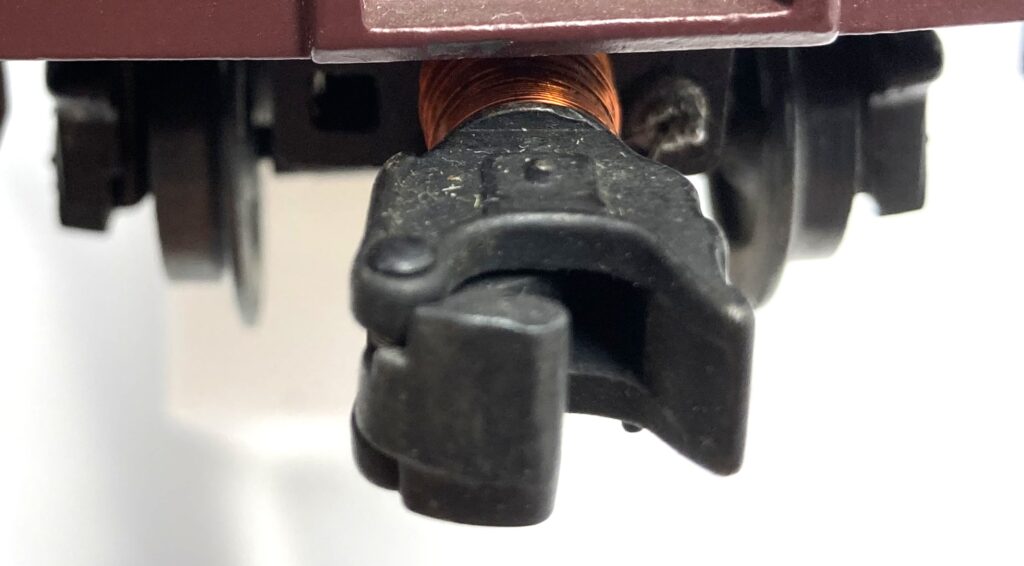
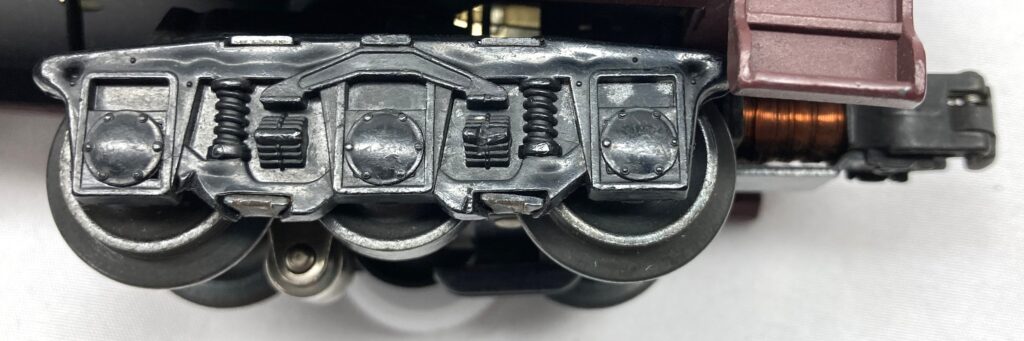
1946 – 1948
OPERATING ARTICULATED TRUCK WITH PICK UP ROLLER
plastic side frames
untaped coil couplers
longer drawbar arrangement which pivots on the truck
center wheelset has no flanges
found on Madison cars
1948 – 1950
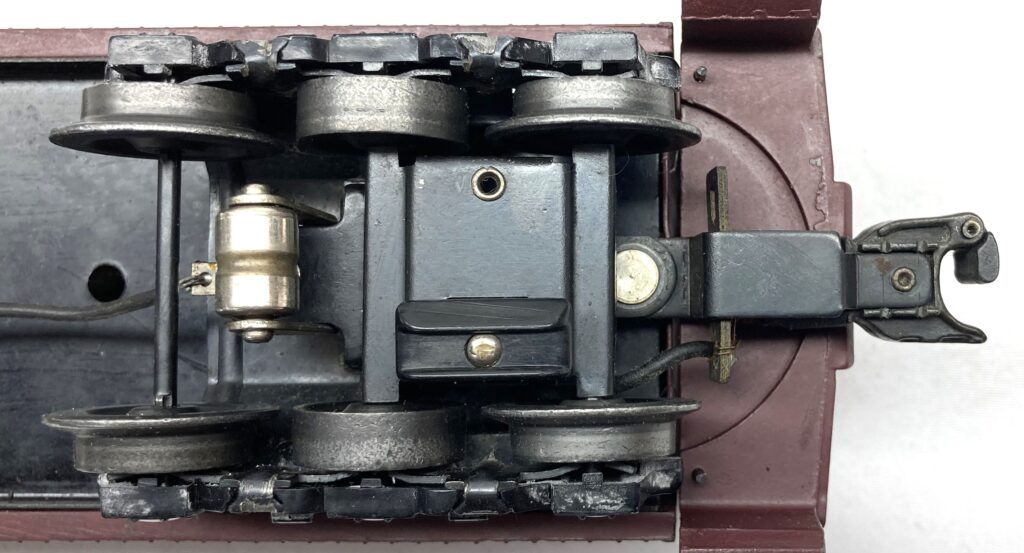
OPERATING ARTICULATED TRUCK WITH PICK UP ROLLER
plastic side frames
tapped coil couplers
longer drawbar arrangement which pivots on the truck
center wheelset has no flanges
found on Madison cars
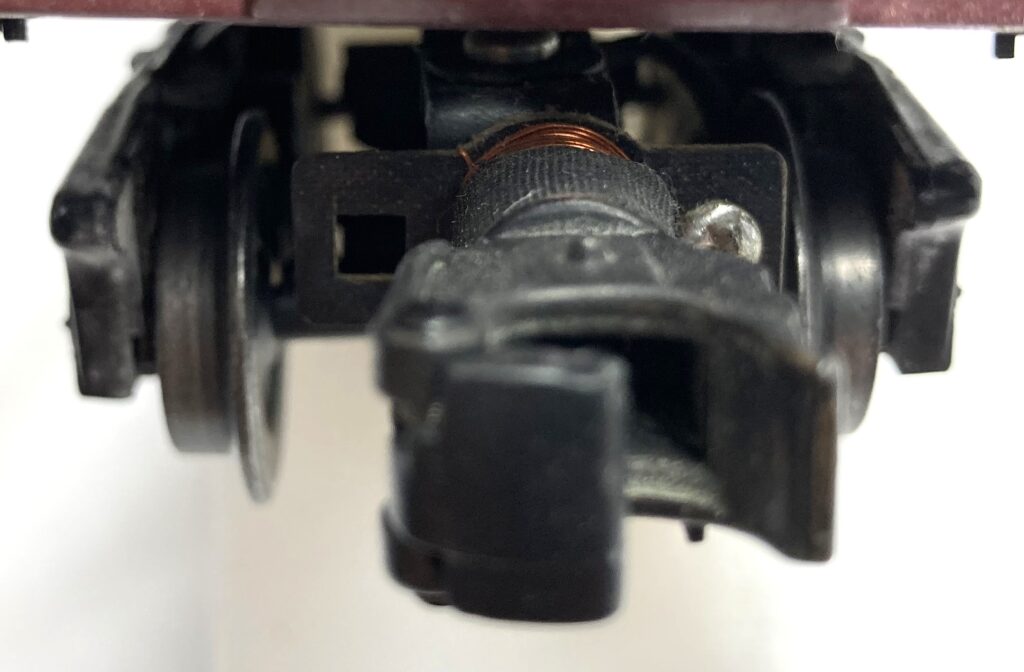
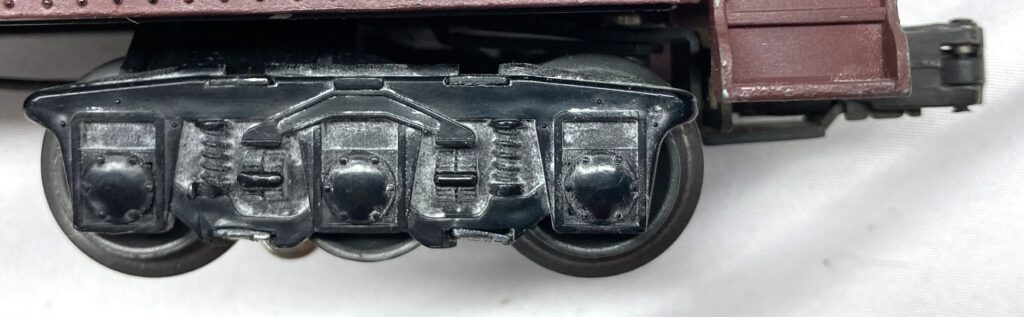
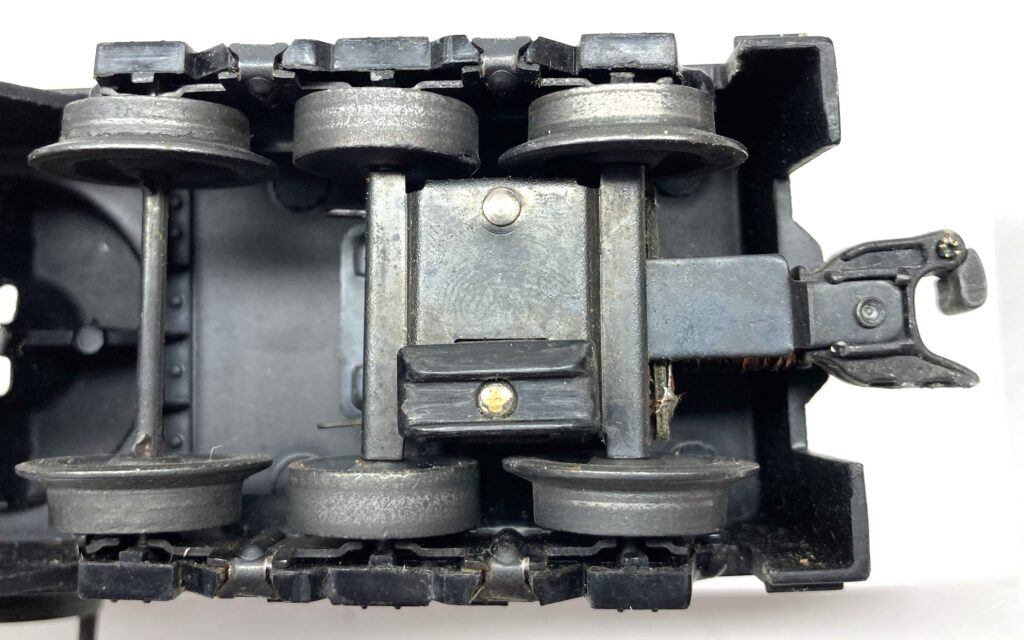
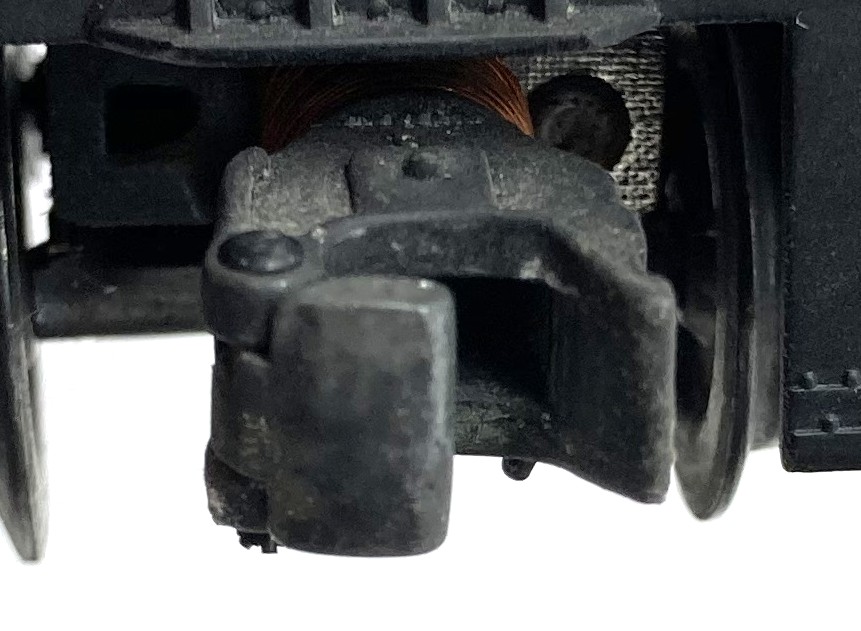
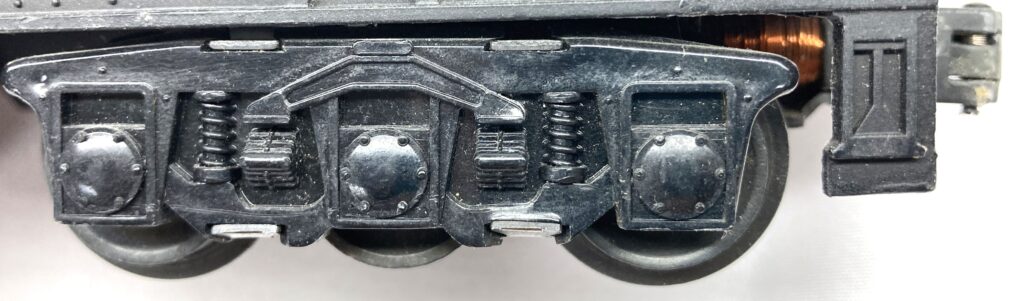
1946 – 1950
OPERATING ARTICULATED TRUCK WITH PICK UP ROLLER
plastic side frames
tapped coil couplers
shorter drawbar arrangement which pivots on the truck
center wheelset has no flanges
found on tenders
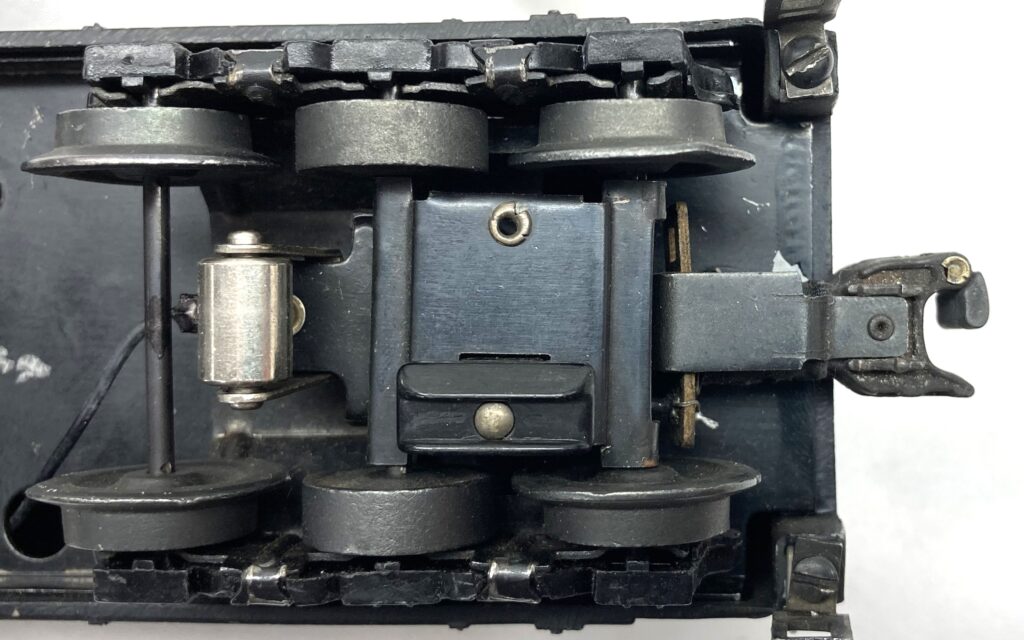
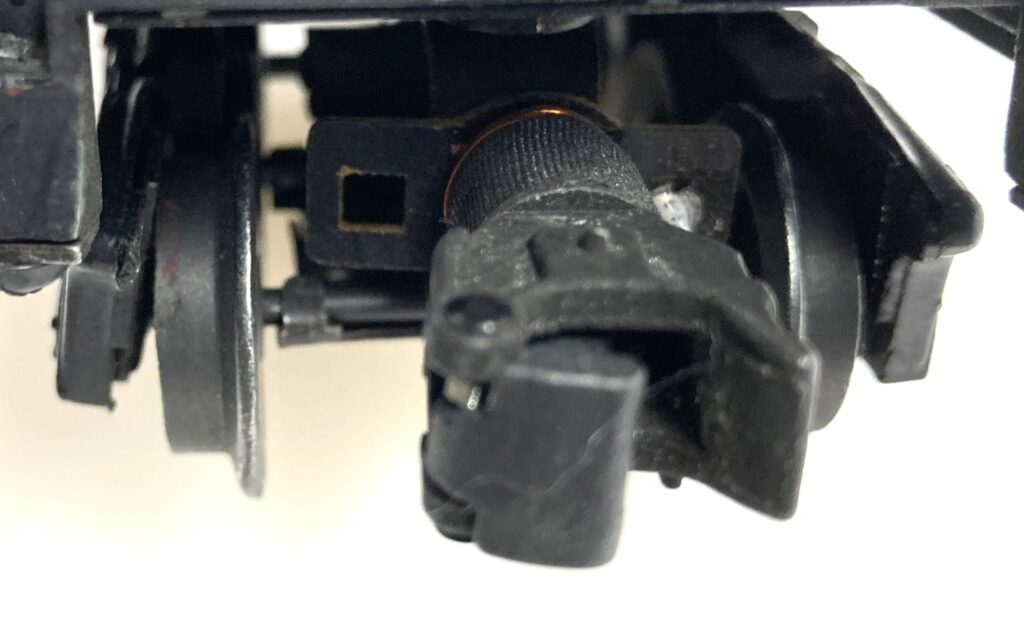
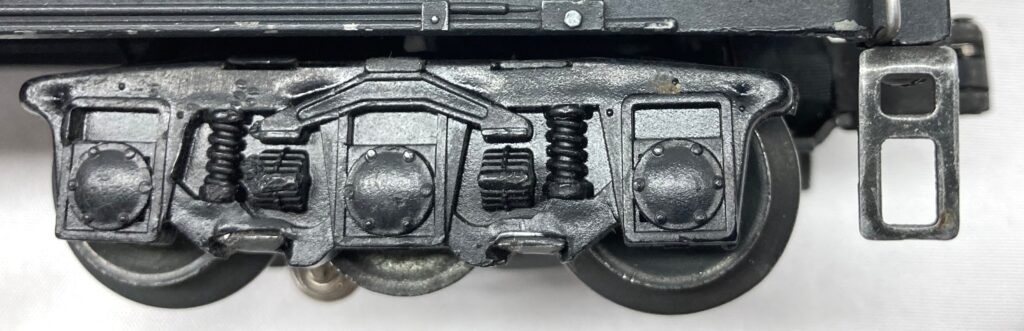
1946 – 1950
DUMMY TRUCK WITH PICK UP ROLLER
plastic side frames
center wheelset has no flanges
found on tenders
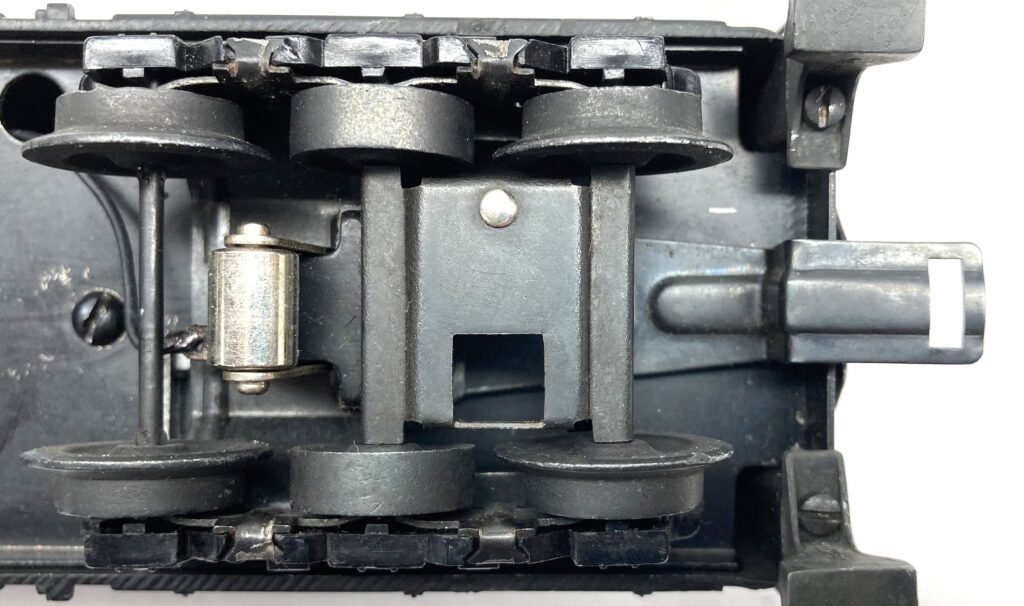
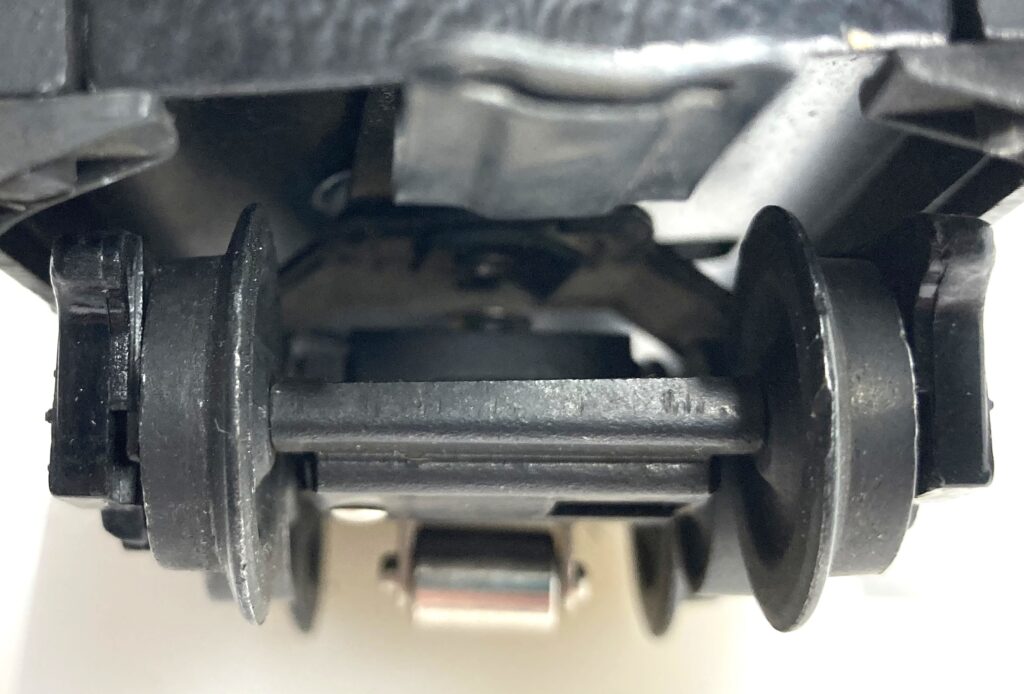
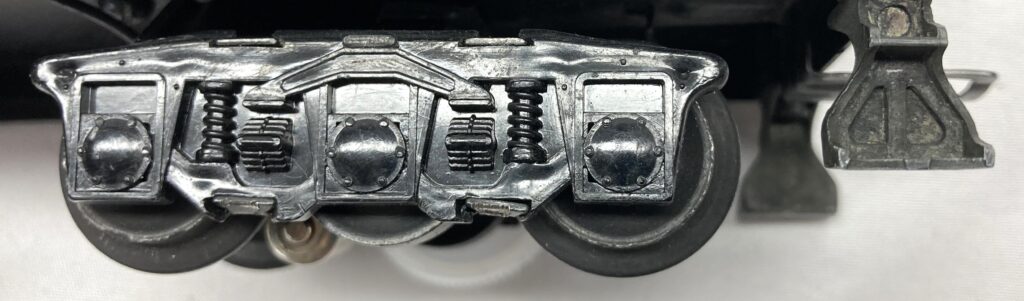
1946 – 1950
OPERATING TRUCK WITHOUT PICK UP ROLLER
plastic side frames
untapped coil coupler
drawbar arrangement which the is part of the truck and does not pivot
center wheelset has no flanges
found on 2460 cranes
WHERE WOULD YOU LIKE TO GO NOW ?