


Click or Scroll Down
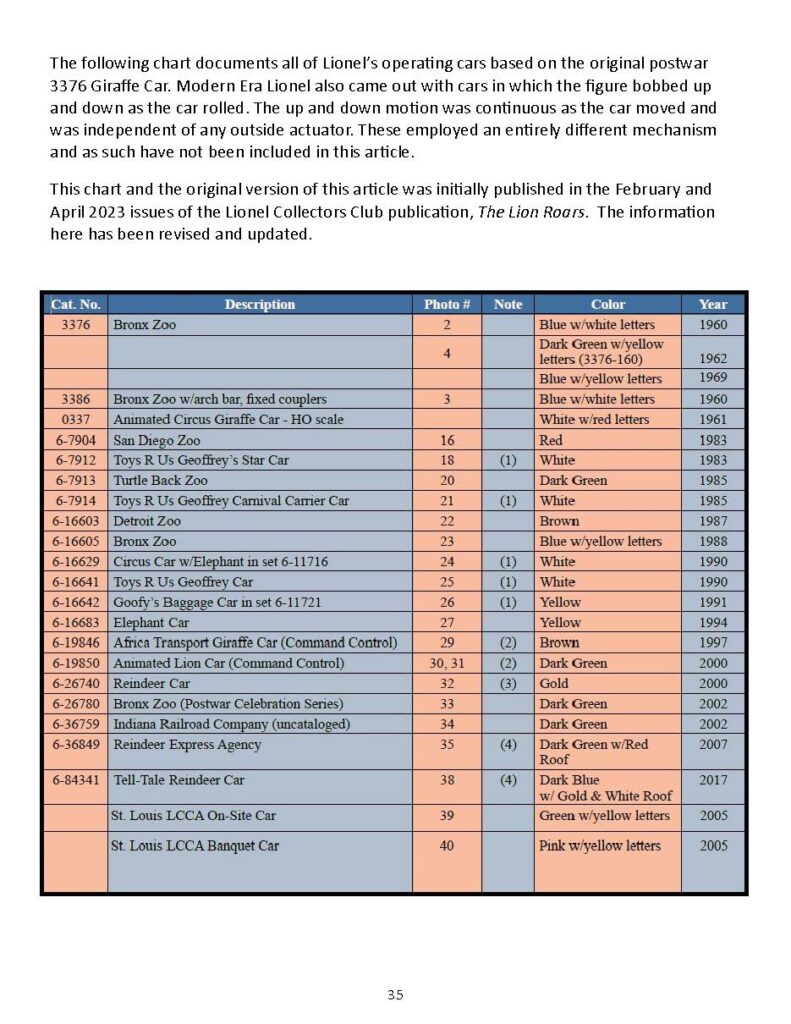
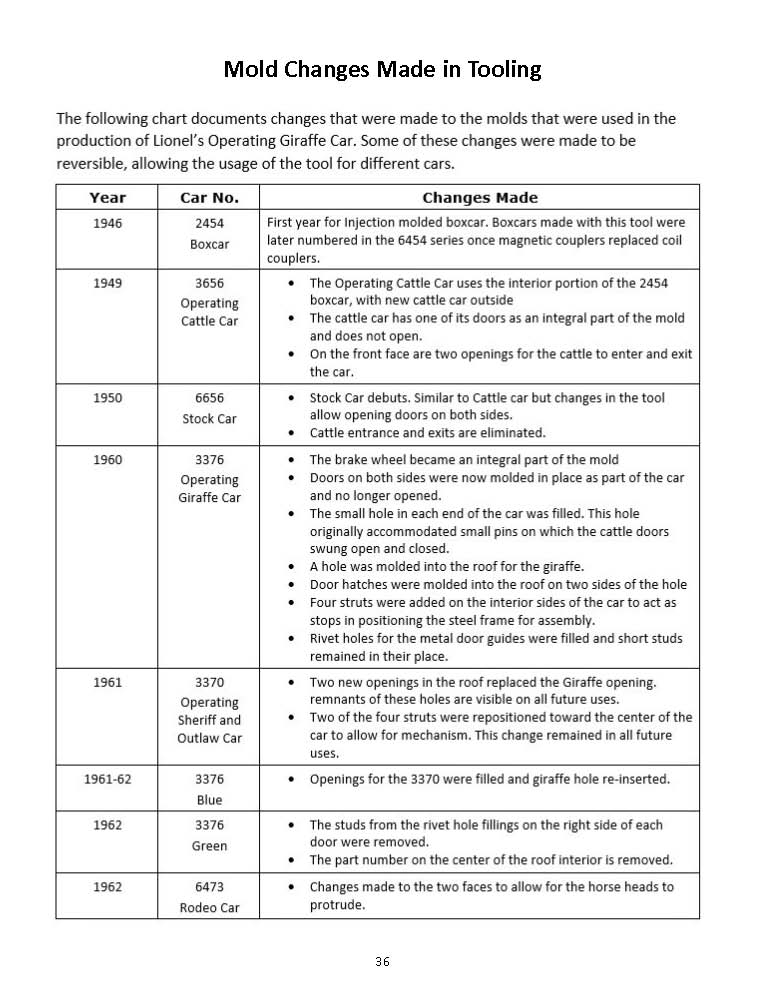
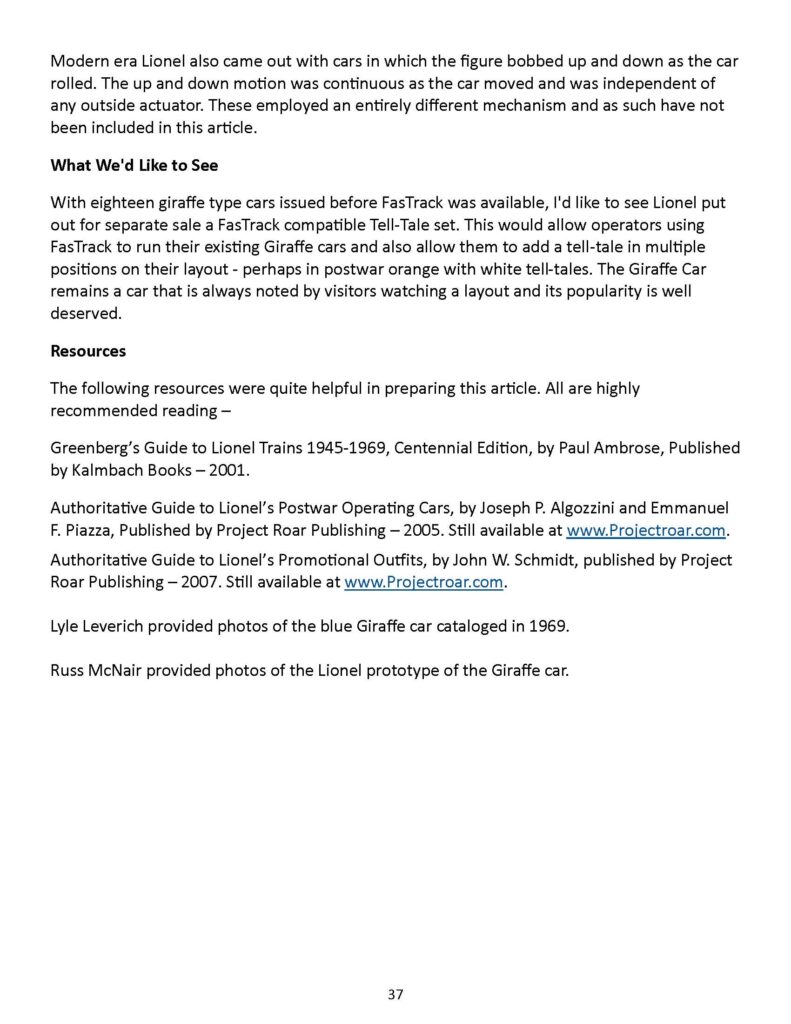
Lionel’s Operating Giraffe Cars
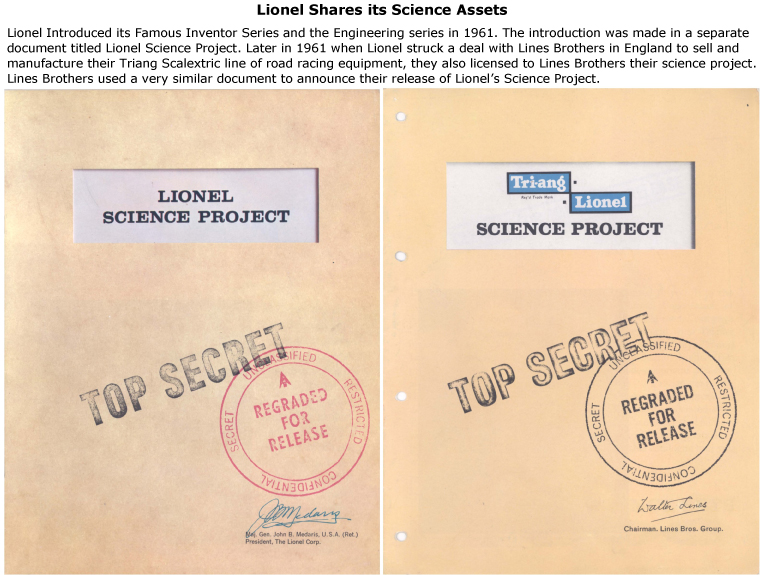
LIONEL SHARES IT’S SCIENCE ASSETS
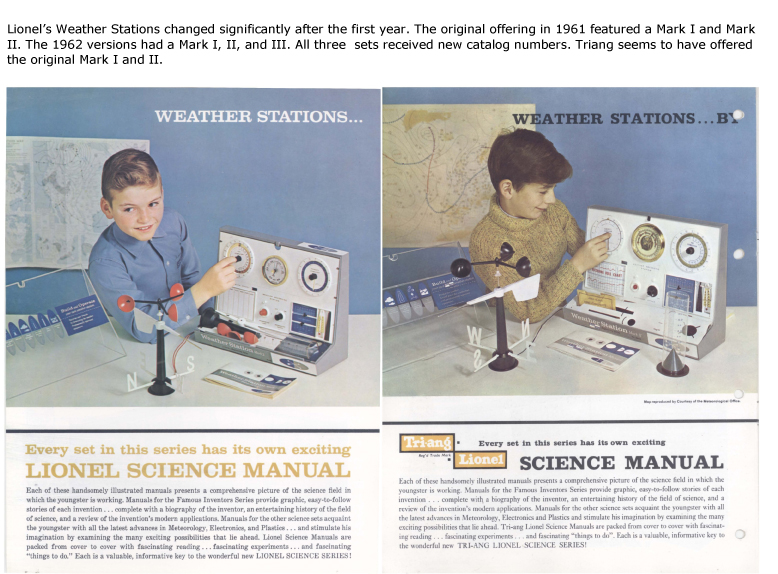
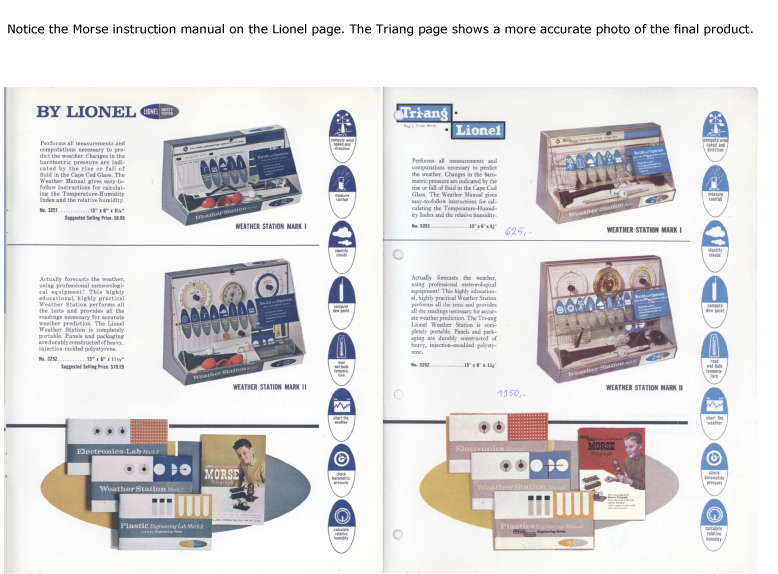
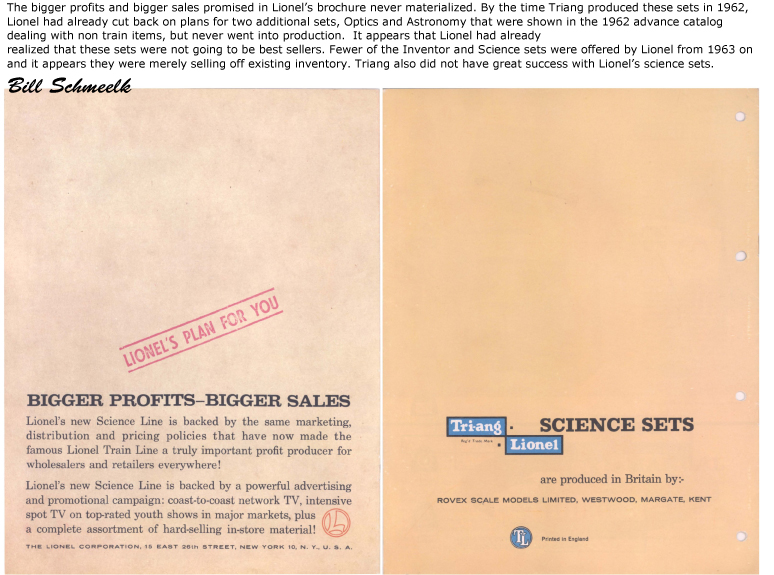
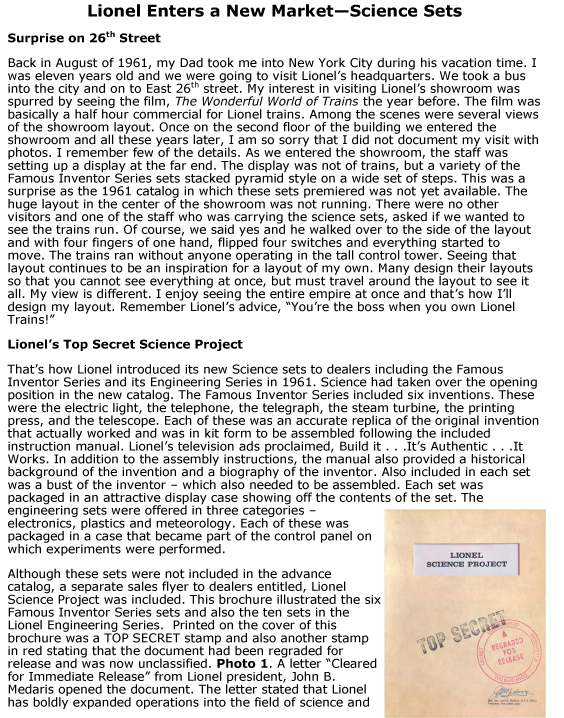
LIONEL ENTERS A NEW MARKET – SCIENCE SETS
Technical info on MagneTraction
b


x
g
Technical info on MagneTraction
Some more technical info on MagneTraction. The magnets did not surround the axle. On diesels, there were hollow non-magnetic stainless steel axles into which the magnets were placed. During assembly, the axles were not magnetized. After installation into the truck, the magnets were
magnetized through the wheels. The wheels were sintered iron. By magnetizing the Alnico magnets through the wheels, the magnetic field was expanded through the wheels. That is why the magnetic attraction to the track is considerably reduced if a wheel is removed from the axle and replaced. Doing so breaks the field and it is not fully restored when the wheel is replaced. Re magnetizing it through the wheels will restore the full attractive force.
For steam locomotives and also on the GG1, an external magnet was placed between the wheels and again magnetized through the wheels. The service manual specifically states that the axles, on the 736 for example, must be made of non-magnetic stainless steel to avoid short circuiting the
magnetic flux. Interestingly, Lionel’s service manual does not show a part number for the magnet, but does show a number for the magnetized frame and wheels. Very few service stations had the equipment necessary to re magnetize a MagneTraction loco.
To re magnetize the magnets, a DC current of sufficient amperage must be used. The magnetization is almost instantaneous and the current need only be applied for an instant. The wheels are placed on the poles of a strong DC electromagnet. The magnetic force is applied through the
wheels so that the full magnetic flux is achieved. Lionel made a magnetizer, but it was an expensive piece and few service stations had them. They were vacuum tube based to rectify AC current to DC. AC current will not magnetize magnetic material. Lionel did make a much less expensive magetizer for HO magnets used in their HO motors. Their description for this magnetizer specifically stated that it was not suitable for recharging O gauge locomotive magnets.
The postwar F3s and GP locos used hollow stainless steel axles. A worm wheel was pressed onto the center of this axle and was powered by the motor. The first Fundimension F3s and GPs that were equipped with MagneTraction used brass instead of stainless steel. While the brass satisfied the need for a non-magnetic material, it was not as strong and problems could develop with the worm gear slipping on the axle. I’m not sure if or when this problem was later corrected. I can only assume that brass was used as it is easier to machine than stainless steel.
Another interesting point about MagneTraction is that its attractive force is the strongest when the magnetic field is a complete circuit. The steel ties that electrically connect the two outer rails of Lionel’s tubular track supply what is needed to complete the magnetic circuit. Chief engineer Joseph Bonnano specifically mentions this in the patent for his design for Super O Track and that is why Super O track was designed with steel ties connecting the two outer rails.
Bill S.